Gardening can be tough in the South. While heat and humidity turn us into a hot mess, the lack of rainfall saps the life out of our perennials and shrubs. Unfortunately, drought has become more common in recent years, and it's not just a summertime situation. Droughts also occur in winter, spring, and fall. This is why every Southern garden needs drought-tolerant, flowering shrubs to brighten the garden throughout the year.
We've come up with a list of flowering shrubs that always seem to remain standing, even in the driest of years. Some offer shade, for which we are eternally grateful. All provide a much-needed burst of color. Plant a few of these reliable, drought-tolerant shrubs that will bring color to your garden—even when other plants are dead and brown.
01 of 10
Crepe Myrtle
- Botanical name: Lagerstroemia indica
- Light: Full sun
- Soil Type: Well-drained
- Soil pH: Slightly acidic to slightly alkaline (6.0-8.0)
Crepe myrtle is one of the best heat- and drought-tolerant trees for the South, but you can also find shrub-sized varieties for your garden. Look for plants from the Razzle Dazzle, Summerlasting, or Barista series, all of which grow to 3 feet tall. Plant crepe myrtle in full sun where it will display vibrant color all summer long.
02 of 10
'Kaleidoscope' Abelia
- Botanical Name: Abelia x grandiflora 'Kaleidoscope'
- Sun Exposure: Full sun, partial shade
- Soil Type: Fertile, moist, well-drained
- Soil pH: Acidic to neutral (5.0-7.5)
'Kaleidoscope' abelia has small white flowers in summer and fall, but it's the foliage that really shines. This selection from the Southern Living Plant collection has variegated leaves that change throughout the seasons. The leaves emerge as light green with yellow margins that intensify in summer, then shift into fiery red and orange in fall. Abelia is quite drought-tolerant once it becomes established in the garden. Even better, this is a semi-evergreen shrub.
03 of 10
Butterfly Bush
- Botanical Name: Buddleja davidii
- Sun Exposure: Full
- Soil Type: Clay, loamy, sandy, well-drained
- Soil pH: Slightly acidic, neutral (6.0-7.0)
Butterfly bush earned a bad rap for being invasive. Fortunately, a professor at N.C. State developed the (mostly) sterile Lo and Behold series of butterfly bushes, which are sold through Proven Winners. The shrubs have a mounding form and grow 2 to 3 feet tall and wide. The flowers have a wonderful scent that attracts butterflies and hummingbirds.
04 of 10
Deutzia
- Botanical Name: Deutzia
- Sun Exposure: Full sun
- Soil Type: Fertile, moist, well-draining
- Soil pH: Acidic, neutral, slightly alkaline (6.0 - 7.5)
Deutzia may be in the hydrangea family, but this low-maintenance shrub is much more drought-tolerant. Water the shrubs the first year while they get established. Much like a hydrangea, deutzia needs afternoon shade in hotter climates, and it doesn't do well south of USDA Plant Hardiness Zone 8. Don't prune deutzia in the fall or you may lose next year's flowers. Give it a trim each spring just after the pale pink or white flowers fade.
05 of 10
Chaste Tree
- Botanical Name: Vitex agnus-castus
- Sun Exposure: Full
- Soil Type: Well-drained, sandy
- Soil pH: Slightly acidic, neutral (6.0-7.0)
Chaste tree can be trained as a tree, but it's often grown as a large shrub. In the Upper South, chaste tree dies back to the ground in winter, then regrows in the spring. Many varieties grow to 10 or 15 feet tall unless you prune them hard in winter. 'Blue Puffball' is a 4-foot variety that can fit in any garden. Clean up the fallen fruits to keep seedlings from popping up around your yard.
06 of 10
Forsythia
- Botanical Name: Forsythia spp.
- Sun Exposure: Full, partial
- Soil Type: Loamy, clay, organically rich, moist but well-drained
- Soil pH: Slightly acidic to slightly alkaline (6.5-7.5)
Forsythia's golden blooms uplift us at the end of a dark winter. You can plant it in Zones 5-8. You'll see more flowers if you plant forsythia in full sun, but it also grows in part shade. This tough shrub can be mostly neglected once established. Prune forsythia each spring to keep it under control.
07 of 10
Southern Bush Honeysuckle
- Botanical Name: Diervilla sessilifolia
- Sun Exposure: Full, partial
- Soil Type: Average, well-draining
- Soil pH: Acidic to alkaline (6.0-8.0)
Southern bush honeysuckle grows on sunny mountain slopes and doesn't flag during dry weather. The small yellow flowers look similar to a honeysuckle. New leaves have a reddish hue, giving this native shrub a multi-colored appearance. Garden centers also carry varieties with chartreuse, variegated, and dark burgundy foliage. Southern bush honeysuckle can be planted almost anywhere in Zones 4-8, but it won't tolerate clay.
08 of 10
Bottlebrush
- Botanical Name: Callistemon spp.
- Sun Exposure: Full
- Soil Type: Well-drained
- Soil pH: Acidic (5.0-6.5)
Bottlebrush is a hardy shrub for gardeners in the Coastal and Tropical South. This Australian plant needs full sun and well-draining soil, though you should add a little compost if your soil is sandy. Bottlebrush can be clipped into a 10 or 15-foot hedge. There are also smaller varieties like the one pictured here. Light Show is a Southern Living Plant that grows to 5 feet high and 4 feet wide.
09 of 10
Blue Mist Shrub
- Botanical Name: Caryopteris x clandonensis
- Sun Exposure: Full sun
- Soil Type: Well-draining, loamy
- Soil pH: Neutral (6.5-7.5)
This hybrid bluebeard is also known as blue mist shrub or blue spirea. The airy plants produce fragrant blue flowers in late summer when most shrubs have finished blooming. Blue mist shrub can be grown in Zones 5-9, but dies back to the ground each winter in the Upper South.
10 of 10
Oleander
- Botanical name: Nerium oleander
- Light: Part to full sun
- Soil Type: Average, well-drained
- Soil pH: Slightly acidic to alkaline (5.0-8.0)
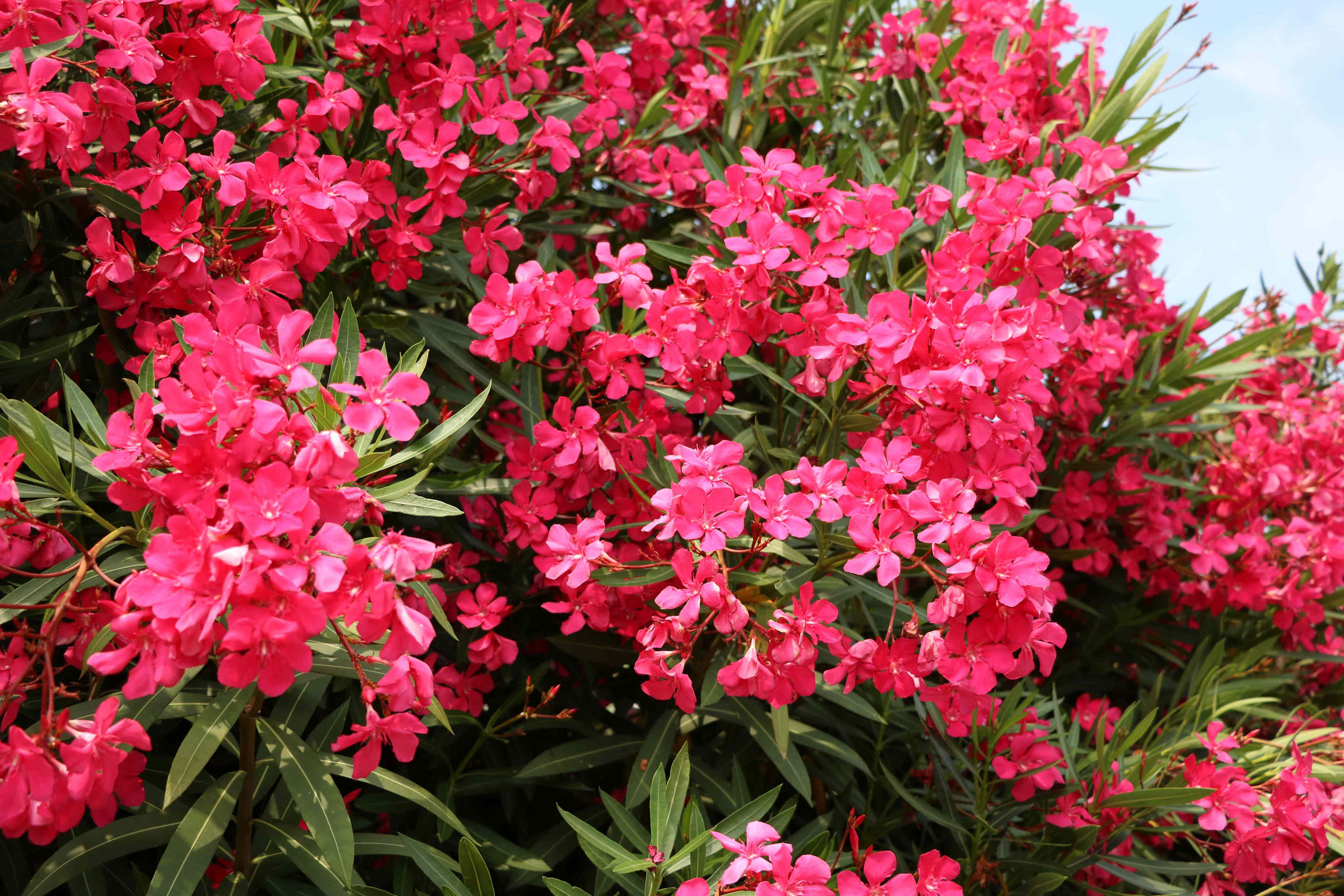
Oleander blooms in the Coastal and Tropical South from late spring to late summer. The fragrant flowers range from white to vivid pink. This large shrub tolerates salt spray and drought and can be grown around pools and pavement. However, you may want to consider other options if you have small children, as it is highly poisonous.
Read the original article on Southern Living