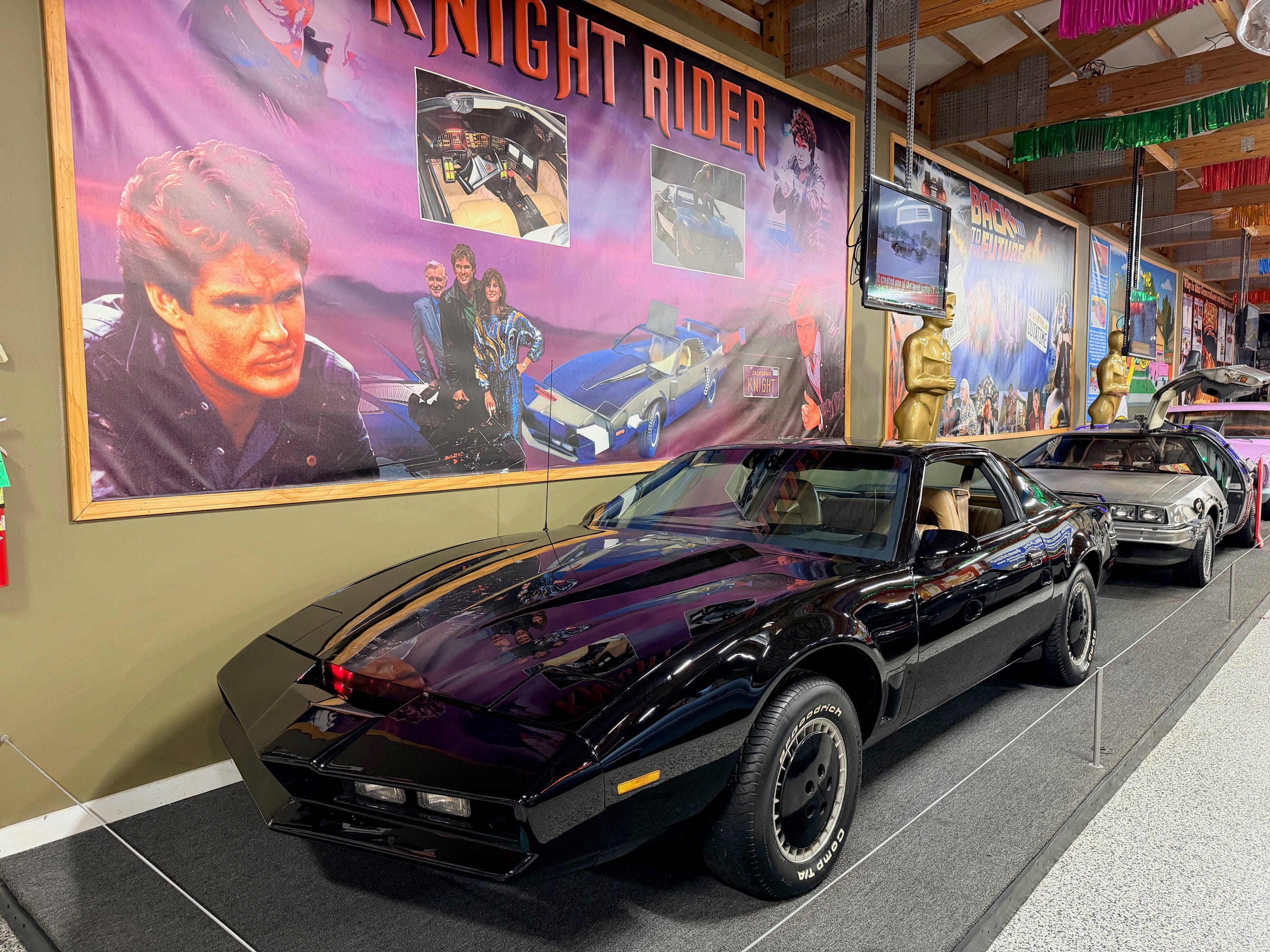
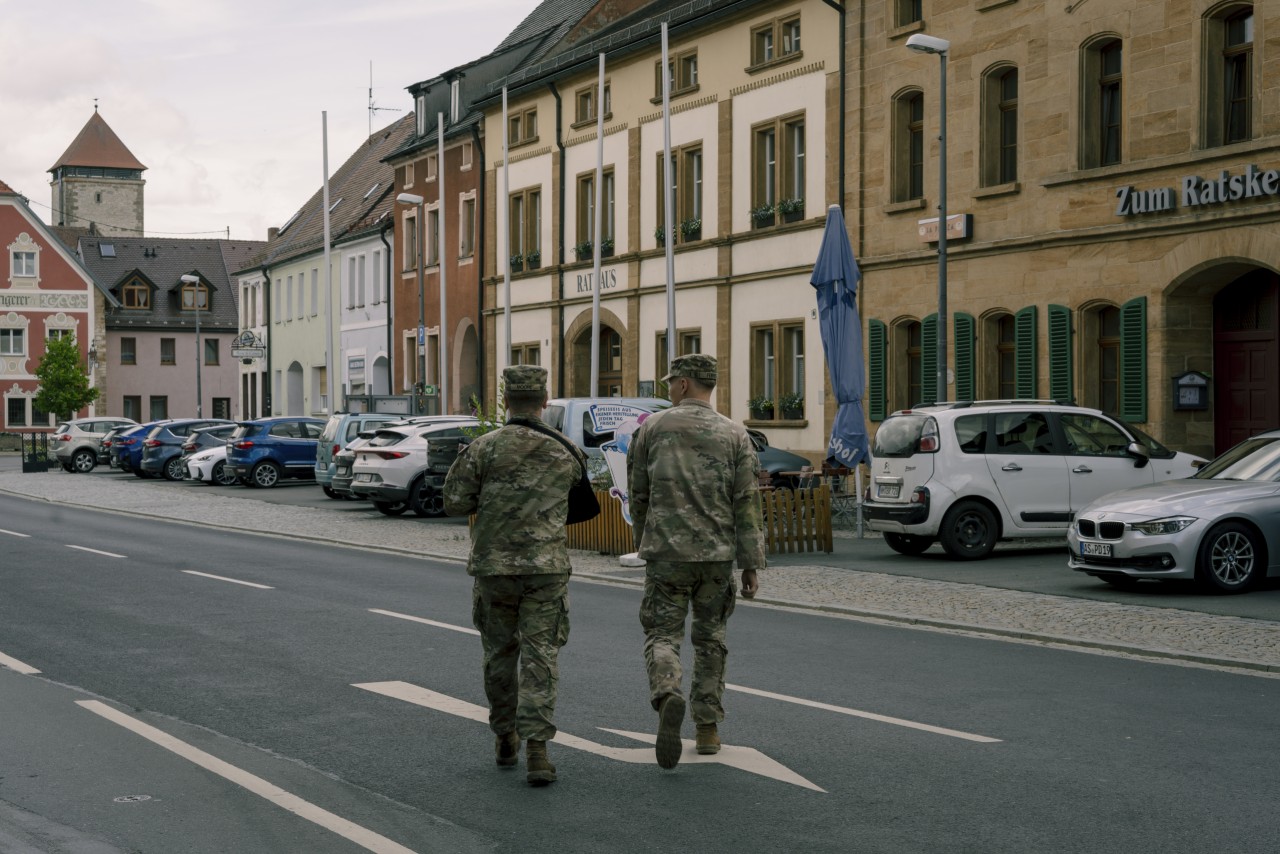
VILSECK, Germany—A line of tattooed, beefed-up men with bushy beards and American accents formed at the bakery in this tiny Bavarian town on a recent May morning. U.S. muscle cars are driven down the medieval streets here, where Americans outnumber Germans 2 to 1.
Enclaves like this sprouted across Germany in areas occupied by U.S. forces after World War II, shaping the society around them for several generations. Elvis Presley served near here in the 1950s and performed at the local pub.
But Germany’s “Little Americas” are dying out.
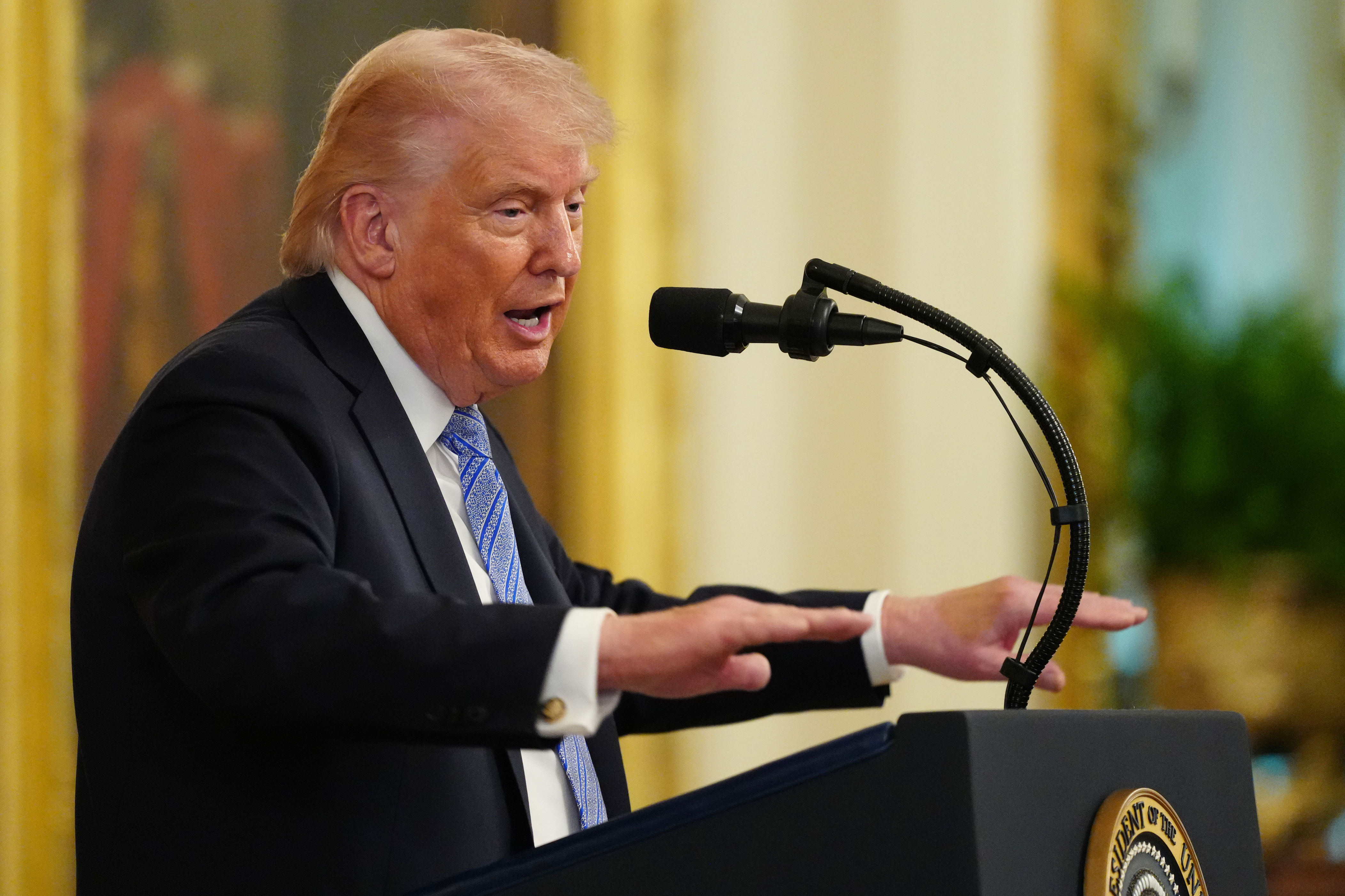
Even before President Trump ordered 5,000 troops out of U.S. bases in Germany in response to criticism of the war in Iran by the country’s chancellor, these islands of American culture had begun to disappear.
After the 9/11 terrorist attacks, U.S. forces retreated inside fenced-off hubs, a process that has segregated them from local communities in the decades since.
Details of the drawdown aren’t public, but German officials say it will likely involve the departure of the 2nd Cavalry Regiment, whose motto is “Always Ready,” and whose troops have been stationed at Vilseck’s Rose Barracks for two decades.
Their exit would represent a significant break in the decadeslong military connection that has given Europe a reassuring U.S. presence on the continent and America the ability to project power across it.
It would also have big implications for the rural community of 6,500 people some 50 miles east of Nuremberg that spreads out from the base. At the town hall in Vilseck, down the road from the Cheers Diner and the 12th-century Dagestein Castle, Mayor Thorsten Grädler was fielding calls on a recent morning from concerned citizens and political leaders about the impending move.
“The situation is dramatic. The people here are really worried,” says Grädler, who grew up celebrating Thanksgiving with American families.
Kayla Overton, public-affairs director for the U.S. Army Garrison Bavaria, referred questions about the Vilseck base to the Pentagon. The Pentagon didn’t respond to a request for comment.
German officials estimate that the Vilseck military complex contributes €650 million to €700 million, equivalent to about $766 million to $825 million, a year to the local economy. Restaurant owners here, whose business suffers whenever the regiment is mobilized for exercises, fear they won’t survive a permanent withdrawal of troops. Others remember the economic shock when large numbers of U.S. troops stationed in Germany left the country at the end of the Cold War.
U.S. troops and German locals had intermarried and settled down, their children went to local schools and played in the area’s sports clubs.
“These deep human ties are the strongest safeguard against populist attempts to divide people,” said Hans Martin Grötsch, a senior Bavarian politician who is also a local councilor.
‘Little ambassadors’
America’s military presence in Germany since WWII is historically unusual, a long-term foreign occupation that permeated and molded both sides.
The German bases were the largest peacetime foreign deployment of American troops abroad, said Thomas Maulucci, history professor at the University of Connecticut who co-edited a book about American GIs in Germany.
“Some authorities described it as a second Marshall Plan for Germany,” given the expenditure involved, he said, referring to the massive American economic aid program for Europe after WWII.
Over 20 million U.S. servicemen and their families have passed through Germany over the past eight decades. At any given time through the 1980s, nearly 300,000 U.S. forces would have been garrisoned in around 900 sites, ranging from airfields to communications outposts and housing complexes.
The bases were meant to guard the so-called Fulda Gap, a corridor between the East German border and Frankfurt that was considered a potential path for a Soviet invasion. But the outposts also introduced Germans to a lifestyle centered on convenience, car culture and consumerism. By employing thousands of locals, these bases cemented America’s soft power victory.
Behind the concertina wire encircling the bases, Germans could experience American bowling alleys and drive-in theaters. The American Forces Network radio broadcast rock ’n’ roll, soul and jazz directly into German living rooms.
When Kathrin Birner was growing up near Vilseck in the 1990s, locals were welcome to wander into the U.S. base to celebrate July 4 or Halloween, she said. New security protocols after the Sept. 11 attacks put an end to that.
“Personally and politically, it was always very reassuring to have the U.S. here,” she said. The soldiers’ presence created “a lot of little ambassadors.”
Since the end of the Cold War, the U.S. presence has dwindled to around 36,000 troops. Entire military communities such as Schweinfurt, Fulda and Giessen withdrew, and the land they had occupied was handed back to Germany. The soldiers who remained became concentrated in fewer, larger bases isolated from local communities.
The troops’ departure was an economic and social shock for local communities, said Marc von Boemcken, head of research at the Bonn International Centre for Conflict Studies, a think tank. More than 70,000 Germans lost their jobs in the early to mid-1990s as a result, according to a 1995 report by the Bonn International Center for Conversion. The U.S. returned enough land to create a new German federal state.
Many of these sites have since been converted to housing developments or business parks, while others, like the Benjamin Franklin Village in Mannheim, have become modern residential quarters. Hahn Air Base, one of the largest U.S. Air Force installations in Germany through the early 1990s, is now a civilian airport.
Former bases with good connections to urban centers fared relatively well, whereas remote communities struggled more, von Boemcken said. “Vilseck is quite remote. The lessons from the past suggest that the concerns of local mayors are real and should be taken seriously,” he said.
Shock waves
The Vilseck military complex encompasses a barracks at the nearby town of Grafenwöhr and one of the largest training grounds in Europe, featuring high-tech live-fire ranges for tanks, artillery and aircraft. It has recently been used to train international partners, including Ukrainians.
“The mood is low for everybody,” said Chrysovalantis Pessianis, a restaurant owner. “Everything is centered on the Americans.”
His restaurant, the Funky Burger, is located minutes from Rose Barracks—named for Maj. Gen. Maurice Rose, the highest-ranking Jewish officer in the U.S. Army at the time of his death in 1945. Some 90% of the restaurant’s revenue comes from Americans. Business hours are tailored to the soldiers’ schedules.
Pessianis worries that he won’t recoup the €15,000 he invested on refurbishments, and may need to let three staff go. He lost about two-thirds of his revenue in March and April when the troops were away in training in Eastern Europe. Several restaurant owners are planning to sell their businesses and leave, he said.
Analysts say that the troop withdrawals hurt the U.S. more than Germany; the bulk of U.S. forces in the country are focused on projecting American power globally, not protecting Germany.
Secretary of State Marco Rubio said Friday that the drawdown represents less than 14% of the total U.S. troop presence in the country and takes levels “back to where we were in 2022” before Russia invaded Ukraine.
For some in Vilseck though, the decision is symptomatic of a deeper U.S.-German divide that has emerged during the current Trump administration.
“I always loved to work for the Americans,” said Wolfgang Dagner, 61, a logistics specialist and the third generation of his family to work for the U.S. military. In the past 15 months, he said, “The reputation of the U.S. has dipped…we are moving a little bit away from each other.”
Write to Tom Fairless at tom.fairless@wsj.com