When Lincoln Riley left Oklahoma for USC, the move was viewed as one of the biggest coaching wins in modern college football.
USC believed it had landed the coach who would immediately restore the program to national championship relevance. Riley arrived in Los Angeles with a 55-10 record at Oklahoma, four Big 12 championships and three College Football Playoff appearances in five seasons.
At the time, the hire felt inevitable. USC needed an offensive innovator with star power, and Riley represented exactly that. Now, entering Year 5, the conversation has changed completely.
Riley has gone 35-18 at USC, a respectable record at most programs. At USC, it feels disappointing. The Trojans improved to 9-4 last season after going 7-6 in 2024, but improvement alone is no longer enough. USC did not hire Riley to be respectable. It hired him to compete for national championships.
That is why 2026 feels like a defining season.
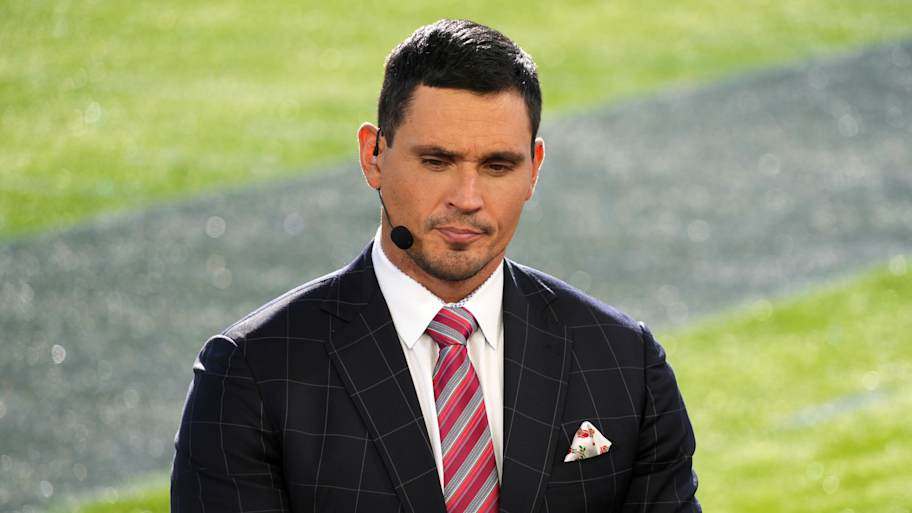
David Pollack made that clear while discussing Riley on "See Ball Get Ball with David Pollack."
"Lincoln came with all of the sizzle," Pollack said. " The sexiness, right? Leaving Oklahoma the way he did, like that, was a big feather in the cap. Then they haven't gotten what they thought they would get. They thought they would return (to greatness)... This has got to be the year. It's got to be the year for USC. They got to perform for sure."
Pollack is right.
The issue is not that USC has been terrible under Riley. The issue is that the program has not looked any closer to becoming a dominant national power. In many ways, USC feels stuck in the exact same cycle Riley had at Oklahoma late in his tenure.
Elite quarterback play and explosive offense paired with inconsistent defense and frustrating losses. Last season perfectly illustrated that reality.
USC ranked No. 8 nationally in total offense, No. 5 in passing offense and No. 13 in scoring offense. Quarterback Jayden Maiava threw for 3,711 yards, 24 touchdowns and 10 interceptions while helping stabilize the offense.
Yet despite all of that production, the Trojans still finished with four losses because the defense once again failed to consistently hold up against quality competition. That has become the defining issue of Riley’s career. His offenses almost always work. His defenses almost never reach a championship level.
This offseason, USC attempted to address that problem again after losing defensive coordinator D'Anton Lynn to Penn State. Riley hired former TCU coach Gary Patterson, one of the most respected defensive minds in college football over the last two decades. That move signals urgency.
Programs do not bring in veteran defensive architects unless they know the pressure is mounting internally. USC understands the roster is talented enough to compete immediately. The administration also understands Riley is entering dangerous territory where perception begins turning permanently negative.
That is the challenge with massive expectations. Once fans stop viewing a coach as the solution, every season starts feeling like evidence of failure instead of progress. Riley is approaching that point.
What makes this situation more complicated is that USC has invested heavily in football. NIL resources, recruiting support and transfer portal additions have all improved dramatically compared to when Riley first arrived. There are fewer excuses available now than there were two years ago.
Even Riley acknowledged this offseason that USC finally has a roster capable of competing at a championship level. That statement matters because it increases the pressure even more. If this is truly the roster Riley believes can contend, then anything short of a major breakthrough becomes difficult to defend.
The reality is simple. USC does not want to merely compete for playoff spots. It wants to become the face of college football again. That is the expectation attached to the program, and it is the expectation Riley accepted when he left Oklahoma.
Now he has to prove he can deliver it.
Otherwise, what once looked like a home run hire may ultimately be remembered as one of the most disappointing coaching eras in modern USC history.
This article was originally published on www.si.com/fannation/college/cfb-hq as David Pollack Names Major College Football Coach Running Out of Time.