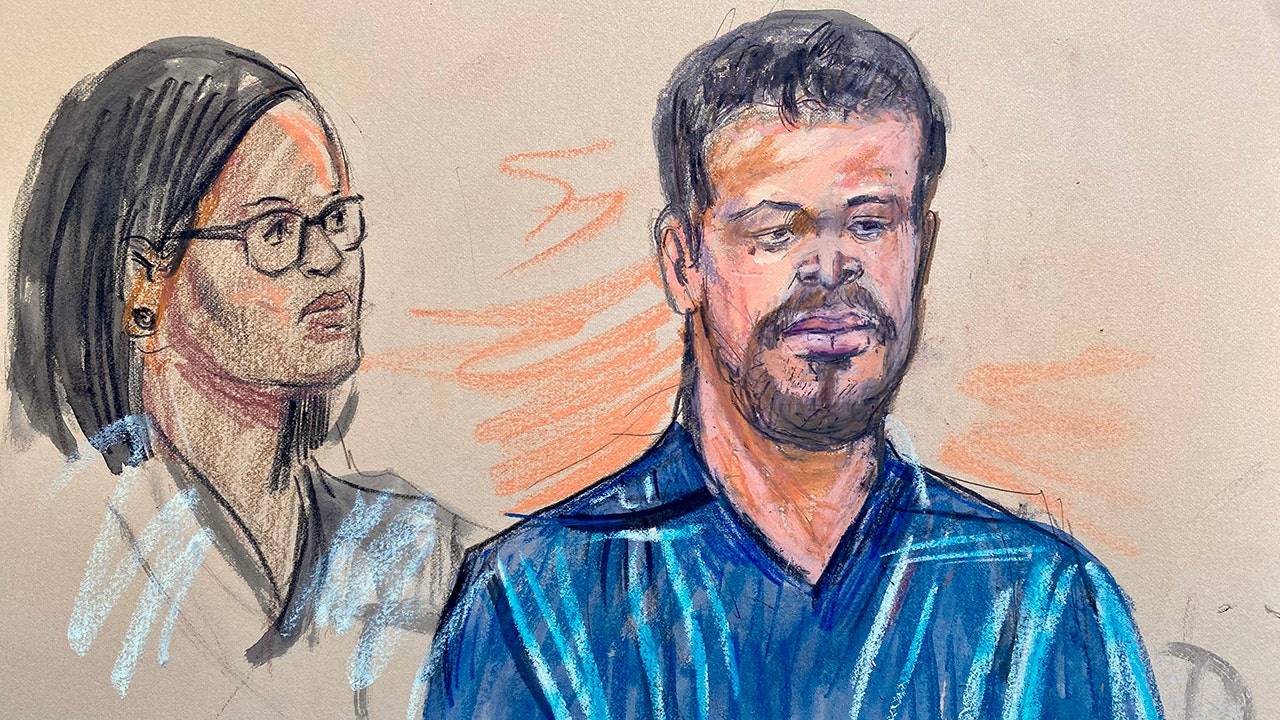
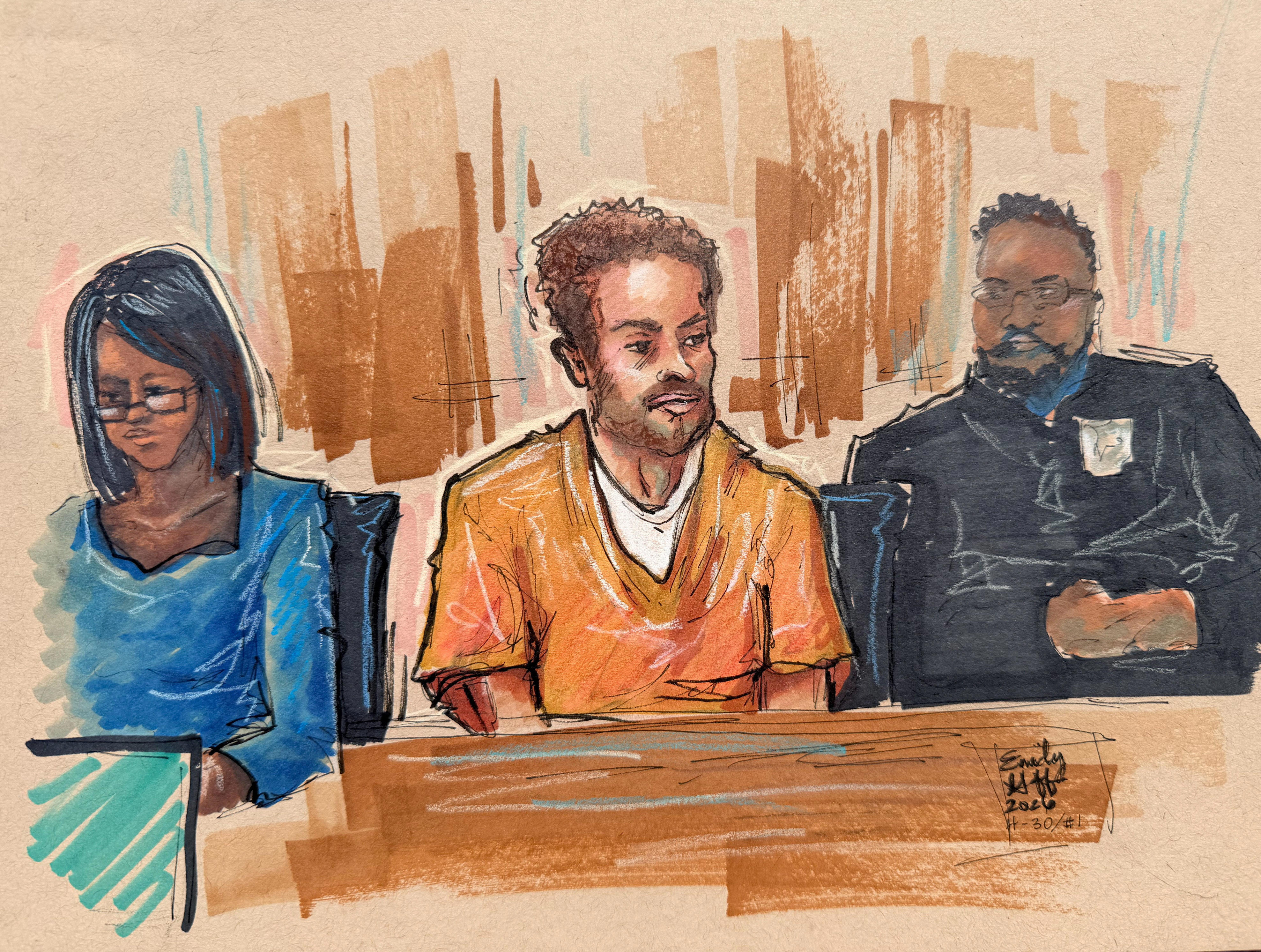
WASHINGTON − A federal judge apologized to Cole Tomas Allen, the man accused of attempting to assassinate President Donald Trump, during a May 4 hearing and grilled a jail representative over the conditions Allen has faced since his arrest.
"I'm sorry," Magistrate Judge Zia M. Faruqui told Allen, who was wearing an orange jumpsuit over a white shirt, after Allen's lawyer described jail conditions that included having been kept alone in a cell and being denied access to a Bible.
"Whatever you've been through, I apologize for the prior week," Faruqui said at one point.
Start the day smarter. Get all the news you need in your inbox each morning.
Faruqui ordered the government to provide an update by 9 a.m. ET on May 5 about when a final determination will be made about where Allen will be housed in the Washington, DC jail. If the jail decides Allen should be treated in ways that are more restrictive than his lawyers believe are appropriate, Faruqui said he will want to know why.
Multiple times during the hearing, Faruqui likened Allen's case to defendants who were accused of attacking the U.S. Capitol on Jan. 6, 2021, saying those defendants were generally treated much better than Allen, who has no criminal history, has been so far.
"This is not the jail's first go around with people engaged in alleged political violence," Faruqui said.
"Pardons may erase convictions, but they do not erase history," he added, referring to Trump giving nearly all defendants charged with Jan. 6-related crimes a full pardon on his first day back as president in 2025.
Allen's lawyers describe major jail restrictions
Faruqui ordered the hearing for noon ET on May 4, even after Allen's lawyers said May 3 that they were dropping their request for it because they learned Allen is no longer on "suicide status" in the jail.
Faruqui said in his order that he still had "grave concerns" about Allen's "seemingly unprompted solitary confinement for days and overall conditions of confinement." The judge added that a representative of the DC Department of Corrections needed to be present at the hearing to explain Allen's confinement conditions.
Earlier May 3, Allen's lawyers said in a filing to the Washington, DC federal district court, which is handling Allen's case, that he was repeatedly screened and cleared of being a suicide risk, and yet the jail was still keeping him under suicide-preventive restrictions that were blocking him from getting personal items, tablets, phone calls, non-legal visits, or dimmed lights.
"Finally, Mr. Allen is forced to be escorted to the shower, strip searched when entering and exiting his cell, and wear a padded vest while inside," according to the motion, which was signed by federal public defender A.J. Kramer and Allen's two court-appointed lawyers, Tezira Abe and Eugene Ohm.
"These conditions are excessive restrictions on his liberty that serve no justifiable purpose and deprive Mr. Allen of dignity while incarcerated," they added.
'It could drive a person crazy'
Acting General Counsel for the DC Department of Corrections Tony Towns spoke of Allen's conditions. He said a medical provider assessed Allen and that he was initially placed on suicide watch before being downgraded to a suicide-prevent status. He said evaluations of Allen are ongoing and the jail's main concern is Allen's safety and health.
A housing board will make a final determination about where Allen should be placed, Towns said.
"Every case is different," Towns added.
Federal prosecutor Jocelyn Ballantine raised two points in defense of the initial suicide-related restrictions on Allen. She alleged that Allen told FBI agents he didn't expect to survive the attempted assassination of Trump, and that an email he scheduled to be sent before the attack referred to him likely not being able to talk to his friends and family later.
Faruqui praised Ballantine as a "professional" and told Towns not to interpret his frustration as a personal comment, adding that Towns doesn't have control over Allen's conditions.
But Faruqui also said the reported conditions were the "functional equivalent of solitary confinement."
"It could drive a person crazy to be in that situation," Faruqui said at one point.
Defense lawyer Ohm said at the hearing that a correctional officer printed out some pages of scripture for Allen, but he still doesn't have a Bible. Allen had also asked for a chaplain May 3 and still hasn't seen one, according to Ohm.
Towns confirmed later at the hearing that he'll make sure Allen gets a Bible.
Next steps for Allen
Allen is being held in jail ahead of his trial, which hasn't yet been scheduled, after he dropped his fight against pretrial detention on April 30. The next event scheduled in his case is a preliminary hearing May 11, where prosecutors may call witnesses and introduce evidence to persuade a judge that Allen probably committed the alleged crimes, and therefore the charges should be allowed to go forward.
Allen faces attempted assassination and firearm charges after prosecutors say he attacked the White House Correspondents' Association dinner at a Washington, DC, Hilton hotel April 25. He was arrested after firing a shotgun in the direction of stairs leading to the ballroom dinner area, prosecutors said in an April 29 court filing.
If convicted, Allen could spend the rest of his life in prison.
This story has been updated with additional information.
This article originally appeared on USA TODAY: Judge grills DC jail on treatment of shooting suspect Cole Tomas Allen