
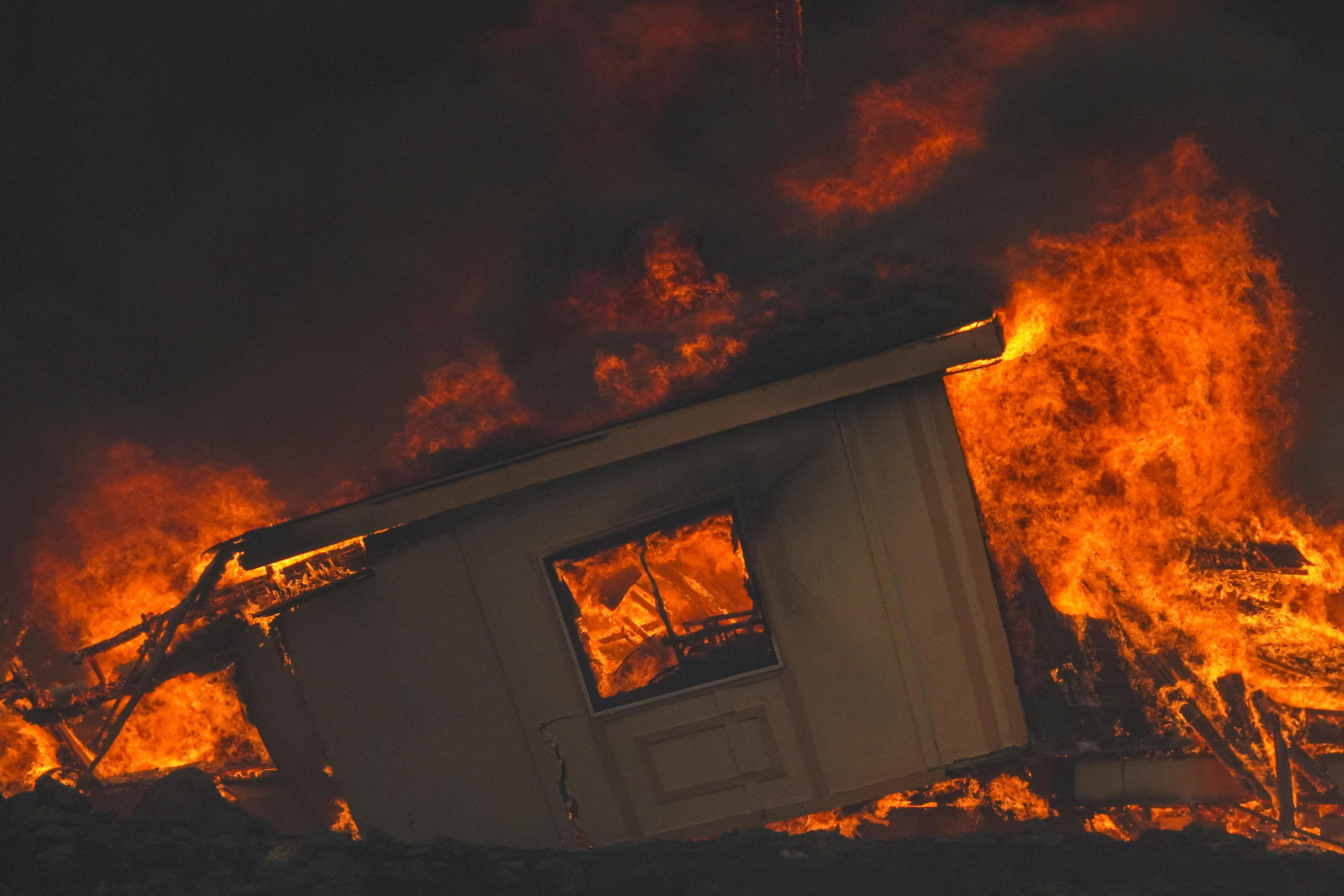
More than a year after the devastating wildfires in Los Angeles County, California is looking to implement rules that would require residents statewide to make some modifications outside their homes to help reduce the risk of a fire.
The new, proposed rules are for an area called Zone 0, and it refers to the first 5 feet around a structure such as your home, according to Cal Fire and the California Board of Forestry and Fire Protection. Legislation in California required the creation of Zone 0, according to the board.
In short, Californians in specific areas statewide could be required to remove what are considered “combustible materials” outside their home — like bark, mulch or wood chips — and follow some maintenance requirements over plants and trees in this immediate area around their residence.
Start the day smarter. Get all the news you need in your inbox each morning.
The updated draft regulations for Zone 0 were released by a subcommittee of the board in April.
Previous drafts for Zone 0 regulations called for stricter requirements on what would be permitted outside your home. For example, a version earlier last year didn’t allow grass and ornamental or native plants within Zone 0, which were considered to be among the “landscaping materials” likely to be ignited by embers, and trees weren’t going to be allowed — though there were some exceptions.
“This area is the most critical zone for protecting a home, and neighborhoods, during a wildfire,” said Board Chair Terry O'Brien in a statement about April’s updated draft proposal. “We’ve taken a thoughtful, science-based approach to develop proposed standards that will meaningfully reduce risk while still being practical for homeowners.”
Here’s what you need to know, including how to participate in an upcoming meeting about this latest draft of Zone 0.
Zone 0 is not a unique idea for California. Why?
California already has requirements in place for larger stretches of the area surrounding a home in the form of Zone 1 and Zone 2. These zones are considered defensible spaces, or “an area around a structure where fuels are removed or reduced to provide a buffer between a structure and the surrounding area that is vital for protecting homes and communities from wildfire,” according to the board.
“Adequate defensible space acts as a barrier to slow or halt the progress of fire that would otherwise engulf a home or structure,” according to the board.
So, why is Zone 0 needed? According to the board, it’s to reduce the likelihood of the structure igniting in several ways, particularly in the case of wildfires driven by embers blowing around. For example, it reduces ignition by embers that accumulate at the base of a wall or by embers igniting vegetation or other items located close to the structure.
What could change with Zone 0?
The regulation — again, currently in a draft form — is “designed to protect the most flammable parts of structures,” according to Cal Fire, such as vents, eaves, windows and the base of walls.
“It will involve keeping the area closest to your home clear of combustible materials,” according to Cal Fire.
That means clearing away mulch, dead leaves and branches, wood chips and other “combustible items” that are within 5 feet of your home and removing dead and dying plants under Zone 0, according to the board.
Zone 0 would also require some Californians to create a “safety zone”— the area directly next to your home and extending the width of your building's eaves — where no vegetation would be allowed, according to the board and Cal Fire.
There are some other regulations about tree and plant maintenance under Zone 0, and Californians would have to make changes to things like fences and sheds. For example, if you have a wooden gate attached to your home, you may have to replace it with a non-combustible metal gate, according to the board.
The proposed regulation will apply to homes in the "State Responsibility Area" and "Very High Fire Hazard Severity Zones in the Local Responsibility Area," according to the board. This refers to the maps that classify California lands into levels of hazard based on the factors that influence the likelihood of a fire and fire behavior, according to Cal Fire. You can find your Fire Hazard Severity Zone by inputting your address on Cal Fire’s Office of the State Fire Marshal’s website, and you can also view maps for the Local Responsibility Area on the website.
When would Zone 0 go into effect? First, an April 23 meeting
New construction will be required to comply with this regulation upon its adoption, according to the board. However, compliance for existing homes and structures will be phased in over several years.
Californians can participate in a discussion about the draft Zone 0 regulations on Thursday, April 23. Cal Fire’s Zone 0 regulatory advisory committee will hold a meeting in Calabasas that people can attend in-person, and the meeting will be streamed live and available online.
Paris Barraza is a reporter covering Los Angeles and Southern California for the USA TODAY Network. Reach her at pbarraza@usatodayco.com.
This article originally appeared on USA TODAY: California eyes ‘Zone 0’ rules for fires. What it means for homeowners