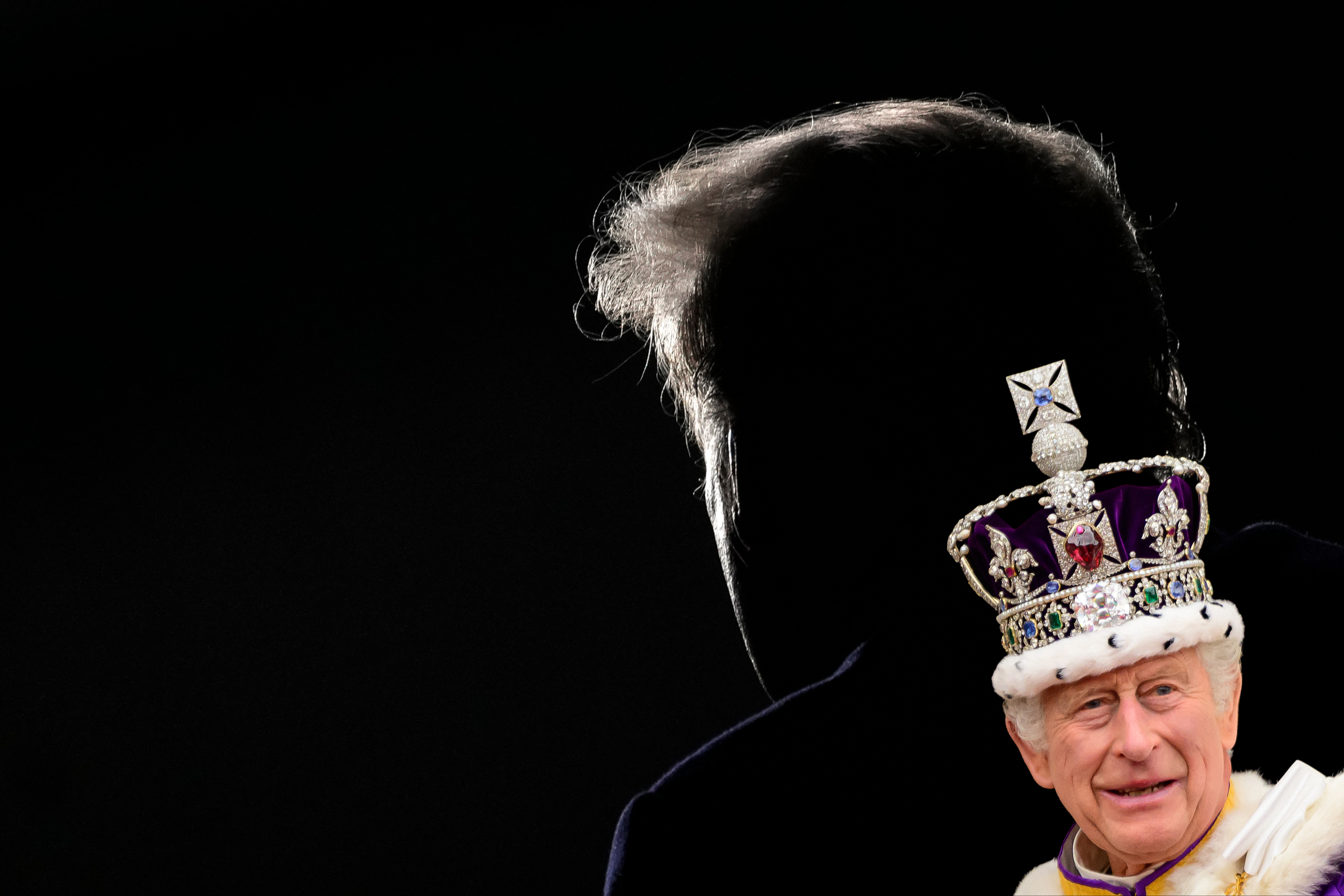
For all its carefully staged choreography, King Charles III’s state visit to the United States comes against a backdrop of conflict and a “special relationship” under visible strain.
The tour—featuring garden parties, a “block party” and, in a more solemn moment, 9/11 commemorations—will unfold against a backdrop of growing tension between London and Washington, with the United Kingdom doubling down on its refusal to join President Donald Trump’s war in Iran. In turn, the U.K., in particular Prime Minister Keir Starmer, has become one of the president’s primary punching bags.
That has all set up Charles for perhaps the biggest diplomatic challenge of his reign, and indeed that of any British monarch in the post-World War II era.
“Short of the visit made by His Majesty the King [George VI] in 1939, I would say this is the biggest and most important visit pretty much any monarch has made to America,” Robert Jobson, author of Our King: Charles III, told Newsweek.
The visit also comes hot on the heels of a gunman attempting to storm the White House Correspondents’ Association dinner in the ballroom of the Washington Hilton on Saturday evening, where Trump, first lady Melania Trump, Vice President JD Vance, Secretary of State Marco Rubio and other members of the president’s Cabinet were in attendance.
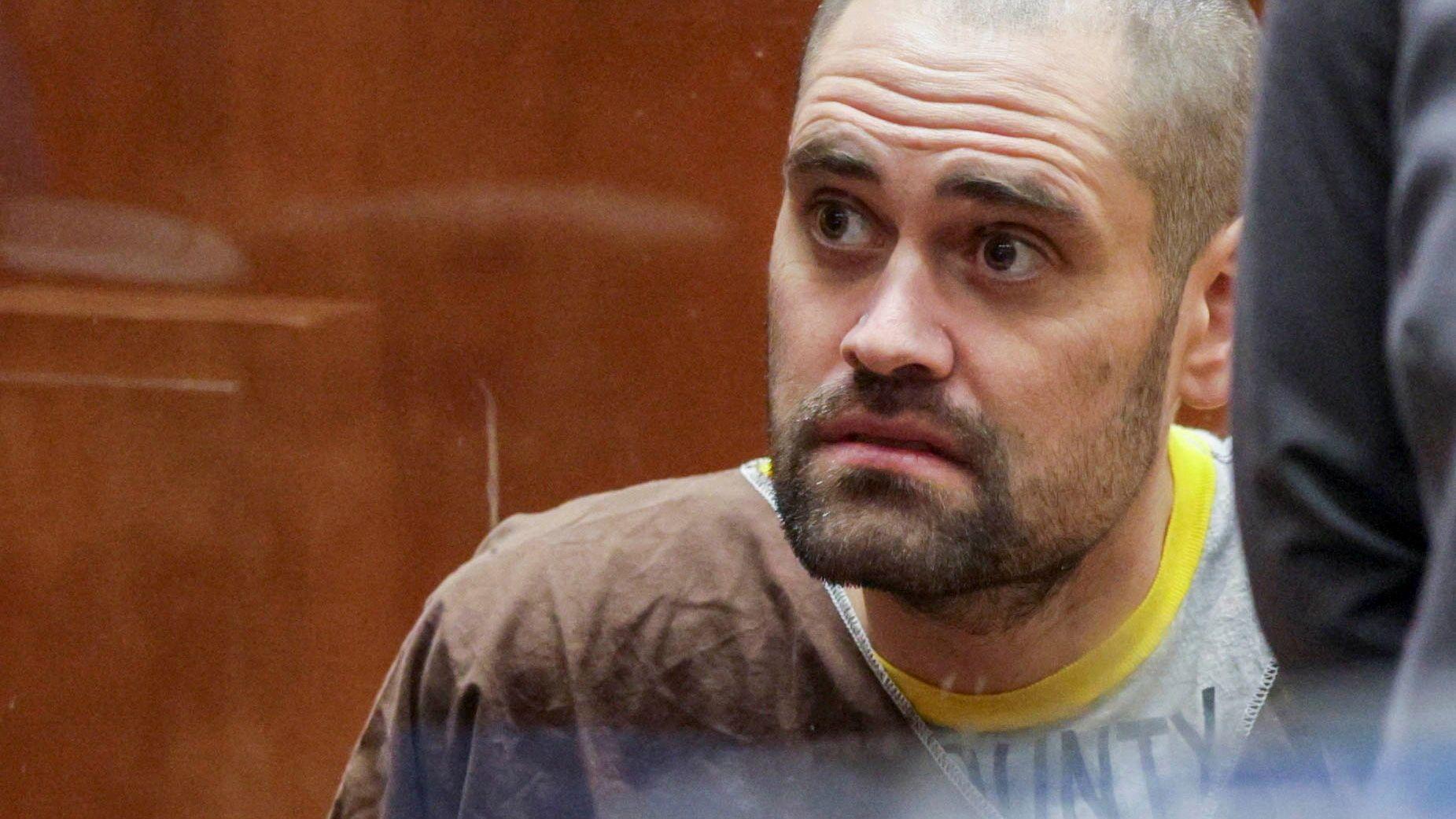
The alleged shooter, Cole Tomas Allen, a 31-year-old teacher from Torrance, California, was stopped by Secret Service officers before he could enter the ballroom.
Allen is due to appear in court today on multiple firearms charges. President Trump described him as as a “lone wolf” and a “whack job” who “hates Christians.”
The incident has heightened security concerns around what was already set to be a highly charged visit by King Charles. However, following urgent security discussions on Sunday, it was decided the trip would continue as planned.
A Buckingham Palace spokesperson said: “Following discussions on both sides of the Atlantic through the day, and acting on advice of Government, we can confirm the State Visit by Their Majesties will proceed as planned. The King and Queen are most grateful to all those who have worked at pace to ensure this remains the case and are looking forward to the Visit getting underway tomorrow.”
The king and queen reached out to the president and first lady privately following the incident to express their sympathies.
Tense Exchanges
Starmer and Trump have been swapping barbs since the beginning of the conflict with Tehran. Trump criticized the prime minister’s initial refusal to let the U.S. use U.K. military bases, including Diego Garcia, to launch strikes against Tehran. “I’m not happy with the U.K.,” Trump said, adding, “the U.K. has been very, very uncooperative with that stupid island that they have.” Comparing Starmer with Britain’s World War II leader, he said: “This is not Winston Churchill that we’re dealing with.”
The president also told The Sun newspaper, “It’s very sad to see that the relationship is obviously not what it was.” Though in the middle of one swipe at Starmer—at a White House Easter lunch, where he claimed the prime minister said he needed his team’s permission to send aircraft carriers to the Middle East—Trump spoke of the April 27-30 state visit positively, saying, “The king is coming over here in two weeks, he’s a nice guy, King Charles.”
Trump has known the king for years. They spent time together during the president’s first state visit to Britain in 2019, and Trump gave an insight into Charles’ conversational style after his September 2025 visit, when he stayed at the royal residence of Windsor Castle, telling Fox News: “I think he was more interested in trade, you know, he loves the environment too, he talks about that a lot, but he was more interested in trade than anything else.”
Trump’s love of the royals dates back further, though, thanks to his Scottish mother, Mary Anne MacLeod. He told a press conference last year that she “loved the Queen [Elizabeth II, Charles’ late mother]. Whenever the queen was on television, she wanted to watch.”
Indeed, one area of concern over the potential diplomatic outcome of Charles’ visit comes from Trump letting slip recently that he did not realize it was at the request of the U.K. government, seemingly believing the king was simply a good friend who wanted to join the 250th celebrations. Charles is Britain’s head of state and goes where its government asks him. A big part of the monarchy’s ongoing appeal in the 21st century comes from the respect international leaders still hold for the crown and the diplomatic doors that can be opened as a result. The U.K.’s Conservative Party made ample use of the royals during the Brexit era, sending them around Europe to curry favor during negotiations over Britain’s exit from the European Union. Starmer has been just as keen to deploy royal charm in relation to Britain’s most important alliance—with America.
Mark Stone, Sky News U.S. correspondent, described a phone conversation he had with the president on Sky’s Trump100 podcast. “I sort of asked him whether he thought the strained relationship with Keir Starmer was going to have an impact on the visit, and he said, ‘Not at all. I’ve known the king a long time. He’s not involved in that process, the politics,'” Stone said.
“But then I said, ‘But he’s been asked to come here to America by Downing Street, by the prime minister.’ And the president said, ‘I don’t know who asked. I mean, I didn’t realize that, but…. It’s my honor to have him at the White House.’
“So it appeared to me he wasn’t entirely clear of the process that the king hasn’t just come here for a jolly. The king has come here on, you know, government business effectively.”
Meanwhile Starmer has hit back at Trump’s barbs and criticized the president’s actions in the Middle East—and will be hoping that the king’s visit can help repair the frayed relationship between the nations.
When Trump threatened to “wipe out a whole civilization” in Iran, the prime minister told ITV, “They are not words I would use, ever use, because I come at this with our British values and principles.” Later, turning to the domestic economic consequences of the conflict, Starmer said: “I’m fed up with the fact that families across the country see their bills go up and down on energy, businesses’ bills go up and down on energy, because of the actions of [Russian President] Vladimir Putin or Trump across the world.”
In the wake of Starmer’s refusal to support the U.S. military action, Trump made threats to trade—and the special relationship—with London. “It’s the relationship where when we asked them for help, they were not there…. And they still aren’t there,” he told Sky News in an April 15 interview. “We gave the U.K. a good trade deal. Better than I had to. And it can always be changed.” Addressing Britain’s parliament later that day, Starmer hit back: “It is not our war, and a lot of pressure has been applied to me to take a different course, and that pressure included what happened last night.
“I’m not going to change my mind. I’m not going to yield.”
While Starmer might be pinning Charles’ diplomatic success on Trump’s love of the royal family, expectations of what the monarch can achieve in moments of war have long been tightly constrained by convention. When the U.K. joined the U.S.-led invasion of Iraq in 2003, Queen Elizabeth resisted calls to weigh in publicly, maintaining the monarch’s apolitical role even as the conflict provoked deep divisions at home and abroad. She instead offered private support to service members and their families..
National Interest at Stake
The king has already become Starmer’s single biggest asset in pursuing national interest in relation to its most significant ally. After Trump’s state visit in September, the nations deepened economic ties, with the U.K. securing U.S. investment worth £150 billion [around $200 billion] and the president and Starmer signing a “Tech Prosperity Deal.” Though in December, the U.S. paused the deal due to trade barriers in the U.K., the Wall Street Journal reported.
Robert Hardman, who interviewed Trump about the royals for his latest book, Elizabeth II: In Private. In Public. The Inside Story, and told Newsweek, said he felt the prospects of Charles achieving movement on policy were slim. “What’s he going to get out of it?” Hardman asked on Newsweek’s The Royal Report podcast. “Quite possibly not very much or nothing at all.”
Opposition politicians in the U.K. had urged the king and Starmer to cancel the visit, which marks 250 years since the Declaration of Independence, to avoid giving Trump a PR win at a time of open diplomatic hostility.
But the consequences of canceling the state visit could have been greater, Hardman said. “What we won’t know is the downside or the damage that would be caused by not going. Because Donald Trump is a huge fan of the monarchy,” he said.
“He has very high regard for the king as well and he is the only U.S. president to have two state visits to the U.K.”
Some might question the prospects of a diplomatic mission that Trump does not actually acknowledge is taking place.
“Everyone is welcome to a view,” a royal insider told Newsweek, “the nation is divided on whether we should be going or not, but we are going on government advice and this will hopefully be a demonstration and a test of the king’s diplomacy.
“There have been moments in the White House over the past few months but I expect President Trump will want the visit to go as well as we do.”
Jobson went further. “The king is somebody who is able to do an awful lot in terms of shifting goalposts,” he said. “He’s somebody people listen to because he’s very experienced. I think Trump listens to no one, but I do think that he used to hear the late Queen.
“I think that he certainly respects and hears what Charles has to say. Whether it makes any difference to what Trump does, I should imagine that’s not going to be the case. But he certainly would listen to him.”
Potential for Embarrassment
There have also been questions over whether Trump might embarrass the king by discussing his hostility to Starmer in front of the cameras, though the royal insider played this down.
“We have our lived experience of the inward state visit by President Trump,” they said. “Certainly geopolitics wasn’t quite as complex as it is today, but the other thing we do know is that the Trumps and their whole traveling party were incredibly respectful, incredibly enthusiastic about ways we could support one another to make sure the visit went as well as possible.
“I expect that same spirit will be taken forth into the return hospitality.”
Hardman agreed. On Trump’s two state visits to the U.K. “he went out of his way to be on his best behavior, if you like. He switched the phone off, there was no social media stuff, no tweeting. For him that was a big deal and this state visit is a big deal. So to cancel it would go down extremely badly,” Hardman said.
“People talk about, ‘Oh, well, he might embarrass the king.’ I would wager he won’t embarrass the king. He will do his very best to be a gracious host.”
Jobson shared this sentiment, but added Trump could wait until Charles has left the U.S. “The speeches both in the White House and the Congress are going to be quite powerful and very, very carefully written,” he said.
“But when Charles leaves American airspace…well, that’s when I would have thought the fireworks would come out, because I’m sure Trump will say, ‘Oh, yeah, the king told me that he thinks Starmer’s a Judas or he thinks Starmer’s an idiot.’ And that’s when it becomes an issue.
“But there’s plausible deniability because the king would say he never said that.”
A Double Victory?
Charles and Queen Camilla’s tour begins in Washington, D.C., where they will be welcomed by the president and first lady Melania Trump with an informal private tea before attending a garden party.
There will later be a formal military ceremony, mirroring the choreography the British royals themselves lay on during state visits.
Charles will give a speech to a joint meeting of Congress—only the second time a British monarch has done so, the last time being Elizabeth’s speech in 1991.
There will be a state dinner at the White House before the royals head to New York, where they will commemorate victims of the 9/11 terror attacks.
The state visit concludes in Virginia, where the king and queen will attend a block party to celebrate America’s 250th birthday.
Beyond the formal choreography, there is a very clear prize for Charles if he can secure a better relationship between Britain and America’s head of state. Long term, if the history books record that the monarchy’s charm on the global stage won concessions for the nation, then Britain’s political elite, present and future, will take note for years to come.
For Trump, the victory will be secured simply by the king’s presence. Asked how he was feeling ahead of the visit, Trump told Sky: “Great. He’s a great gentleman, a friend of mine. He’s a fantastic person.”
Related Articles