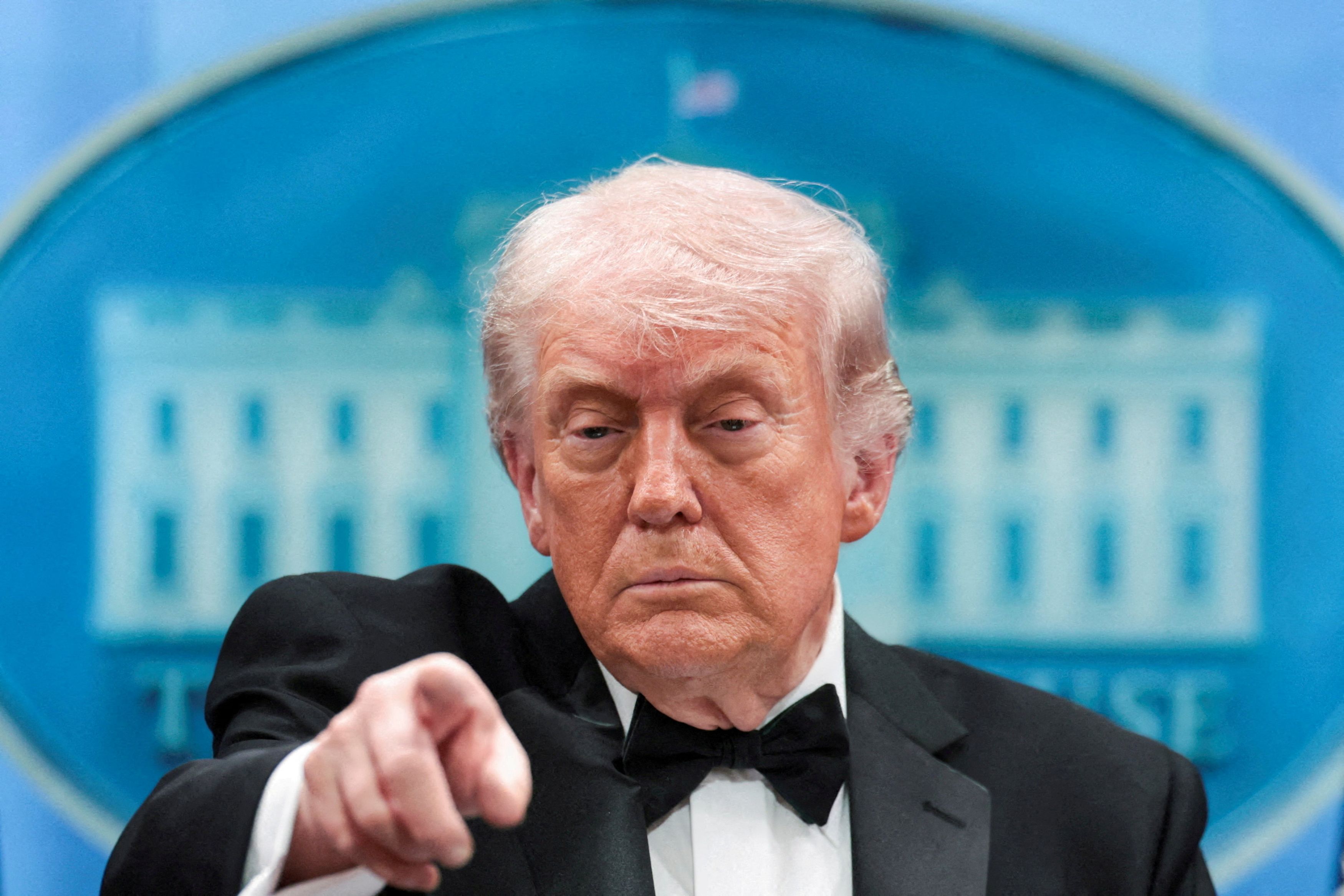
U.S. President Donald Trump’s Iran war has given Liu Zhou another reason to be happy with the electric vehicle he uses daily as a driver for the DiDi ride hailing app in China.
“Gas prices have gone up a lot now. If you drive a lot, then the electric vehicle is the best option,” he told Newsweek on a trip in the southern city of Changsha. “Electric vehicles are still more expensive to buy, but gas vehicles are only worth buying for someone who is not going to use it often. I have to use an electric vehicle.”
Gas price rises because of the U.S.-Israeli war against Iran are showing how China’s two-decade-old bet on EVs is paying off in a big way and helping insulate the country somewhat from the full economic impact of the conflict launched by President Donald Trump, which will be central to his landmark summit in Beijing this month with Chinese counterpart Xi Jinping.
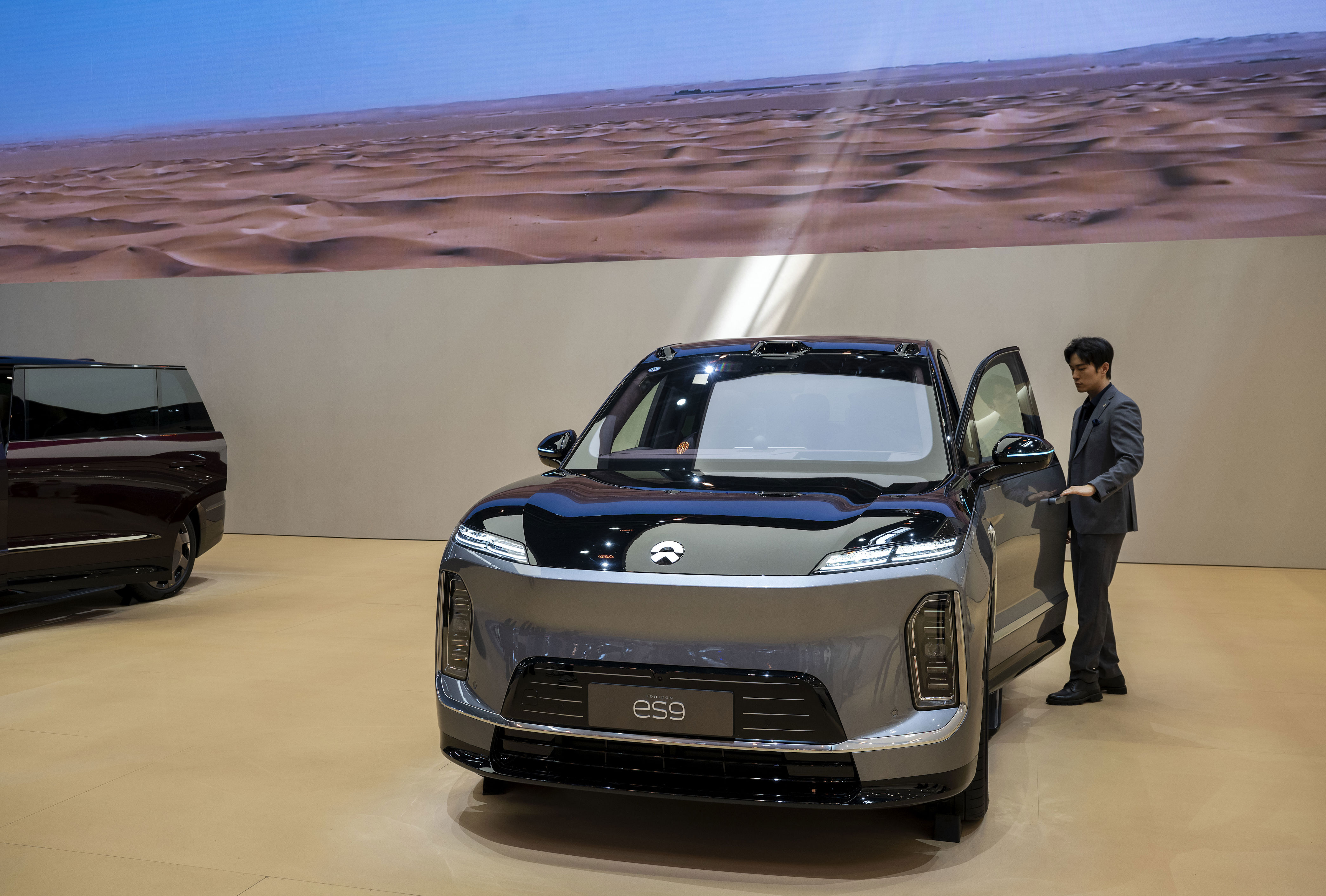
The higher world gas prices are also giving another lift to what had already become by far the world’s largest EV industry even as it struggles with low profit margins because of intense competition, with improving prospects for sales both at home and in export markets.
“The gas price getting higher definitely helped new energy vehicle sales, both domestically and overseas,” Yu Zhang, managing director of the Automotive Foresight vehicle consultancy in Shanghai told Newsweek.
The Iran war threatens to push the world into its gravest energy crisis in decades, with shipments of oil blocked through the Strait of Hormuz, which previously carried around a fifth of global seaborne oil and natural gas exports—including not only Iranian crude, of which China was the biggest buyer, but also oil from Gulf Arab countries that were bigger suppliers to China.
For China’s fossil fuel-burning drivers, that pushed up fuel prices at the pump for both gasoline and diesel by nearly 20 percent, although they have recently dropped a little to the equivalent of around $5 a gallon for gasoline and $4.50 for diesel—still slightly lower than U.S. averages.
But ever more drivers in China are adopting EVs, their presence evident from the increasingly ubiquitous green number plates and the fact that city roads have grown much quieter with the dwindling of internal combustion engines, though still punctuated by the frustrated honks of those caught in congestion that the shift to electric has not eased.
China’s overall shift to electric at a time the United States is doubling down on fossil fuels limited the Iran war’s impact and put China in a better position than it otherwise would have been, said American businessman Manuel C. Menendez, who has been working in the country since 1979.
“China is the world’s leader in renewable energy—solar, wind, hydro, geothermal and now building 45 nuclear plants—so they have pivoted away really from fossil fuels. Not 100 percent because it will take a time to transition, but the impact won’t be as great as people anticipate,” he told Newsweek in Beijing.
“I think they’ll come out at the other end probably better than any other major economy.”
China’s EV industry has taken off spectacularly after some two decades of investment and state support for what began as a niche industry. China focused on electric cars because it understood it would not be able to compete with the traditional auto makers.
With the additional spur from the rising fuel prices, China’s new energy vehicle penetration rate reached a record 62.8 percent of total sales in April, according to data from the China Passenger Car Association cited by Cnevpost. By contrast, EV sales in the U.S. are less than 10 percent of the total.
“Persistently high international crude oil prices are spurring consumers to accelerate their shift from traditional internal combustion engine vehicles,” Cnevpost quoted the Chinese report as saying.
China’s BYD overtook Tesla last year as the world’s biggest electric carmaker: it sold more than 2.25 million vehicles worldwide compared to 1.64 million for Elon Musk’s firm. China’s brands are cheaper, but are also building a growing global reputation for quality.
However, the rapid growth of the EV industry has also led to intense competition internally, overcapacity and falling profitability, putting manufacturers under pressure for domestic sales and to build bigger overseas markets.
“The domestic phase is just hyper-competition, and as a result of that, BYD, Geely and so on, nobody’s having a good time,” said Li Shuo, director of China Climate Hub at the Asia Society Policy Institute.
“The international aspect is quite the contrary…. They’re highly successful, technologically advanced and are able to deliver some of the most cost-competitive products in the global market,” Li told Newsweek. “The difficult, challenging domestic phase actually reinforces the formidable, internationally facing image of Chinese companies.”
Chinese automakers are still waiting for meaningful car export sales figures to show the impact of the Iran war globally, but there is already some small indication from a surge in regional exports of two-wheelers—the kind of quiet electric scooters now crowding Chinese streets in a way that pedal bicycles did in past.
Chinese electric two-wheeler exports to neighboring Myanmar rose nearly 620 percent to $9.5 million, with increases to Laos of 26 percent to $6.4 million, and to Cambodia of 26 percent to $5.6 million, according to Singapore’s The Business Times newspaper. Those Southeast Asian countries have been among the worst hit by fuel price rises resulting from the Iran war.
Related Articles