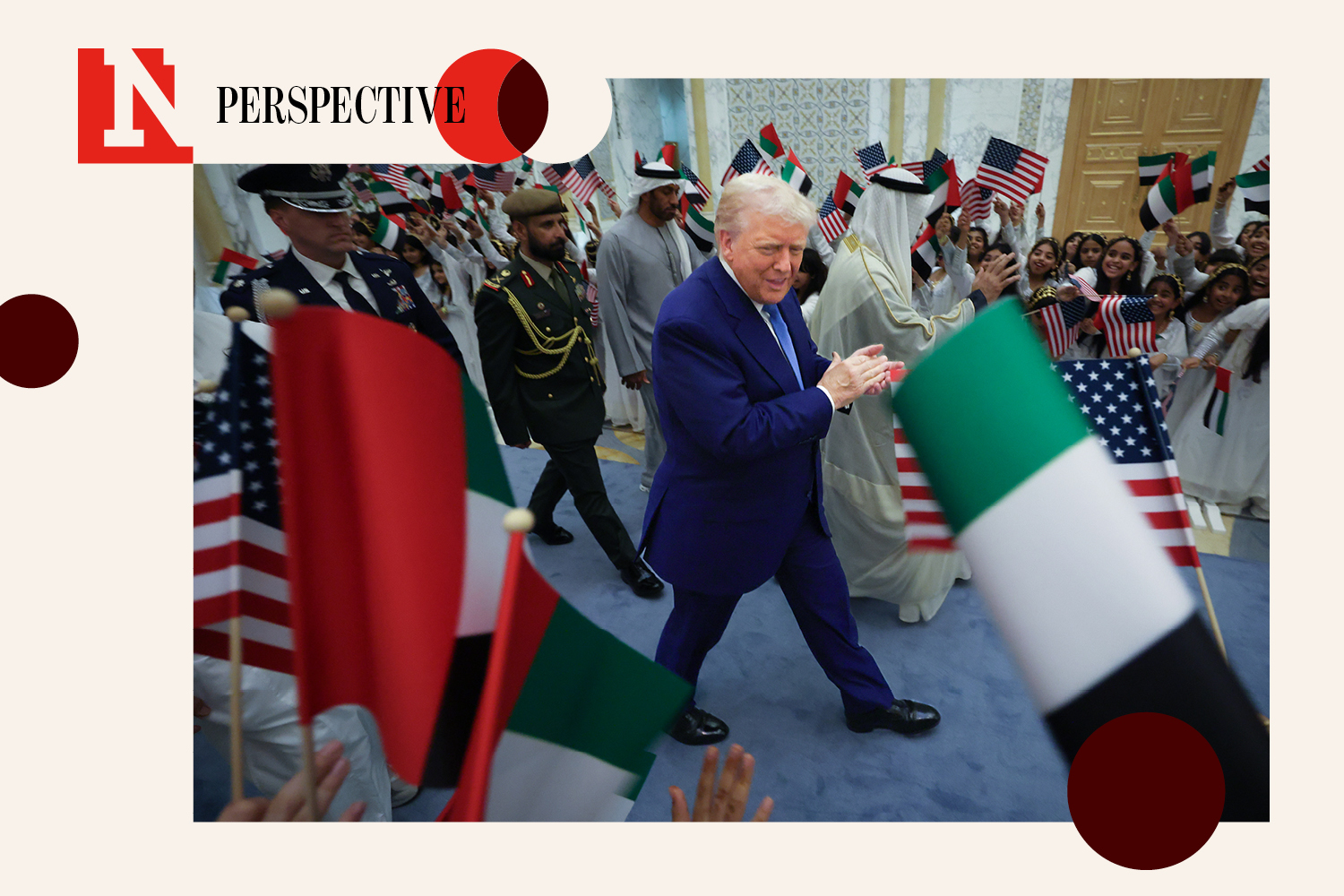
It was a stunning announcement: The UAE is leaving the oil cartel OPEC on May 1 this year. The news will be warmly welcomed in the White House as a win for President Donald Trump, who has long railed against OPEC for distorting oil prices by artificially adjusting supply against market forces, accusing it of “ripping off the rest of the world” in a fiery 2018 speech to the U.N. General Assembly.
“This decision reflects the UAE’s long-term strategic and economic vision and evolving energy profile, including accelerated investment in domestic energy production, and reinforces its commitment to a responsible, reliable, and forward-looking role in global energy markets,” the UAE said.
The exit of the UAE is a major blow to OPEC that strikes at its core premise. It calls into question OPEC’s ability to sustain the collective restraint of oil-producing nations across the world—many of them strategic rivals to the U.S.—and manipulate oil prices higher to their advantage.
Iran War Triggers UAE’s OPEC Decision
Trump’s Iran war appears to have been the catalyst for the UAE’s exit, though it is not the sole cause.
The war’s impact on the Strait of Hormuz, through which a fifth of the global oil and gas trade passes, has driven oil prices painfully higher. Iran has attacked commercial vessels transiting the “closed” strait, while the U.S. has blockaded Iranian ports.
This gives Abu Dhabi a greater incentive to break free from OPEC’s stifling production limits—characterized by the cartel as market “stabilization”—and instead use its spare capacity to generate revenue, fulfilling its own ambitions on capacity.
The UAE has long chafed under production restrictions, and the Abu Dhabi National Oil Company plans to raise production capacity to 5 million barrels per day by 2027. A country investing to expand output has less reason to let others ration its barrels, especially when those barrels may be worth more in a disrupted market.
The UAE’s Abu Dhabi Crude Oil Pipeline to Fujairah has reported capacity near 1.8 million barrels per day, leaving room for additional volumes in a closure scenario, according to the IEA. That infrastructure changes the politics of restraint. For the UAE, output flexibility is national insurance against a regional chokepoint crisis like in the Strait of Hormuz.
The war in Iran has also exposed the Gulf’s energy-security vulnerabilities, increasing the need to take a view of oil production rooted in national and regional interests rather than those of fellow OPEC producers who live outside the Middle East.
This conflict has exposed that OPEC members do not all share the same vulnerability to blocked sea lanes, damaged infrastructure, or U.S.-Iran escalation
Moreover, the Iran war has sharpened regional political strains, especially with Saudi Arabia, which serves a leading role in OPEC. UAE-Saudi relations had already been under strain over economic issues and Yemen.
And then there’s Russia. The UAE’s exit damages the Saudi-Russia production-management machine. It weakens Moscow’s influence over the oil market, though it has wounded itself in this regard through the Ukraine war, even as Russia benefits in the near term from the huge price spike.
On April 5, OPEC listed Saudi Arabia, Russia, and the UAE among the eight countries coordinating voluntary adjustments, compensation plans, and compliance with the Declaration of Cooperation. Removing the UAE from that machinery deprives Riyadh and Moscow of a producer with expanding capacity and a history of pushing for more room to pump.
Strategic Win for U.S.
Ultimately, the UAE has chosen a path of independence and setting its own policy free from the demands of OPEC. Its success outside could further rupture OPEC if other members see the logic for themselves, fracturing a cartel that has kept oil prices elevated for decades and often been a tool of leverage used against Western interests.
The White House’s gain is political and strategic, not immediate relief at the pump, because the same Iran war that sharpened Abu Dhabi’s incentives has helped keep oil prices painfully high.
But the UAE’s exit gives Trump something sanctions and naval pressure alone cannot deliver: a visible crack in the producer coalition that has often resisted U.S. pressure for cheaper oil.
That is bad news for OPEC and a warning to everyone else that cartel discipline is less useful in the new oil politics than sovereign self-help.
All told, this is a significant win for Trump and a big plus for his Iran war strategy, one that he may well seek to build on by encouraging more to follow the UAE’s lead.
Hey gang, Carlo Versano here. I hope you enjoyed this article. As Newsweek‘s Director of Politics and Culture and editor of the 1600 newsletter, I’m keen to hear what you think. Now, Newsweek is offering a new service to allow you to communicate directly with me in the form of a text message chat. You can sign up and get a direct line to me, as well as the reporters who work for me. You can shape our coverage.
As a Newsweek member, we’re offering this service to you for free. You can sign up below, or read more about how it works here. Let’s talk!
Related Articles