BEIJING — President Donald Trump was riding the early high of his return to power last year when he took his first major foreign trip and declared that he would make a sharp break from years of U.S. nation-building around the world.
Exactly one year after that visit to Saudi Arabia, Qatar and the United Arab Emirates, he came to China at a very different moment in his presidency, with inflation spiraling and no easy way out of a conflict with Iran. The fight has ensnared the U.S. military, driving energy prices up and Trump’s approval rating down.
This time, there were no sweeping declarations about how Trump’s America would manage the world, nor backslapping bonhomie shared with Gulf royals who offered golden swords and honor guards riding Arabian steeds.
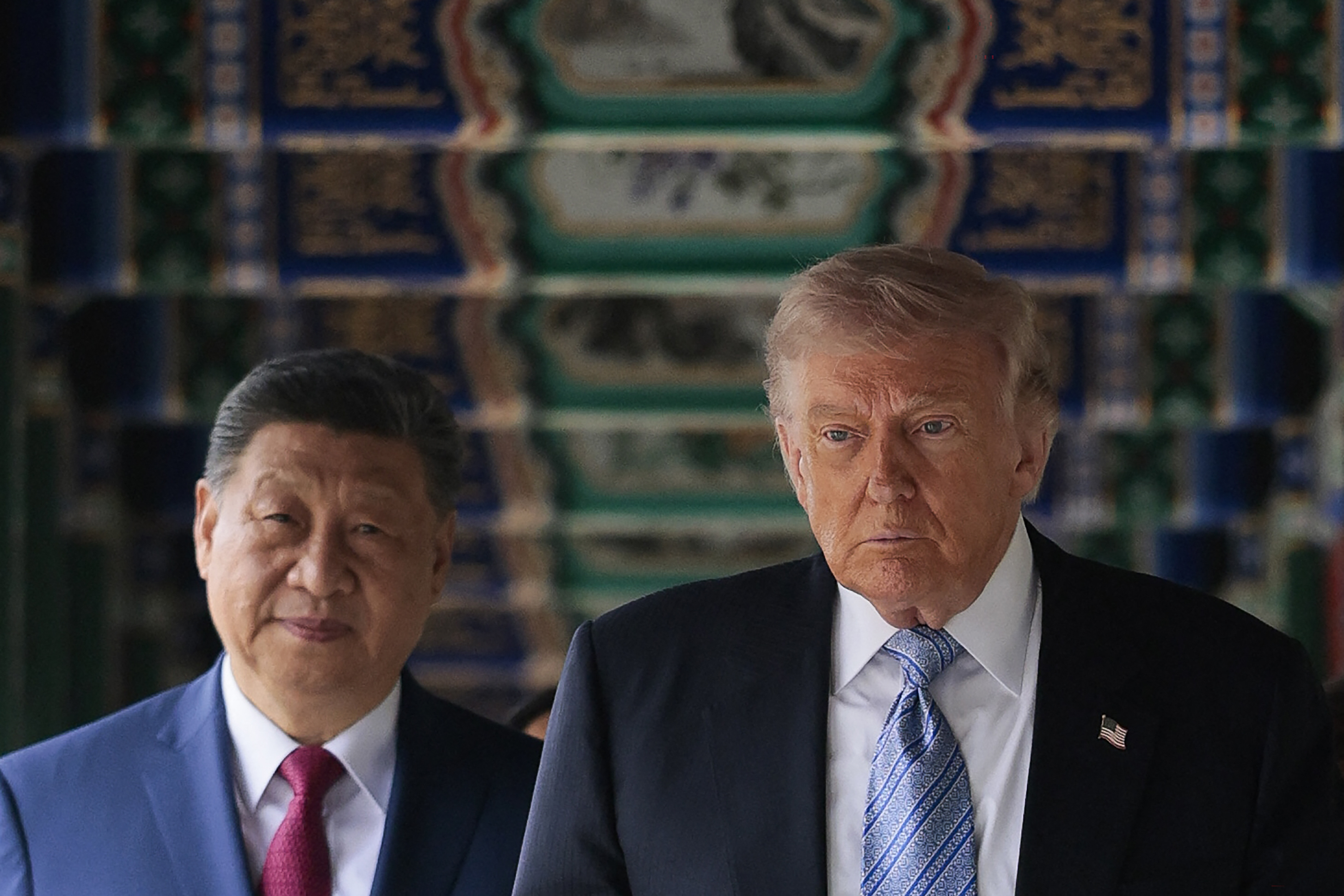
Instead, there was Chinese President Xi Jinping, respectful but businesslike, welcoming but appearing to bend little on the U.S. leader’s priorities.
Trump came to Beijing hoping to do trade deals. Xi made it known that Taiwan’s fate, not investment, was China’s top priority — yanking the spotlight from Trump’s preferred focus to warn of “clashes and even conflicts” with the United States should disagreements over the disputed island be mismanaged.
Trump left on Friday with a promise of a Xi trip to the White House in September and trade deals that were mostly a disappointment, at least as measured by the 8 percent drop in Boeing’s stock price between Trump’s arrival in Beijing and his departure. The president declared delight that the trip made it possible for top U.S. business executives to meet the Chinese leader, but offered little evidence of transactions that resulted.
“The biggest businessmen in the world and women, couple of women, and most of them, almost all of them, but most of them never met President Xi. This was the first time they’ve met up. So they found it exciting,” Trump told Fox News.
“They had stuff back in our country, but here they are, they’re standing in front of this, you know, massive country, the leadership, but they’ve really performed well, I thought,” Trump said.
It was a stark shift from a year ago, when the president hopped from one Gulf monarchy to another to declare that a new era was at hand. Back then, he had just imposed sweeping tariffs on the globe, including ones on China that eventually peaked at 145 percent. He vowed that Russia’s war in Ukraine would soon end under his guidance. And he was pushing Iran to engage in diplomacy to abandon its nuclear program.
Most of those efforts have fallen by the wayside. The Ukraine war still rages. Many of the tariffs were tossed by the Supreme Court. And Iran diplomacy has been set aside in favor of war.
With slumping approval ratings and a shuddering economy, Trump now travels on the world stage with less of a boost from the home front than he did a year ago. On Iran, he could use the involvement of China to pressure its allies in Tehran to reopen the Strait of Hormuz and do a deal with Washington on nuclear issues.
The two leaders spoke about the issue, Trump said, though he was careful not to portray himself as a supplicant.
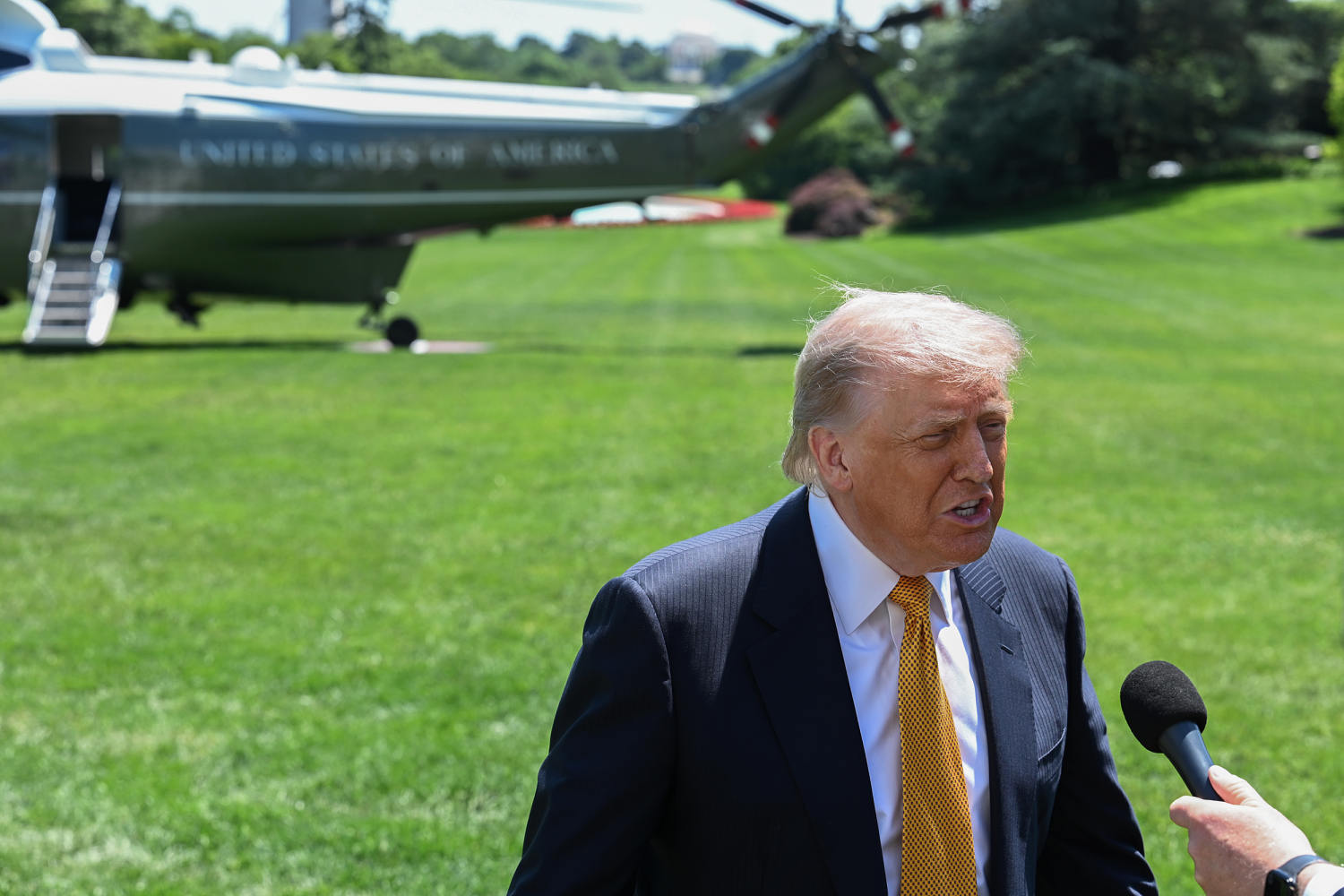
“I’m not asking for any favors, because when you ask for favors, you have to do favors in return. We don’t need favors,” he told reporters traveling back to the United States on Air Force One.
Instead, he said, the U.S. effort to reopen the strait, which Tehran had never tested its ability to close prior to the war, was a favor to the world and countries that are dependent on shipping through the chokepoint.
Although Trump bragged about the deals he said had been concluded during the trip — “our farmers are going to be very happy,” he said — the lack of concrete details from either side left open the question of what, exactly, had been agreed.
It was a far cry from the more expansive ambitions Trump had for relations with Xi last year, when the two men agreed to meet four times in 2026 to reshape their broader relationship. With Iran now preoccupying Trump and weighing the global economy, there is little bandwidth for a rethink.
China, meanwhile, fought Trump’s trade measures last year by halting exports of the rare earth metals that are used in advanced manufacturing. The Chinese struck a bargain that restarted the flow of rare earths, but left open the possibility that they could stop again if ever Trump’s policies sparked Beijing’s ire.
“Last year, it was Trump who was on the offensive. But this year, it looks like China is being more proactive and even taking the lead” in reshaping the relationship, said Wang Yiwei, a former Chinese diplomat and professor of international relations at Renmin University in Beijing. “After more than a year in office, he is realizing that with China, sticks don’t always work and cards are hard to play.”
Xi’s focus this week was the opposite of Trump’s new-era approach of a year ago. The Chinese leader trumpeted the status quo and stability — offering a welcome ceremony for Trump that was nearly identical to the last time he visited, in 2017, and a walk in a former imperial garden complex where some of the trees are said to be a thousand years old, a gentle reminder of ancient continuity.
The tour and visit to Zhongnanhai, now the cloistered headquarters and residence complex of China’s senior leaders, was a choreographed display of respect to Trump, since entry by foreigners is uncommon. But it was also a muscle flex, reminding the visitors that Xi plans to be tending the roses that Trump admired long after the U.S. leader is out of office.
“Beijing appeared to put noticeably little effort into giving Trump a platform to claim success,” said Ryan Hass, director of the China Center at the Brookings Institution.
The U.S. leader puts weight on his personal ties to other leaders. Xi is looking past him and past 2028, using a different time horizon, Hass said.
Xi “expects to deal with further administrations beyond Trump,” Hass said. “Beijing believes the status quo and this current period of stability serve its interests, because Beijing believes that trends are working in its favor.”
Those trends include a president who appears to be less interested than many of his predecessors in adhering to decades-old U.S. assurances from President Ronald Reagan about support for Taiwan, the disputed island territory that China claims and the U.S. backs.
“I think that the 1980s is a long way; that’s a big, far distance away,” Trump told reporters on Air Force One, explaining his lack of interest in following precedents set in that era. In December, his administration approved an $11 billion arms package for Taiwan, the largest ever, but it has yet to move on an additional $14 billion package that Congress green-lit the following month.
“The last thing we need right now is a war that’s 9,500 miles away,” Trump said, although he stuck to a traditional presidential doctrine of ambiguity by declining to answer a question about what he would if Taiwan were attacked.
Trump said he would keep thinking about the $14 billion arms package, which his administration needs to formally transmit to Congress for weapons purchases to go forward. Hosting Xi in September may put the decision on hold until then, analysts said — the delay itself a prize for Beijing.
This week’s meetings “kept the door open to something that could happen over the next months to stabilize relations,” said Orville Schell, the vice president of the Center on U.S.-China Relations at the Asia Society, who traveled to Beijing to watch the summit.
But, he said, deeper structural tensions will remain.
“Make no mistake. The contradictions which bedevil this relationship are boiling beneath the surface and may reappear,” he said.
Some Chinese analysts said that they take Trump’s ambitions seriously — but that they believe his vision is of a United States with a smaller shadow across the globe.
“I think he wants to fundamentally change the relations between the U.S. and the entire world. In the past, the U.S. was the unipolar hegemon providing public goods in the economic and security sense. Now he wants to change the relationship completely and to make the U.S. evolve from an empire to a nation state, just like everyone else,” said Da Wei, director of the Center for International Security and Strategy at Tsinghua University.
“So he’s someone bringing fundamental change to the world and he’s willing to pay the cost,” Da said. “I view him in the more serious way.”
Rebecca Tan in Singapore and Lyric Li in Taipei, Taiwan, contributed to this report.
Most Read From The Washington Post
- California gubernatorial candidate under investigation over payments to influencers
- He made a fake ICE deportation tip line. Then a kindergarten teacher called.
- Inside Ben Shapiro’s MAGA meltdown
- See which jobs are most threatened by AI and who may be able to adapt
- These states have the smartest, friendliest people, according to ChatGPT