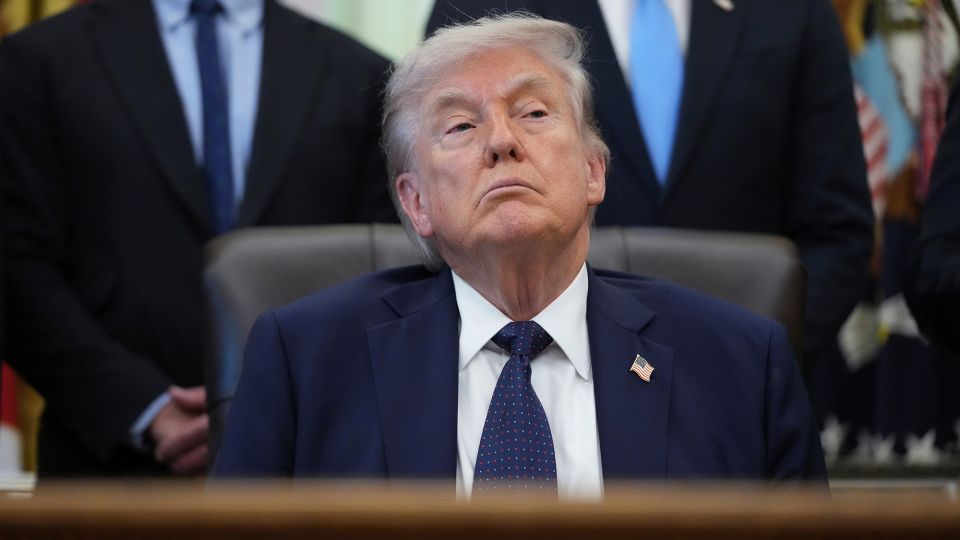
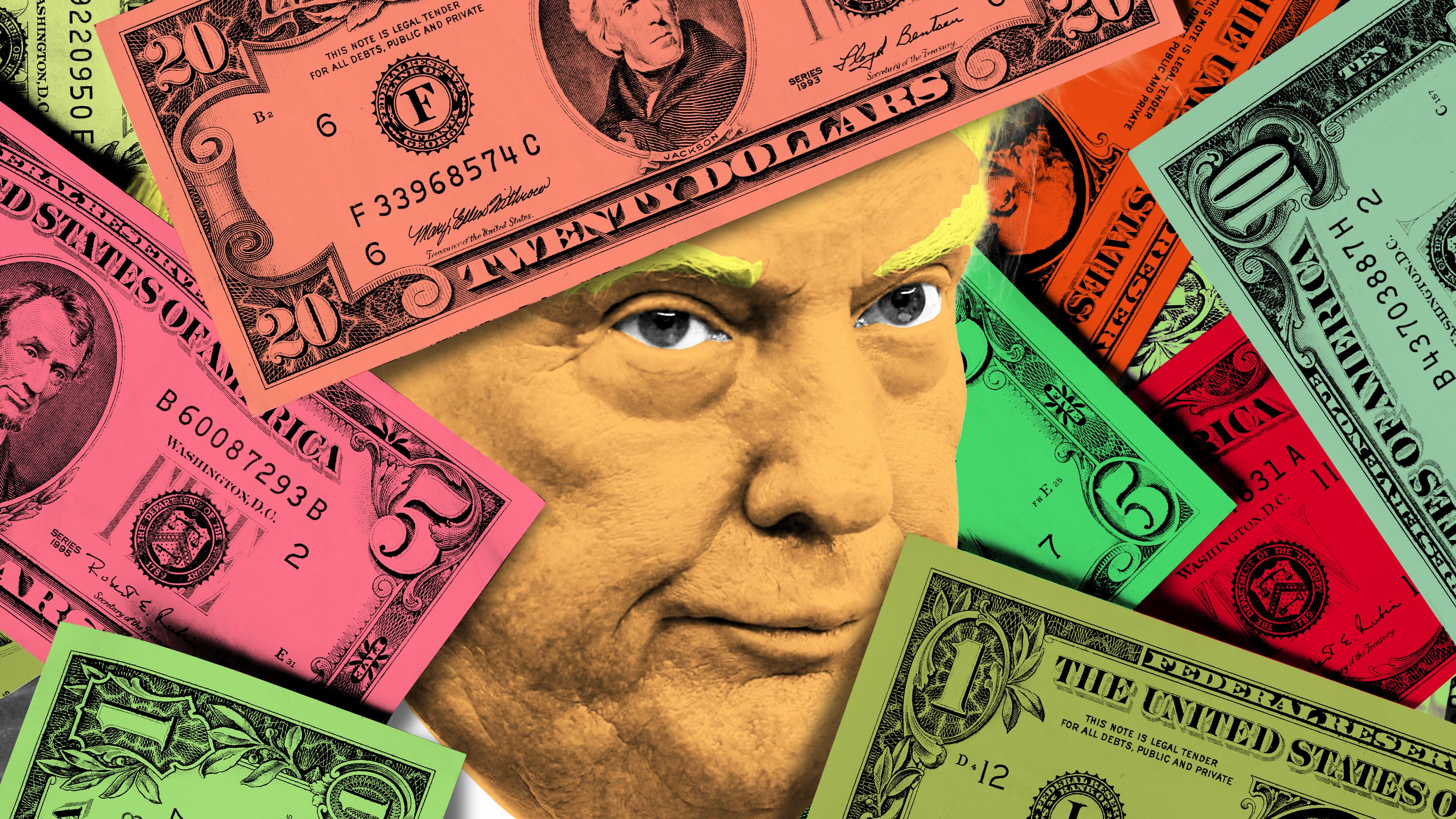
The alarm bells are ringing ever louder for the GOP ahead of the midterm elections, with a slew of new polls showing voters turning on Donald Trump over soaring costs—including a growing number of Republican voters.
As the war entered another day, damning new research from bipartisan public affairs agency ROKK Solutions found that 73 percent of voters blame Trump and his administration for rising prices.
What’s more, the sentiment extends beyond partisan lines, with 57 percent of Republican voters blaming Trump for soaring costs while 55 percent blame congressional Republicans.
In another damning finding, a new Fox News poll showed that, for the first time since 2010, more voters believe Democrats would handle the economy better than Republicans, with inflation and the economy the issues voters are most concerned about.
And a third poll, by the Cook Political Report, found that Democrats now hold a 6-point advantage in a survey of the 36 House districts most likely to determine which party wins the majority in the lower chamber.
The triple whammy of polls came as Trump told reporters this week that he was in no rush to resolve the issue in Iran, where a standoff in the Strait of Hormuz has led to soaring oil prices and more pain at the pump for consumers.
Pentagon chief Pete Hegseth doubled down at his latest press briefing on Friday morning, saying that the administration was “not anxious” for a deal with Iran.
“We have all the time in the world,” he said on Friday.
But the polls show most Americans don’t feel the same way as they struggle to make ends meet, despite Trump’s many campaign promises.
“Starting on day one, we will end inflation and make America affordable again to bring down the price of all goods,” he told supporters at a rally in Montana weeks before the 2024 election.
Behind the scenes, alarm is building inside Republican circles. At a high-level strategy session convened by White House Chief of Staff Susie Wiles at Washington’s Waldorf Astoria this week, insiders acknowledged the political drag created by the prolonged conflict and stubbornly high prices.
Attendees focused heavily on messaging, with some urging a sharper economic pivot while others warned that tying the party too closely to the war effort could deepen voter backlash.
Several Republicans have also publicly signaled unease about the trajectory of both the conflict and its domestic fallout.
Texas Senator John Cornyn, for instance, has cautioned about “the strain on resources,” while Maine Senator Susan Collins slammed Trump this month for his “incendiary” remarks on the war and called for a “swift” end to the conflict.
Trump, for his part, has brushed off mounting pressure to accelerate an end to the conflict.
Speaking to reporters this week, he insisted he would not be “rushed” into a resolution.
“We were in Vietnam, like, for 18 years. We were in Iraq for many, many years,” Trump said on Thursday. “I don’t like to say World War II, because that was a biggie. But we were four-and-a-half, almost five years in World War II. We were in the Korean War for seven years. I’ve been doing this for six weeks.”
Meanwhile, Bureau of Labor Statistics figures show that electricity prices have risen 4.6 percent for the year, food away from home (ie, restaurant costs) has jumped by 3.8 percent over the same period, while energy costs have risen by 12.5 percent.
“I think the more that the economic costs start to become apparent in a couple of weeks here in the United States, he really runs the risk of not being able to have control over his own narrative,” said Narges Bajoghli, associate professor of anthropology and Middle East studies at Johns Hopkins University.
“I think that is something that is proving extremely difficult to him.”