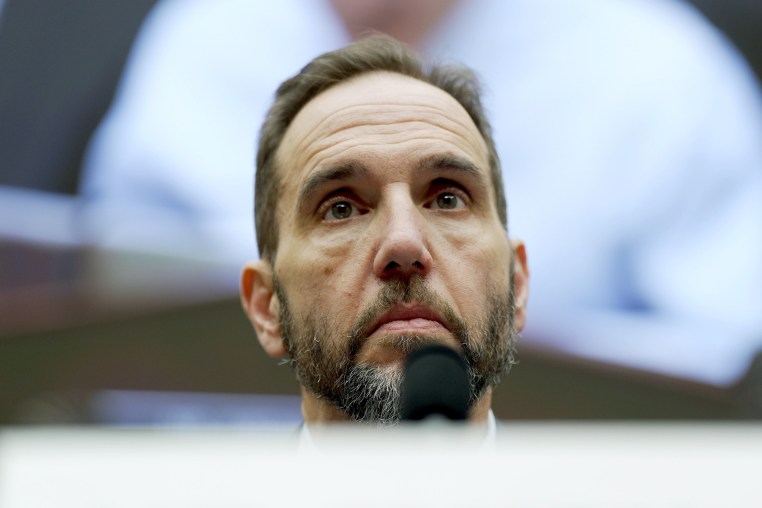
Jack Smith has been speaking out. His words are welcome — even if they may be coming a little too late.
From the time he was appointed special counsel in 2022 until his resignation in January of 2025, Smith conducted himself with the kind of stoic silence we expected of the Justice Department at the time. He spoke only at formal press conferences — during which he announced criminal charges against Donald Trump — and even then, scrupulously followed DOJ’s guidance to discuss only facts contained within the four corners of the indictments.
His conduct mirrored that of Robert Mueller, who was similarly silent when serving as the special counsel investigating Russian election interference just a few years prior. In stark contrast, Trump’s current acting Attorney General Todd Blanche routinely uses television news interviews to discuss pending cases, such as the recent indictments against former FBI Director James Comey and the Southern Poverty Law Center.
As Smith recently told an audience in Washington, D.C., “I grew up as a prosecutor in sort of the Robert Mueller mode of prosecutor. I speak in courtrooms. I do not speak on the courthouse steps. I don’t do media.”
But since leaving his post, Smith has begun to let those rigid prosecutorial walls come down a little, blasting Trump’s Department of Justice on multiple occasions. In April at a private event hosted by the Cosmos Club in Washington D.C., Smith stated that DOJ “targets people for criminal prosecution simply because the president doesn’t like them” and “fails to move on cases because they might uncover facts that are inconvenient to narratives the president would like to press.” Last fall, Smith told an audience at George Mason University: “My career has been about the rule of law, and I believe that today it is under attack like in no other period in our lifetimes.” And at an event in London in October of 2025, Smith spoke out specifically against the increasing attacks on public servants, warning that “it has a cost for our country that is incalculable.”
Mueller and Smith scrupulously followed DOJ’s press policy, often to a fault. They provided no updates on their work until charges were filed, consistent with DOJ’s practice to neither confirm nor deny the existence of an investigation, though everyone in America knew their assignments as special counsels. Even after announcing charges against Trump for election interference and unlawful retention of government documents, Smith did not comment on the evidence or the defendant’s potential guilt, lest he taint Trump’s due process rights to a fair trial. Then-Attorney General Merrick Garland gave an occasional speech about his department’s approach to significant cases, but he, too, largely abided by the traditional view that saying less is more.
The conduct of these men was commendable, but perhaps unnecessary and even counterproductive. While the Blanche model arguably runs afoul of Justice Department policy, future DOJ officials might reconsider whether silence is as golden as was once thought. When a special counsel says nothing, others fill the vacuum with their own narratives. Trump certainly had plenty to say about Mueller and Smith, constantly disparaging them and undermining confidence in their work with labels like “hoax” and “witch hunt.”
The next attorney general might be well served to reconsider the silent treatment. While it remains inappropriate to discuss ongoing investigations, DOJ officials should consider speaking out about their work, their processes and their standards, all of which are designed to treat defendants fairly.
For example, DOJ officials may find utility in making the rounds of the Sunday morning shows when a high-profile case is filed, not to opine on a defendant’s guilt, but to explain how grand juries make a finding of probable cause before returning an indictment. It would surely benefit public confidence to understand that DOJ policy directs prosecutors to provide even more protection than the law requires, such as sharing with grand jurors any evidence that might tend to refute a defendant’s guilt.
In other contexts, officials could discuss the training and policies it uses to ensure compliance with the Principles of Federal Prosecution, which forbid prosecutors bring cases unless they believe it probable that the evidence is sufficient to obtain and sustain a conviction. Most importantly, these principles prohibit prosecutors from making case decisions on the basis of partisan politics.
Rather than standing by in silence when critics like Trump disparage prosecutions, officials in the next DOJ should speak out, assuring the public that it has complied with legal standards, ethics rules and its own policies. Mueller, Smith and Garland followed the norms they had always known, but new challenges require new rules.
The post Jack Smith’s latent honesty is valuable — but new challenges require new rules appeared first on MS NOW.
This article was originally published on ms.now