A food scientist weighs in.
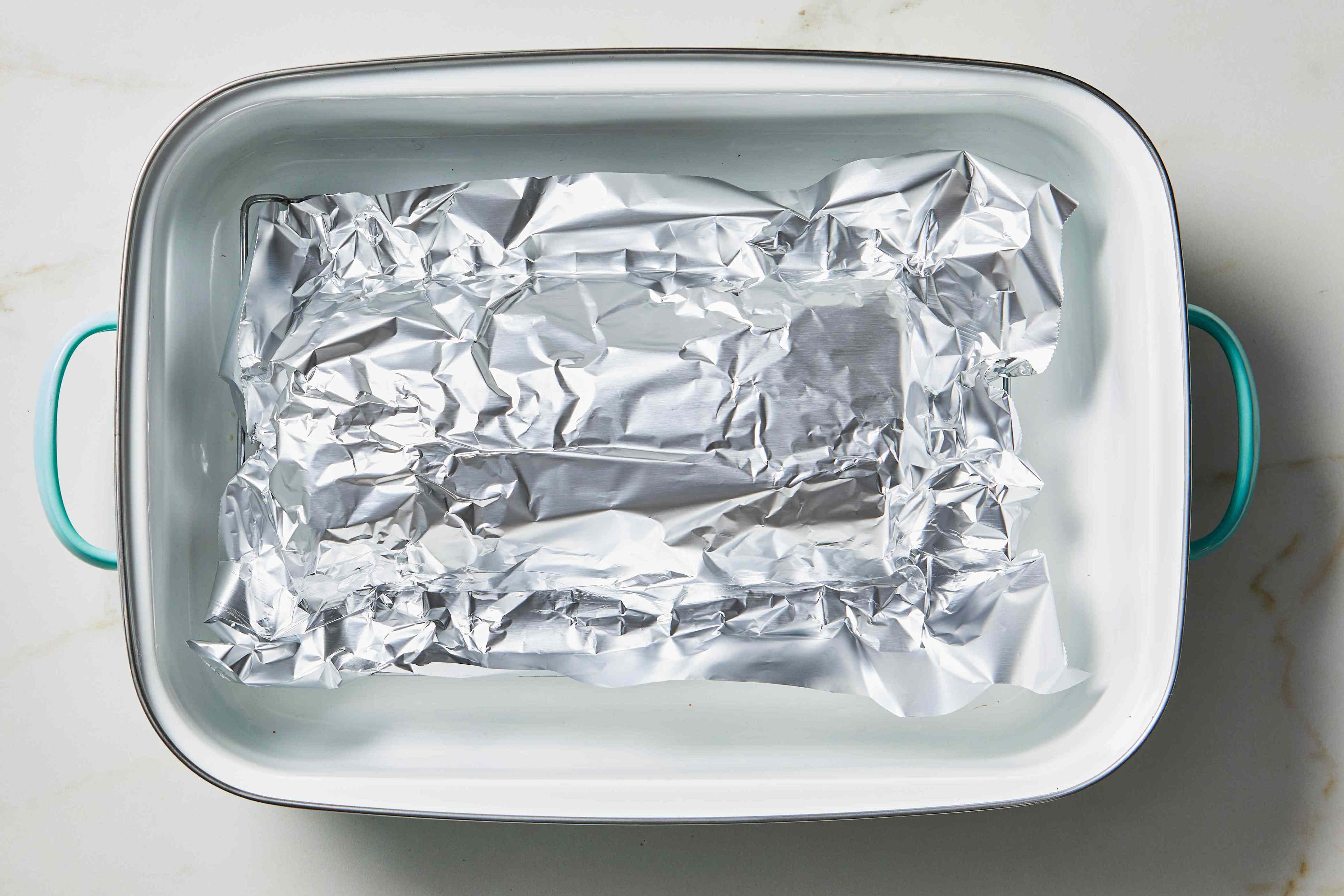
Aluminum foil is a kitchen essential. You can use it to line baking sheets when roasting vegetables for easy cleanup, create foil packets for the grill, and cover a pie crust to avoid it becoming too dark. It can even be used to shine your silverware.
If you frequently use aluminum foil in the kitchen, you might have noticed that it has both a shiny side and a dull side. What’s the difference? And which one should you be using? To find out, we tapped a food scientist—here’s what you need to know.
Why Does Aluminum Foil Have a Shiny Side and a Dull Side?
Wondering why aluminum foil even has a shiny side in the first place? According to Lara Tiro, a food scientist and owner of Vancouver-based consulting company RebelCPG, it’s a result of the manufacturing process.
“Large slabs of aluminum go through a continuous process consisting of heat and heavy-duty rollers, applying pressure to compress, thin, and lengthen the material,” Tiro says. “The final stage of the process is called cold-rolling, which includes passing two layers of foil through sets of rollers simultaneously. This further reduces to the desired thickness and improves the material's final resistance and flexibility. It is during this process that the material comes out shiny on one side, when in contact with the rollers, and dull on the non-roller contact side.”
Should You Use Aluminum Foil Shiny Side Up or Down?
So, which side should you use? Turns out, it’s entirely up to you. “There is no difference in the material make-up and insulating properties of the shiny side or material side,” Tiro says. “Either side can be used for cooking.”
According to Reynolds, one of the largest manufacturers of aluminum foil, “it’s perfectly fine to place your food on either side so you can decide if you prefer to have the shiny or dull side facing out.”
The one exception to this rule is nonstick foil, which is typically only coated on one side. “If you are using nonstick foil, then place food on the dull side,” Tiro says. “Nonstick aluminum foil contains an FDA-approved coating on the dull side, ensuring an easier and cleaner detachment of foil from cooked foods like battered fish fillets or chicken nuggets.”
Can Aluminum Foil Be Reused?
If you’re looking for ways to reduce waste in your kitchen, there’s good news—Tiro says aluminum foil can often be reused. That said, there are a few exceptions. If your aluminum foil shows any of these signs, it should be thrown away:
- Grease
- Heavy residues from acidic foods like tomato-based sauces, citrus, or vinaigrettes
- Moisture (which can lead to bacteria/mold growth)
- Rips or tears
When to Avoid Using Aluminum Foil
Aluminum foil comes in handy for countless applications in the kitchen, but there are some instances when it should be avoided.
- Brining meats. “Although an excellent barrier to light and oxygen, the aluminum can react with salt-heavy foods, forming aluminum chloride crystals on the food,” Tiro says.
- Browning ingredients. “If you desire the crispy, browning Maillard reaction, do remember to remove the foil as it helps keep all the moisture and allow for consistent heat during cooking,” Tiro says.
- Storing leftovers. “Avoid using foil to store leftovers,” Tiro says. “It does not provide an airtight seal, so your leftovers can be compromised.”
- Baking cookies. Tiro cautions to avoid lining your baking sheet with foil when baking cookies. “The underside of the cookies will bake faster than the rest of the cookie,” she says. Instead, opt for parchment paper or a silicone mat.
Related: I Asked 4 Chefs if We Should Wrap Baked Potatoes in Foil, They All Said the Same
Read the original article on Better Homes & Gardens