"They portray him as an eccentric, overgrown child, which we know is not the full story," Dan Reed said.
Key Points
- Leaving Neverland director Dan Reed criticized the biopic Michael for depicting Michael Jackson as a "asexual plastic action doll."
- The filmmaker said that he "could kind of buy" the film's early scenes that showed Jackson's childhood.
- The documentarian added that framing Jackson as an "eccentric, overgrown child" is "not the full story."
Leaving Neverland director Dan Reed has watched Michael — and he doesn't like what he saw.
The documentarian's 2019 film saw Wade Robson and James Safechuck accuse Michael Jackson of grooming and sexually abusing them as children. Now, Reed has viewed Antoine Fuqua's hit biopic about the "Smooth Criminal" musician, and offered his two cents about the film — which does not address the allegations against the singer — in an interview with Variety.
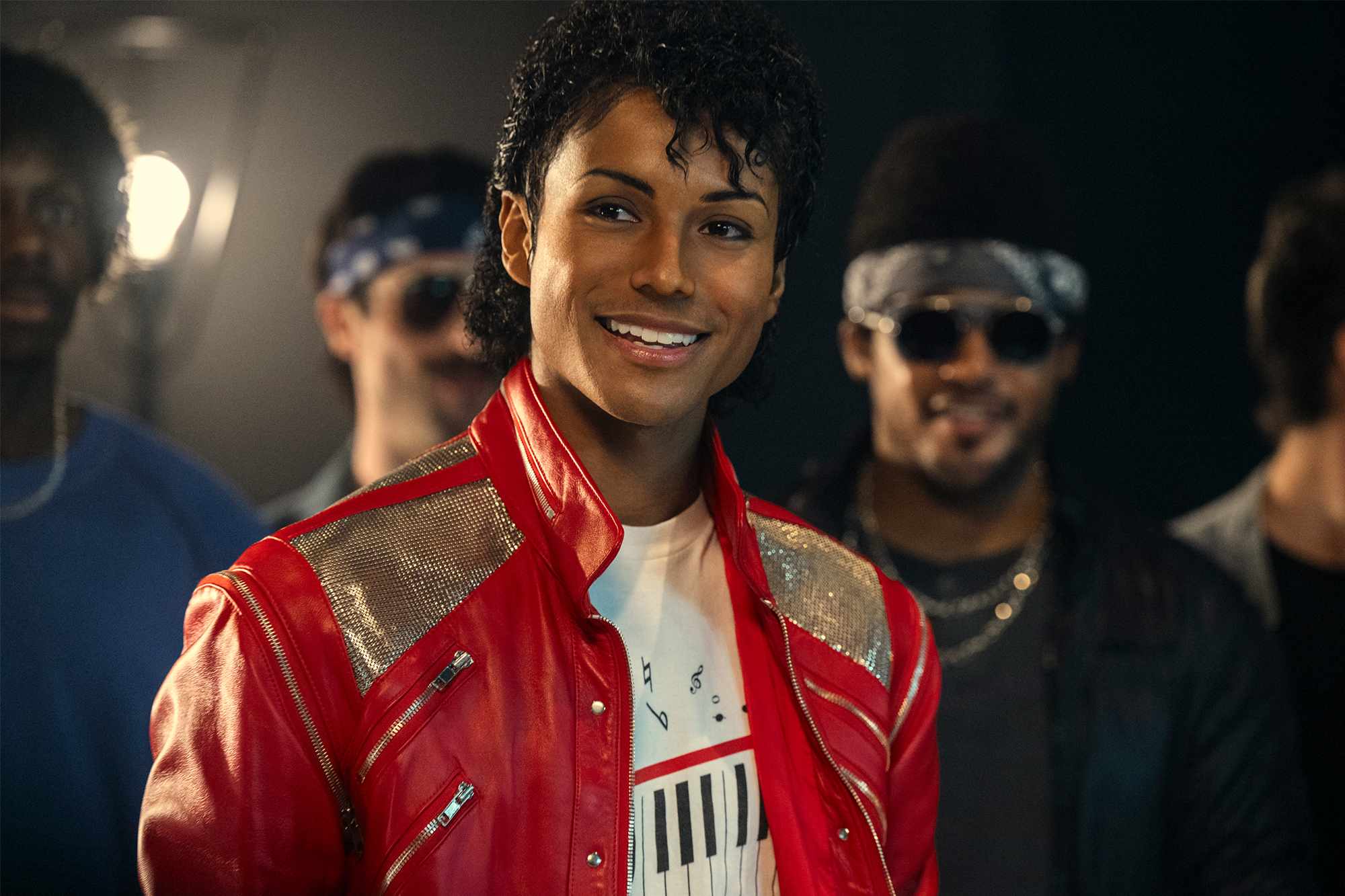
"The first part of Michael as a child, I could kind of buy that," he said. "But as soon as we go to the adult Jackson, played by his nephew Jaafar, that burst my bubble. I thought, he's a great dancer, but his performance is very wooden, and one of the reasons for that is he didn't have much of a script to work with."
Reed opined that Michael fails to accurately depict the late "Thriller" singer or meaningfully explore his psychology. "He becomes this waxwork who performs these jukebox songs, but there's zero insight into what makes Jackson tick," the documentarian said. "He's this asexual plastic action doll of a figure in the film. And of course, the issue of his relationship with children is completely distorted by the fact that they portray him as an eccentric, overgrown child, which we know is not the full story."
Entertainment Weekly has reached out to representatives for Jackson's estate and Lionsgate, the studio behind Michael, for comment.
The filmmaker explained why he believes the biopic sought to depict Jackson in this manner.
"To the culture, Jackson is like a religion. So, what I've done [with Leaving Neverland] is essentially blaspheme, and this biopic reinstates the myth," he hypothesized. "As absurd as any religion, people have to believe in the miracle of Jackson being this asexual, pure being who only wished good for little children and helped them. They've given him the attributes of a deity."
Reed also argued that Michael fails to contend with the allegations from his documentary, even though he thinks the film was intended to offer a convincing opposing viewpoint.
"The film just flips the truth on its head — black is white, white is black, and two and two make five — and none of the people who go and see the movie will ever question that, but it's a movie that's impossible to take seriously as a counter-narrative to Leaving Neverland," he said. "It was supposed to be the retort to Leaving Neverland, and they tried that in an early script and it fell apart, so they created this jukebox movie but haven't managed to create a plausible narrative that would explain Jackson's fondness for children."
Get your daily dose of entertainment news, celebrity updates, and what to watch with our EW Dispatch newsletter.
Michael has received fairly negative reviews from critics, currently holding a 37% approval rating on Rotten Tomatoes and a 39/100 score on the aggregator Metacritic. However, the film was embraced by audiences in its opening weekend, scoring $217.3 million at the global box office — a record-setting opening weekend for a musical biopic.
Read the original article on Entertainment Weekly