Democrats have gone into what party insiders openly describe as panic mode as Republicans suddenly see a clearer path to holding the House in 2026.
A series of court rulings on redistricting and voting rights has given the GOP a clear path to pick up at least 10 House seats, political experts say.
What only weeks ago appeared to be a growing Democrat advantage in the national redistricting battle has now dramatically reversed.
A major ruling this past week by the Virginia Supreme Court invalidating the state's newly drawn congressional map, combined with a recent U.S. Supreme Court decision limiting key provisions of the Voting Rights Act, could ultimately hand Republicans control of the House in the next Congress.
The developments have rattled Democrats nationwide and energized Republicans who now believe the political map has shifted decisively in their favor.
"F*****ck!!" one House Democrat texted Axios reporter Andrew Solender after Virginia's high court struck down the Democrat-backed map that would have targeted four Republican-held seats.
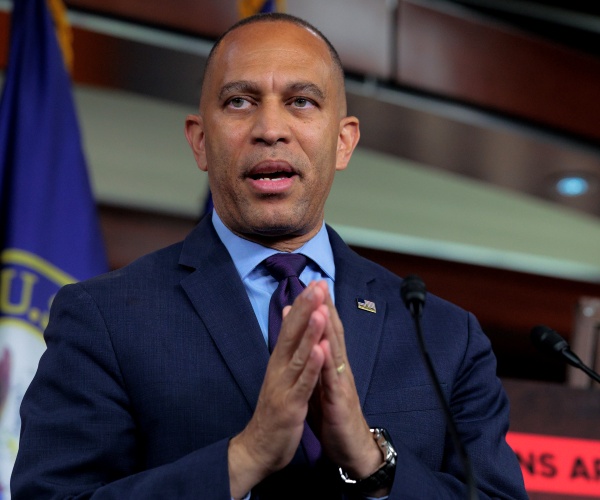
House Minority Leader Hakeem Jeffries vowed Democrats would pursue "all options to overturn this shocking decision," while Democrat strategists privately acknowledged the setback could fundamentally alter the battle for control of Congress.
"I think we still take back the House, but it's a major setback," Democrat strategist Adrienne Elrod told reporters. "We have to just win at the ballot box. And we can do it."
Republican optimism comes after a dramatic turnaround in a redistricting war Democrats themselves escalated beginning in 2023.
That year, Republicans shocked Democrats by flipping 11 House seats nationally, including major gains in New York. Democrats responded aggressively.
In Albany, Democrat lawmakers moved to redraw New York's congressional map, effectively eliminating six Republican districts and reigniting mid-decade redistricting efforts across the country.
The strategy unleashed an all-out national battle over congressional lines, with both parties searching for ways to gain an advantage before the next census.
Until recently, Democrats appeared to have momentum.
Virginia Democrats had approved new congressional maps projected to create four additional Democratic-leaning seats.
But the Virginia Supreme Court's ruling Friday erased those gains and restored a friendlier political landscape for Republicans.
At nearly the same time, Florida Gov. Ron DeSantis unveiled new congressional maps that could create four more Republican-leaning districts in his state's already GOP-dominated delegation.
Then came perhaps the most consequential blow of all: the U.S. Supreme Court ruled that a key provision of the Voting Rights Act could not be used to create a racial majority district.
The ruling opens the door for Republican-controlled Southern states such as Louisiana, Alabama, and Georgia to redraw numerous majority-minority districts that had long been protected under federal law.
Political analysts believe the decision could reshape congressional maps across the South for years to come.
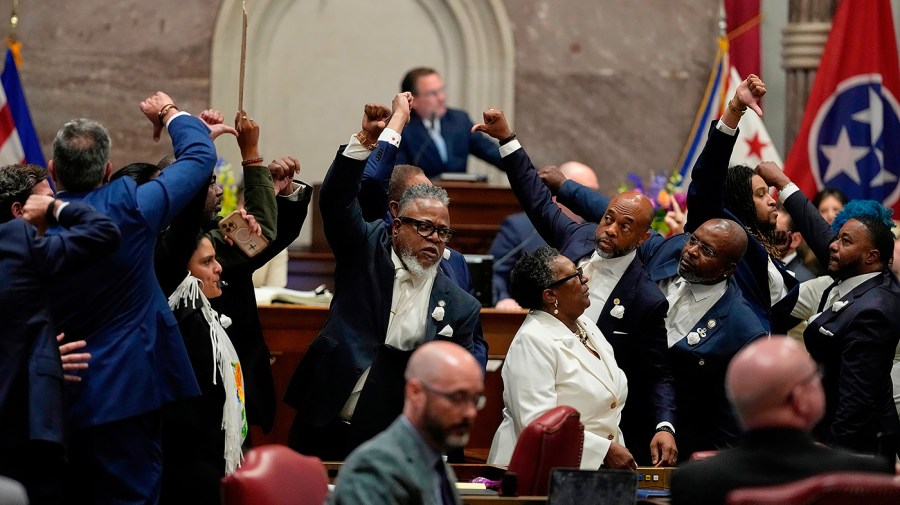
Tennessee Republicans have already approved a new map targeting the state's lone Democrat-held district, while other Southern legislatures are reportedly moving quickly to redraw additional lines.
Democrat consultant Trevor Southerland bluntly summed up growing concerns inside the party: "Rigged maps can overcome a lot."
Republicans, meanwhile, are celebrating what they see as a political and legal breakthrough.
"I thank the Supreme Court for its courage in standing up for what is right," said Rep. Jen Kiggans, R-Va., whose district would have become heavily Democrat under Virginia's invalidated map.
Rep. Richard Hudson, chairman of the National Republican Congressional Committee, declared: "This win is yet another sign Republicans have the momentum heading into November. We're on offense, and we're going to win."
The redistricting reversal is particularly striking because Democrats had believed the 2026 political environment favored them strongly.
President Donald Trump's approval ratings have struggled amid concerns about inflation, energy prices, and tensions surrounding the war with Iran.
Historically, the party controlling the White House often loses House seats during midterm elections.
Democrats still believe public dissatisfaction with economic conditions could carry them to victory.
But party officials now fear redistricting may blunt those advantages.
One Democrat strategist admitted the party may now have to divert huge sums of money simply to remain competitive in House races.
"Dems are going to have to double down on winning the House — even if that means being unable to expand the map in the Senate," the strategist said.
The financial cost is already enormous. Democrats reportedly spent more than $65 million on the Virginia redistricting effort that was ultimately struck down by the courts.
Republicans credit much of the strategy to Trump political advisers who pushed for aggressive mid-decade redraws nationwide.
James Blair, a Trump ally who advocated the plan, reacted to the court victories by posting on X: "Lord grant me humility."
Trump campaign manager Chris LaCivita praised Blair's strategy, writing: "Always initiate contact — never wait for it to come to you."
Some Democrats now fear the conflict could escalate even further by 2028, with both parties embracing increasingly aggressive gerrymandering tactics.
Rep. Terri Sewell, D-Ala., warned that Democrats may retaliate in blue states.
"I take 52 seats from California and 17 seats from Illinois," Sewell said. "We're going to play their game, and we're going to beat them at it."
For now, however, Republicans appear to hold the upper hand in a redistricting battle that could determine control of Congress not just this year — but for the rest of the decade.
© 2026 Newsmax. All rights reserved.