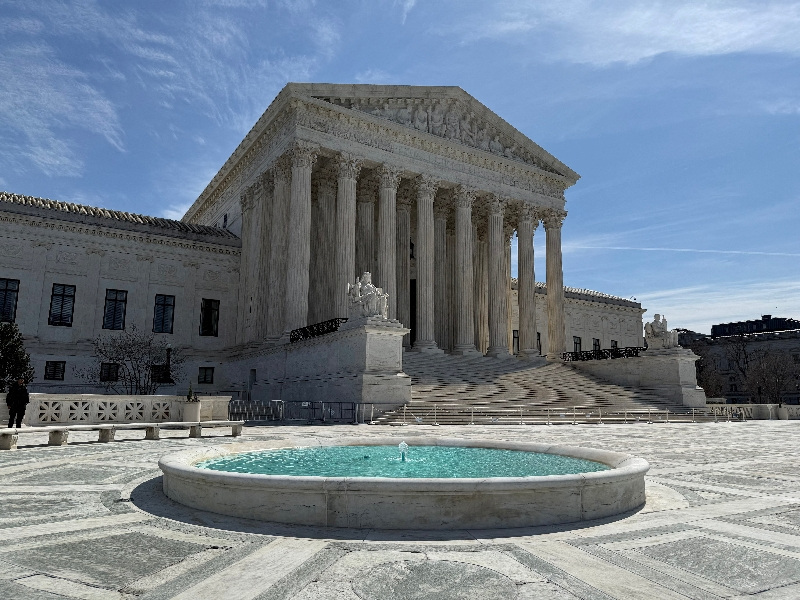
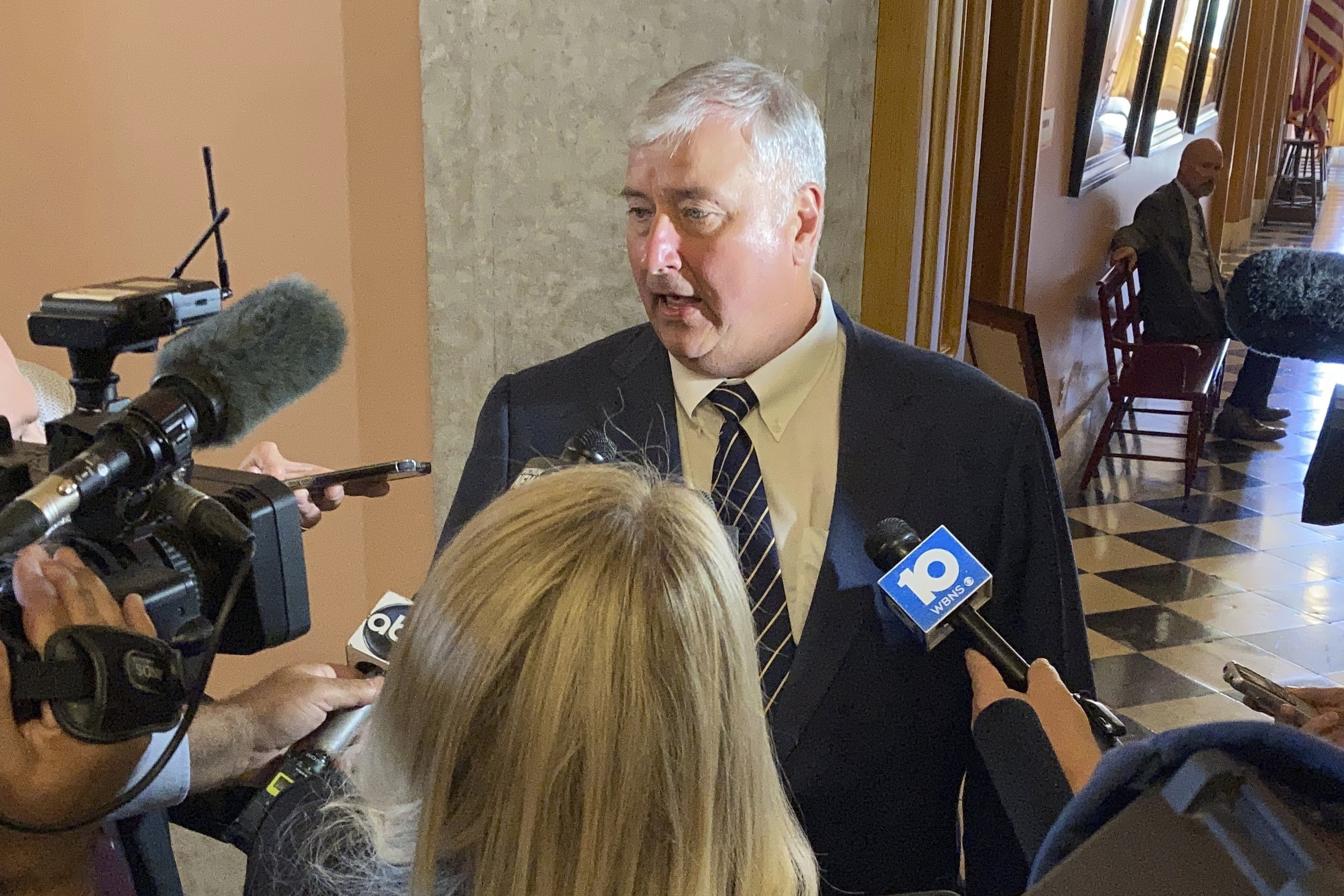
The U.S. Supreme Court on Monday upheld the federal racketeering convictions of former Ohio House Speaker Larry Householder and former lobbyist Matt Borges in the state’s sweeping $60 million bribery scandal, leaving intact their prison sentences.
The justices declined to overturn a unanimous ruling by a three-judge panel of the 6th U.S. Circuit Court of Appeals, which last May rejected the defendants’ challenges to their convictions. Householder and Borges had sought Supreme Court review after the appeals court denied requests for a rehearing by the full bench.
No reason was provided as to why the court decided against taking the case, which was included on the court’s “Certiorari Denied” list published Monday morning.
Steven Bradley, an attorney for Householder, told Newsweek he is “deeply disappointed” by the court’s decision.
“The legal issue that we raised, namely what conduct constitutes a bribe of a public official versus an ordinary campaign contribution, remains muddled and needs to be addressed by the Court hopefully sooner than later. The fact that multiple Circuit Courts of Appeal have invited the Court to revisit this issue highlights the need to provide more clarity to litigants as well as public officials,” he said.
Newsweek reached out to lawyers for Borges for comment via email.
Why It Matters
The court’s ruling has legal implications for one of the largest corruption scandals the country has faced in recent years involving Householder. The scandal has drawn national attention and concerns about campaign finance.
How the $60 Million FirstEnergy Bribery Scheme Worked
Federal prosecutors secured the convictions in March 2023 following a yearslong investigation and a trial that lasted more than six weeks. Authorities said Householder, once one of the most powerful figures in Ohio politics, led a criminal enterprise funded by Akron-based utility FirstEnergy Corp.
Prosecutors said the scheme used secret payments to help elect Republican allies, install Householder as speaker, and pass a $1 billion bailout for two nuclear power plants tied to FirstEnergy. The group then worked to protect the law, known as House Bill 6, from a voter-backed repeal effort.
Householder, now 66, was sentenced to 20 years in prison. Borges, 53, a former chair of the Ohio Republican Party, received a five-year sentence for his role in undermining the repeal campaign. He was released to a Cincinnati halfway house in October and is scheduled to be released November 12, according to the Bureau of Prisons.
Former U.S. Attorney David DeVillers described the case as “likely the largest bribery, money laundering scheme ever perpetrated against the people of the state of Ohio.”
Householder and his coconspirators accepted nearly $61 million to pass a billion-dollar bailout for a nuclear plan, according to the Department of Justice (DOJ). They accepted the funds and went on to help defeat a ballot initiative to overturn the bailout.
He began receiving $250,000 payments from the energy companies each quarter into a bank account for his 501(c)(4), Generation Now. His team spent millions of the company’s funds to help him become speaker, to support candidates who would be likely to support him and for their own personal benefit, the DOJ said.
Prosecutors said he used more than half a million dollars to pay off credit card debt, repair his home in Florida and settle a business lawsuit.
Borges was budgeted $25,000 to bribe an Ohio GOP operative to promote the bailout, prosecutors said.
Between 2004 and 2023, a total of 17,772 individuals have been convicted in public corruption cases, according to DOJ data. From 2014 to 2023, there were 175 corruption convictions in Ohio.
Larry Householder’s Supreme Court Argument Explained
Householder filed a petition with the court challenging the legal standard used to convict him of bribery, Hobbs Act extortion, and honest services wire fraud, arguing it conflicts with long‑standing court precedent protecting political speech and campaign fundraising
His lawyers wrote there was “nothing surprising, nor illegal” about Householder wanting to become speaker.
“For Larry Householder, a public official with a long history of supporting utility companies, this meant accepting contributions—large ones—from an Ohio utility company who was suffering financial hardship and needed legislation to be passed to help it recover. Not surprisingly, that company, FirstEnergy, decided to support the selection of state representative candidates who would be loyal to Householder, with the expectation that a Householder-led Ohio House would be supportive of FirstEnergy,” his legal team wrote in a petition to the court.
What Happens Next
The Supreme Court is the highest-ranking court in the country, so its denial is final. With no formal ruling being issued, the decision is unlikely to have any effect on future corruption cases.
Related Articles