Researchers have concluded that a 2025 tsunami in Alaska was the second largest recorded natural disaster of its kind in history, with a wave that reached up to 1,578 feet high.
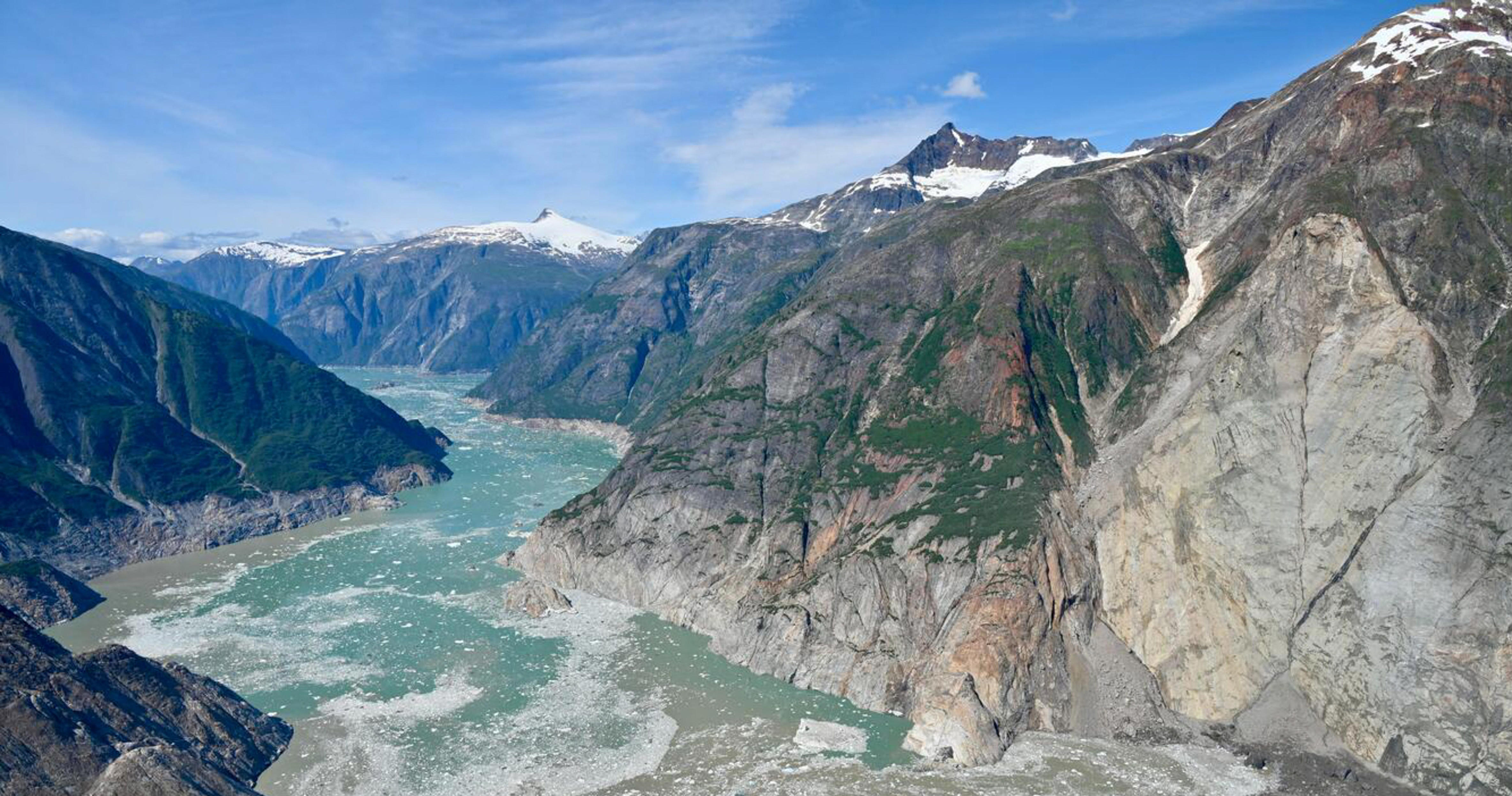
The massive tsunami took place at 5:26 a.m. local time on Aug. 10 in the Tracy Arm Fjord, a popular cruise destination about 50 miles south of the state's capital, Juneau. As defined by National Geographic, a fjord is a long, narrow body of water that reaches far inland, often lined by a steep walls of rock.
No injuries were reported, but the tsunami stripped vegetation from steep rock lining the near 25 mile-long fjord with cliffs stretching more than 3,280 feet high, according to Dan Shugar, lead author of the study published May 6 in the journal Science.
Start the day smarter. Get all the news you need in your inbox each morning.
"The Tracy Arm tsunami impacts were mostly ecological, in terms of ripping out vast swathes of coastal rainforest," Shugar told USA TODAY on May 6. "Nobody was killed, unbelievably. But it was a close call."
Shugar said the landslide was driven by climate change after the glacier buttressing the mountain retreated amid warming temperatures, leaving the rock unsupported.
Researchers determined the wave height by measuring where the stripping of vegetation had occurred, leaving dramatic scars on the rock walls. The wave rose so high because the immense volume of water displaced by rock from the landslide was squeezed through a confined space.
The study found nearly 83 million cubic yards of rock collapsed in about one minute − the equivalent of 24 times the volume of the Great Pyramid of Giza, according to University College London geophysicist and study co-author Stephen Hicks.
"This collapse triggered a seismic wave observed around the globe," Hicks said.
Where did the highest tsunami take place?
Shugar said the highest-ever recorded tsunami took place in 1958 in Lituya Bay, a fjord on the coast of the southeastern Alaska.
The more than 9 mile-long fjord in is Alaska’s Glacier Bay National Park.
It was also landslide triggered, Shugar said, and ran more than 1,700 feet high.
Contributing: Reuters
Natalie Neysa Alund is a senior reporter for USA TODAY. Reach her at nalund@usatoday.com and follow her on X @nataliealund.
This article originally appeared on USA TODAY: Alaska's 1,578-foot tsunami was second largest ever recorded