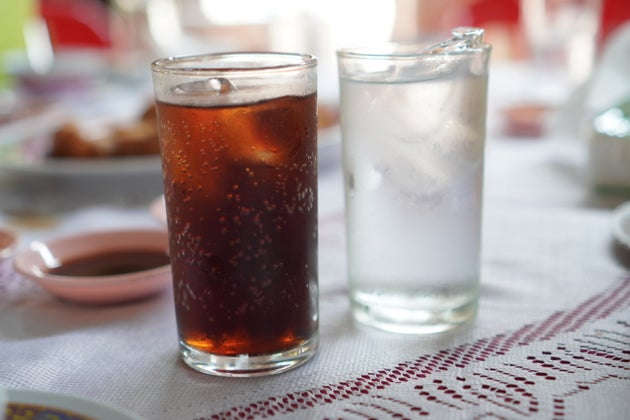
During my son’s first trip to Paris, he ordered a Coke. Sodas are a rare treat for him, and he was looking forward to gulping down an icy-cold drink after a long, hot day of traversing the city. However, his excitement dimmed when his glass arrived, chilled, but without ice.
When I flagged down the server to ask for a few cubes, she nodded knowingly. I knew what was coming. “Ah, you are Americans,” she said. I felt my cheeks flush, but simply said, “Merci beaucoup” when she brought a small dish of ice to our table.
My son and I aren’t the only tourists whose orders inadvertently outed us as Americans. From asking for ketchup to requesting the check in a hurry, certain restaurant behaviors immediately reveal a customer’s American roots.
Asking for ice
Asking for ice is an immediate and very common giveaway that someone is American, said Daniel Herszberg, the co-founder of Travel Insighter, who has visited every country in the world. “If they’re trying to be very American, there will usually be a specific amount of ice, such as ‘just half a cup of ice’ or ‘just a few cubes,’” he added. Most other cultures enjoy cold drinks from the fridge, but don’t see the need to add ice to make them even cooler, said Anthony Neal Macri, the creative director at the Italian Calabria Food Fest. In Italy, “Ice is for a Negroni or to put on an injury,” he explained.
Ordering a soft drink — and expecting refills
In much of the world, and especially in Europe, drinking soda with meals is unusual, said Andrew Satkowiak, executive vice president at the Luxury Travel Agency. Yet, “Americans will usually order some form of soft drink, often Coke or Diet Coke,” Herszberg said. If there is still any doubt about a customer’s nationality, calling a soda “pop” or expecting free refills is a dead giveaway, Satkowiak explained.
Must Read: We Asked 9 Nutritionists If They Let Their Kids Eat McDonald's — You Won't Believe What They Said
Requesting condiments
After asking for ice, “the next big giveaway is condiments,” said Herszberg. He said he has observed that “Americans will ask for some ketchup, no matter what, and often mustard or barbecue sauce.” If that’s not enough to peg someone as American, customers who are shocked that these condiments are not available at some restaurants, who balk at paying extra, or who take issue with being served a small portion are certainly from the United States, he explained.
Stressing allergies
People from all over the world have allergies, but only Americans seem not to trust the server and chef to keep them safe. “Not to be disrespectful to the allergens among us, but Americans tend to be very forward about allergies,” Herszberg said. Americans usually say something like, “Please write this down so the chef is aware,” while Europeans are more nonchalant and say “by the way” before mentioning an allergy, he said.
Sending food back
Restaurant patrons from anywhere in the world will send a dish back if they didn’t get the meal they ordered or if their food is undercooked. However, the biggest giveaway that someone is American is “the way they send food back for simply being not right,” Herszberg said. “I’ve never even thought about sending a coffee back because it felt a bit too milky, or returning a salad because there wasn’t enough of a certain vegetable or cheese,” Herszberg explained. But Americans are different. “Americans don’t shy away from that. Europeans? They just sigh, complain, and eat it,” he said.
Ordering ‘water’ — and a lot of it
Almost everyone likes to drink water, but the way Americans ask for the beverage makes them stand out, Macri said. In other parts of the world, it’s common to specify what type of water you would like when ordering, such as sparkling, still or tap. However, Americans simply ask for water, which usually means the server needs to ask for clarification. Then, once they get their water, Americans tend to drink more than others. “Americans hydrate like it’s a competition,” Macri observed.
Asking for changes to menu items
Most restaurants around the world “run under the norm of what you see is what you get,” said Schreck.
Must Read: Doctors Reveal The Damage That 1 Day Of Thanksgiving Food Can Do
“But Americans are used to making all the changes they want. They will ask, ‘Can you take off the tomatoes and add cheese instead?’” he explained. That attitude is distinctly American, according to Paul Whitten, a former Peace Corps volunteer and U.K. Parliament fellow who now runs Nashville Adventures, a tour company that welcomes visitors from around the world.Americans “expect a smile, a big portion, and the idea that the customer’s always right. Overseas, that same habit reads as bold or, at best, impatient,” he explained.
Being impatient with slow service
Americans value efficiency, said Allison Collier, the founder of Collier Travel Collective. Because of that, “Americans will often finish a meal in record time and be ready to move on to the next thing,” she explained. However, because meals in other parts of the world are a slower-paced ritual, servers tend not to hover. Many Americans find this rude. “They are not ignoring you. They are giving you space to enjoy,” she explained. Americans also tend to get annoyed when their check doesn’t arrive right away after they finish eating. “In many other countries, the bill is not brought until you ask. The assumption is that you are enjoying your time and you will low-key signal when you are ready for the bill,” Collier said.
Asking for straws
Another way Macri can spot Americans is “the whole straw obsession,” he said. Macri says he has even seen Americans drink espressos with a straw, which he found confusing. Finally, Macri’s curiosity got the better of him, and he asked an American why they liked straws so much. “They said it was so as not to stain their teeth,” he said. “Which, fine, I get it. At that point, I just smiled and nodded. Who am I to stop that kind of dedication?”
Tipping
Tipping isn’t the norm in much of the world. However, Americans are so accustomed to tipping culture that they often automatically leave a tip for their server, even in cultures where tipping is not the norm. Most Americans mean well, but they need to be cautious. “It holds up the stereotype that Americans sort of just do whatever they want without thinking about the local culture,” Schreck said. Plus, the tip may go to the owner rather than the server anyway, he added. Moreover, tipping in some countries, such as Korea and Japan, is more than just an odd American practice. It’s insulting.
Waving
When Americans want to get their server’s attention, they tend to flag down their server with a raised hand or a wave, explained Collier. In Europe and other parts of the world, she said, “a simple glance is the typical approach for connecting with the wait staff.”