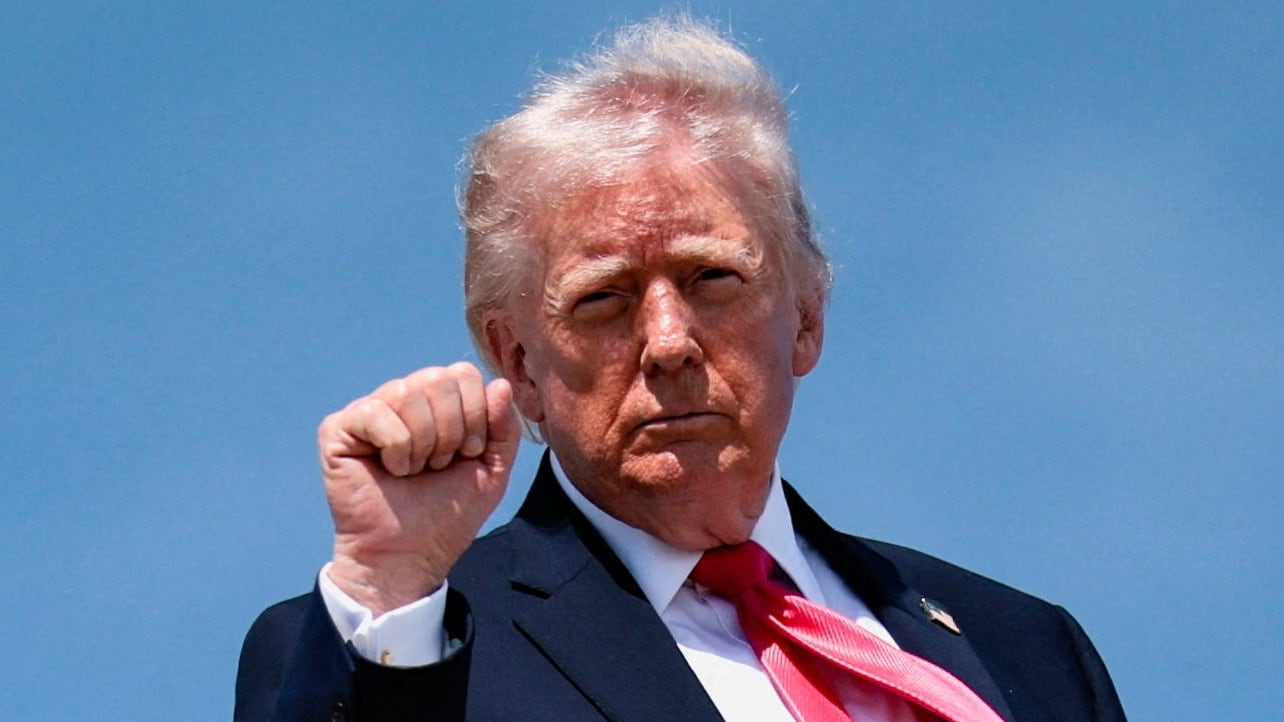
President Donald Trump on Friday escalated tensions with the European Union, with reported plans to pull thousands of U.S. military personnel from Germany and an announcement of 25 percent tariffs on imported European cars and trucks.
Both decisions came amid strained relations over the Iran war, raising fresh concerns inside NATO about Washington’s long-term commitment to the alliance.
US Troop Withdrawal From Germany
Newsweek obtained a statement from the Pentagon that said around 5,000 personnel would withdraw from bases in Germany as a direct result of the country’s lack of support for the U.S. war in Iran and “follows a thorough review of the Department’s force posture in Europe and is in recognition of theater requirements and conditions on the ground. We expect the withdrawal to be completed over the next six to twelve months.”
Some troops may return to the U.S. and then be redeployed elsewhere in the world, including the Indo-Pacific region, according to CBS News, which also said that one combat team will be impacted by the withdrawal, while another battalion meant for deployment later this year will now be reassigned.
The Landstuhl Regional Medical Center in Germany, the largest U.S> military hospital outside the U.S., would not be affected, the officials said.
Trump Announces New Tariffs: What To Know
The president has been advocating for an increase in car manufacturing in the United States, using tariffs as one method to leverage that wish with manufacturers.
In a post on Truth Social on Friday, Trump said tariffs on EU-made vehicles would rise to 25 percent (from 10-15 percent) starting next week, accusing the bloc of failing to comply with the transatlantic trade deal announced last summer.
The president argued the move would push automakers to relocate production to the United States, saying vehicles built in U.S. plants would not face duties.
The White House has framed the tariffs as part of a broader push to rebalance trade and boost domestic manufacturing.
“I am pleased to announce that, based on the fact the European Union is not complying with our fully agreed to Trade Deal, next week I will be increasing Tariffs charged to the European Union for Cars and Trucks coming into the United States,” Trump posted on Truth Social. “The Tariff will be increased to 25%. It is fully understood and agreed that, if they produce Cars and Trucks in U.S.A. Plants, there will be NO TARIFF.”
Trump touted an increase in plant construction with “over 100 Billion Dollars” in investment and jobs for American workers.
What Does This Mean for the EU Trade Deal?
As he left the White House Friday at lunchtime, the president told reporters on the White House Lawn that the EU was, “as usual,” not sticking to the trade deal agreed upon with European Commission President Ursula von der Leyen last July, which set a 15 percent tariff on most goods.
That deal was part of a swathe of tariffs overturned by the U.S. Supreme Court, with Trump instead imposing a 10 percent tax while investigating trade imbalances and national security issues, which could allow him to add additional tariffs.
Those backup tariffs were hit around the time of the Iran war, when global trade slowed, resulting in lower tariff revenue.
Strained EU Relations Over Iran
Both announcements landed against the backdrop of growing strain between Washington and European allies over security and defense burden-sharing.
This week, Trump launched a fresh verbal attack on German Chancellor Friedrich Merz, shortly after threatening to reduce the number of American troops on German soil. Trump told reporters Thursday that U.S. troop presence in Spain and Italy could also be reduced. He has repeatedly criticized NATO members for falling short on defense commitments and for what he calls a lopsided reliance on U.S. military protection.
European officials have warned that renewed trade penalties and uncertainty over U.S. troop levels risk further destabilizing an already fragile transatlantic relationship.
Related Articles