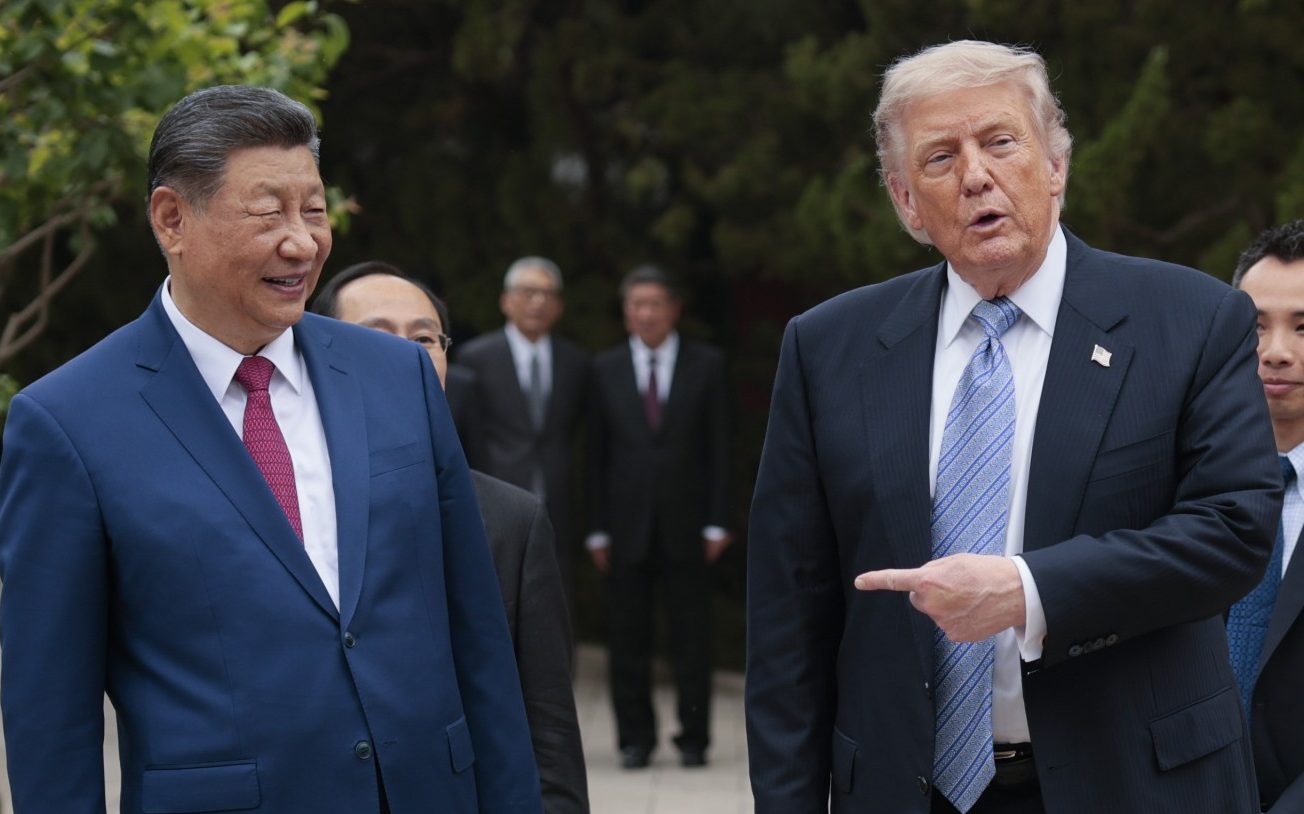
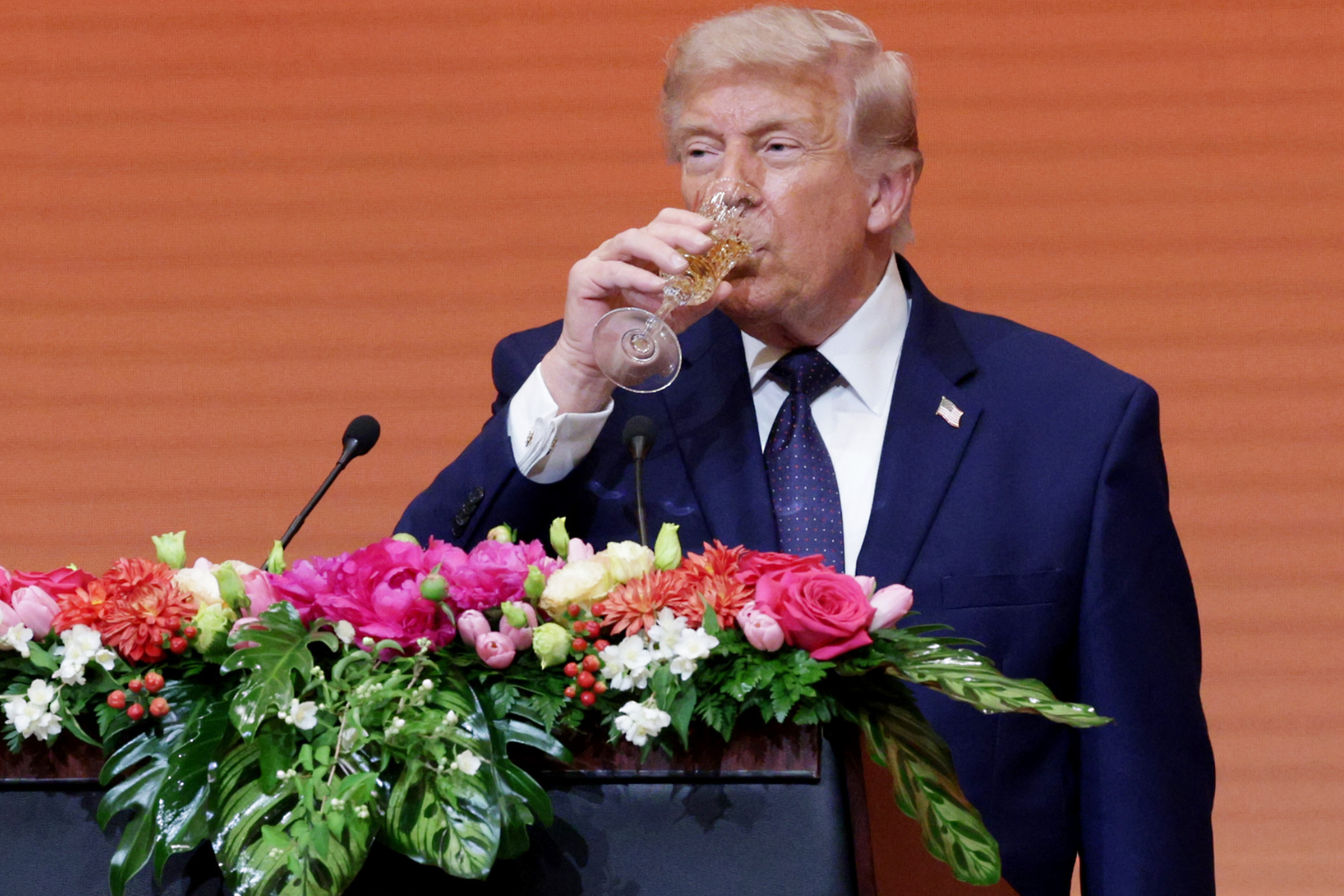
A brief moment at Donald Trump’s high-stakes meeting with Chinese President Xi Jinping has sparked fresh attention after the U.S. leader was seen raising a glass and appearing to take a sip during a formal reception.
Footage from the event shows Trump holding a stemmed glass alongside Xi and other officials before bringing it to his lips. The moment stands out because the president has presented himself as a lifelong teetotaler—making even routine diplomatic gestures open to closer scrutiny.
The reception formed part of a tightly choreographed state visit, where symbolism and protocol carry as much weight as policy discussions. Toasts between leaders are a standard feature of such events, often designed to signal mutual respect and stability in the relationship, regardless of what is actually consumed.
Newsweek has contacted the White House for comment outside of working hours.
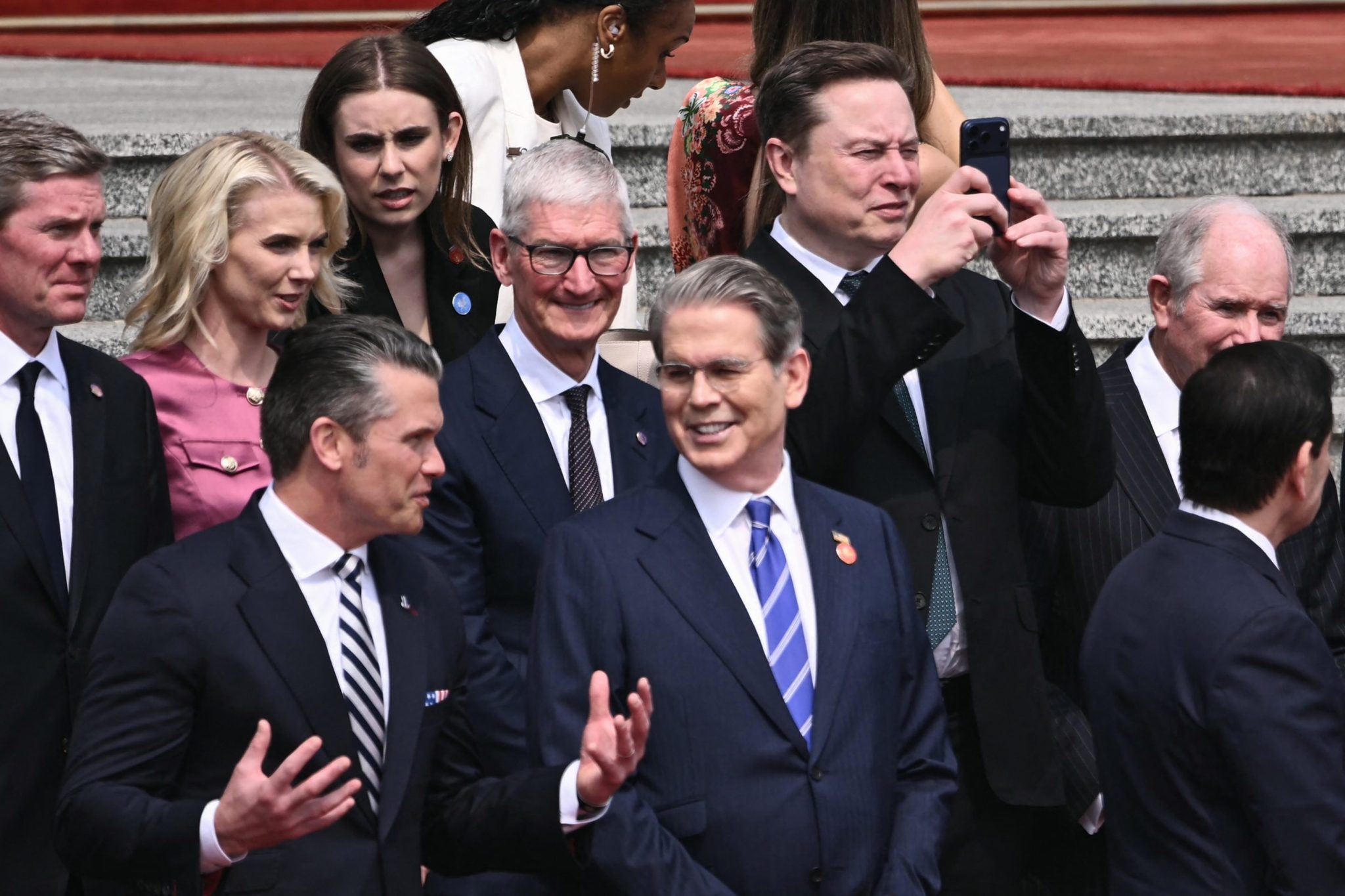
Images from the banquet show multiple attendees holding similar glasses typically associated with wine or Champagne. At events of this nature, however, alcoholic and non-alcoholic drinks are frequently served in identical glassware, allowing participants to take part in the ritual without necessarily drinking alcohol. There has been no confirmation of what Trump was served.
This is not the first time such moments have prompted questions. Throughout his presidency, Trump was repeatedly photographed raising Champagne flutes or wine glasses at international events, particularly during multilateral gatherings where toasts are expected.
One widely reported instance in 2017 noted that he appeared to sip from a wine glass at a United Nations reception. At the time, coverage emphasized that it was also not possible to verify the contents of the glass.
Does Donald Trump Drink Alcohol?
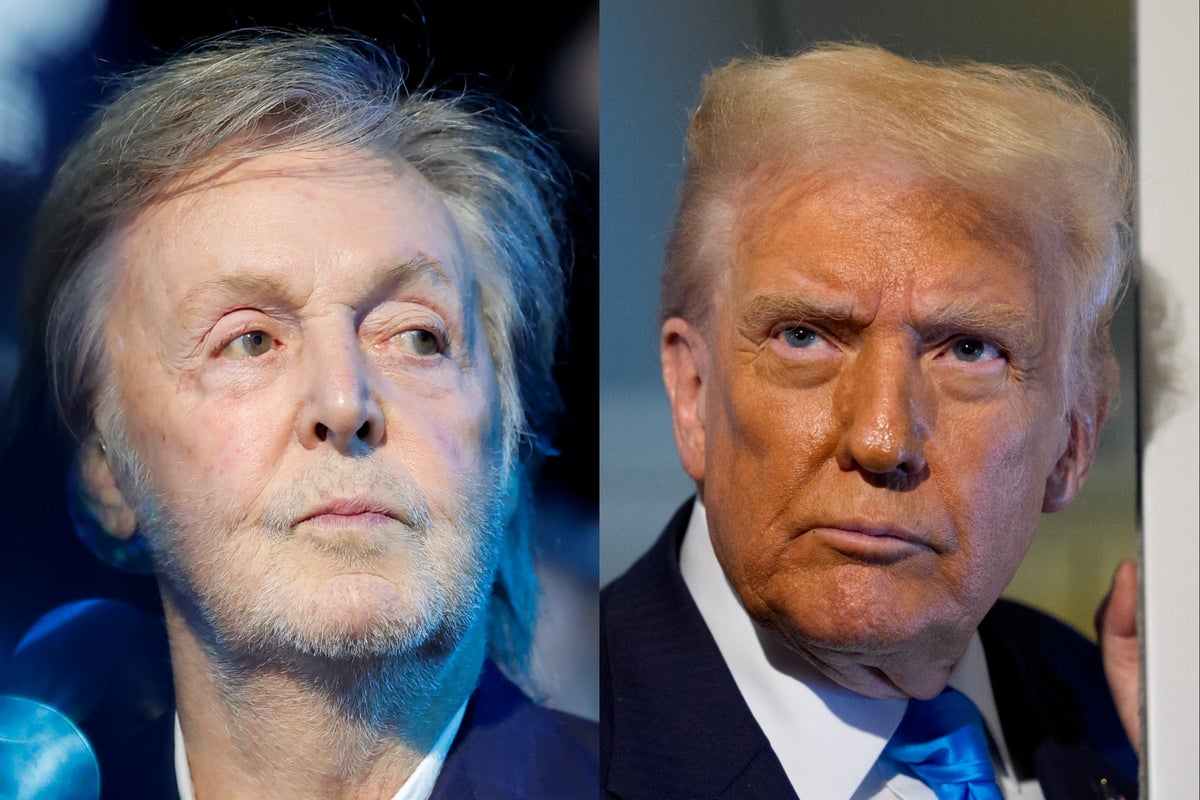
Trump has repeatedly said he does not drink alcohol, a decision he has linked to the death of his older brother, Fred Trump Jr., who struggled with alcoholism. The president has frequently framed the decision as both a personal rule and a lesson drawn from his family’s experience.
“Look, I’m just saying, I’m not a drinker. I can honestly say I’ve never had a beer in my life, OK? It’s one of my only good traits, I don’t drink,” Trump joked in 2018, adding “I’ve never had a glass of alcohol, I’ve never had alcohol. I just, for whatever reason. Can you imagine, if I had, what a mess I’d be? I’d be the world’s worst.”
That claim has remained a consistent part of his public image for decades, setting him apart from many political figures who openly drink at official functions. It also means that any imagery suggesting otherwise tends to attract disproportionate attention—particularly in highly visible diplomatic settings.
At official events, Trump has instead typically opted for alternatives such as Diet Coke or water, even when standing alongside counterparts drinking wine or Champagne.
Trump is not the only president to abstain from alcohol. Notable teetotalers include Joe Biden and Jimmy Carter, while others like George W. Bush stopped drinking before taking office, and Rutherford B. Hayes famously allowed no alcohol in the White House.
On the other side, there have also been presidents famed for their heavy drinking habits. Franklin D. Roosevelt loved hosting White House cocktail hours and was famous for mixing his homemade martinis. Lyndon B. Johnson had a legendary fondness for scotch whisky, specifically Cutty Sark. He frequently drove around his Texas ranch in an open-top car while sipping Scotch out of a plastic cup.
It is little surprise that Trump took part in the toast, but diplomatic practice allows for flexibility too. Leaders are expected to take part in the gesture of a toast, but not necessarily to drink alcohol itself, and substitutes are commonly used without being publicly specified.
The White House has not commented on the moment, but the attention from the public highlights how small, symbolic moments can take on outsized significance during closely watched meetings between global leaders.
Related Articles