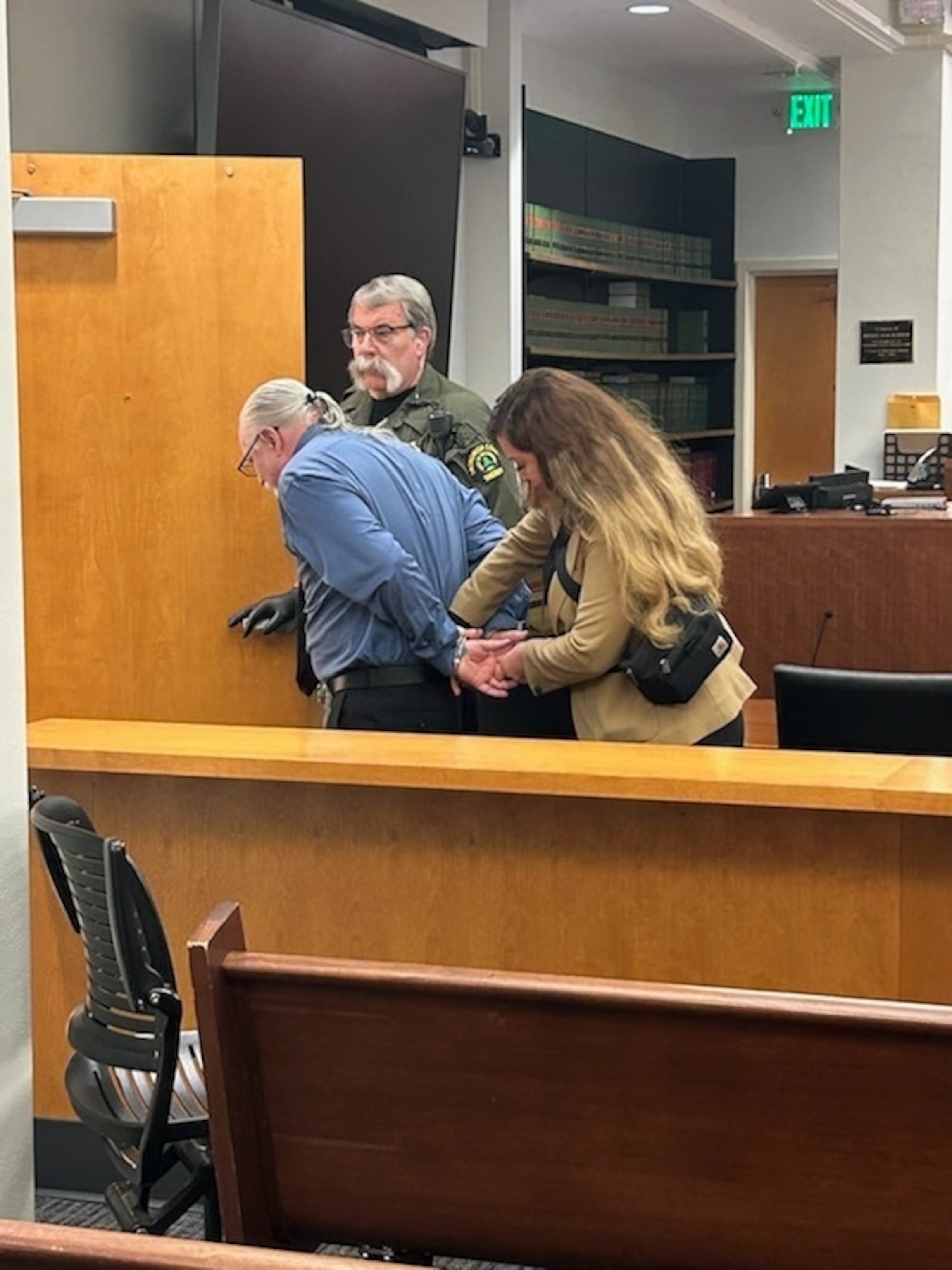

A healthcare business founder and owner was convicted Wednesday over what the Acting U.S. Attorney General called one of the “most egregious” Medicare fraud schemes in Florida history.
Brett Blackman’s conviction over the $1 billion-plus scheme falls amid a concerted effort by the Trump administration to put a stop to what it sees as widespread fraud schemes targeting Medicare and Medicaid funding by so-called bad actor companies filing false claims or placing patients on unnecessary treatments.
Blackman now faces up to 30 years in prison over healthcare fraud, wire fraud, and other convictions. His coconspirator, Gary Cox, was previously convicted and sentenced to 15 years over his part in the scheme.
“The Department of Justice crushed one of the most egregious fraud schemes in Florida history,” Acting Attorney General Todd Blanche said in a press release Thursday. “This illegitimate operation stole more than $1 billion from American taxpayers — including hundreds of thousands of Medicare beneficiaries.
“This was cold, calculated, industrial-scale theft targeting the sick and elderly, coercing vulnerable people into buying unnecessary medical equipment. We will not rest until every fraudster ripping off the American people is held accountable.”
Medicare Fraud in Florida: What To Know
According to the U.S. Department of Justice (DOJ), Blackman, 42, of Johnson County, Kansas, worked with co-conspirators to target hundreds of thousands of Medicare beneficiaries, many of whom were in Florida, leading them to accept medically unnecessary orthotic braces and other medical items.
The scheme operated in and around South Florida, including Miami-Dade County, as well as in Kansas and Arizona, from at least 2015 through 2020 and involved executives tied to companies including Healthsplash, Inc. and Power Mobility Doctor Rx (PMDRX).
Prosecutors who brought the case in the Southern District of Florida said the companies ran an online platform that generated doctors’ orders for braces, prescription creams and other items. Those orders were then funneled to medical suppliers and pharmacies, which used them to submit claims to Medicare and related programs.
Unlike legitimate medical orders, the documents were often not based on real examinations. In many cases, medical practitioners allegedly signed the orders after only brief phone calls—or no interaction at all—with patients.
The system relied heavily on telemarketing and advertising campaigns targeting Medicare beneficiaries, promising free or low-cost medical products in exchange for personal information. Those details were then used to generate standardized, pre-filled order forms falsely claiming that physicians had evaluated the patients and deemed the products medically necessary.
Investigators said the conspiracy also involved kickbacks and bribes. Participants allegedly bought and sold these fake doctors’ orders, disguising the payments through sham contracts and invoices labeled as marketing or administrative services.
The scale of the fraud was vast. Federal health care programs were billed nearly $2 billion, and paid out more than $639 million based on the fraudulent claims, according to court documents.
How the Scheme Worked
At the center of the operation was a web-based platform designed to streamline the production of fraudulent medical documentation.
Prosecutors said the platform allowed user companies to input patient information and automatically generate “doctors’ orders” using pre-written templates. The templates were crafted to maximize reimbursements and avoid scrutiny, even including language falsely indicating that in-person examinations took place.
In some instances, internal communications showed efforts to remove references to telemedicine consultations to reduce the risk of audits.
The resulting documentation was then transmitted to suppliers, who billed Medicare for items such as orthopedic braces or compounded medications—often costing hundreds or thousands of dollars per claim.
“This conviction further underscores our dedication to protecting the integrity of military healthcare from large-scale exploitation,” Special Agent in Charge Jason J. Sargenski, of the Department of Defense Office of Inspector General’s Defense Criminal Investigative Service (DCIS), Southeast Field Office, said in a press release.
“Fraud of this magnitude drains vital resources and jeopardizes the care promised to our service members, retirees, and their families. DCIS, alongside our partners, remains steadfast in rooting out and dismantling these schemes, ensuring every conspirator faces justice.”
What Happens Next
The conviction marks a significant step in the government’s broader crackdown on Medicare fraud, particularly schemes tied to telemedicine practices that expanded rapidly in recent years.
Those found guilty in similar cases can face substantial prison time, financial penalties and forfeiture of illicit proceeds. Under federal law, conspiracy to commit health care fraud carries a maximum sentence of up to 20 years in prison, along with fines tied to the amount of fraudulent gains.
Correction 5/14/26, 3:22 p.m. ET: This article and headline were corrected to reflect that the fraud totaled $1 billion rather than $1 million as previously stated.
Related Articles