WASHINGTON – The Washington Hilton for the annual White House Correspondents’ Association Dinner is one of the most tightly secured sites visited by the president of the United States and much of the capital's elite.
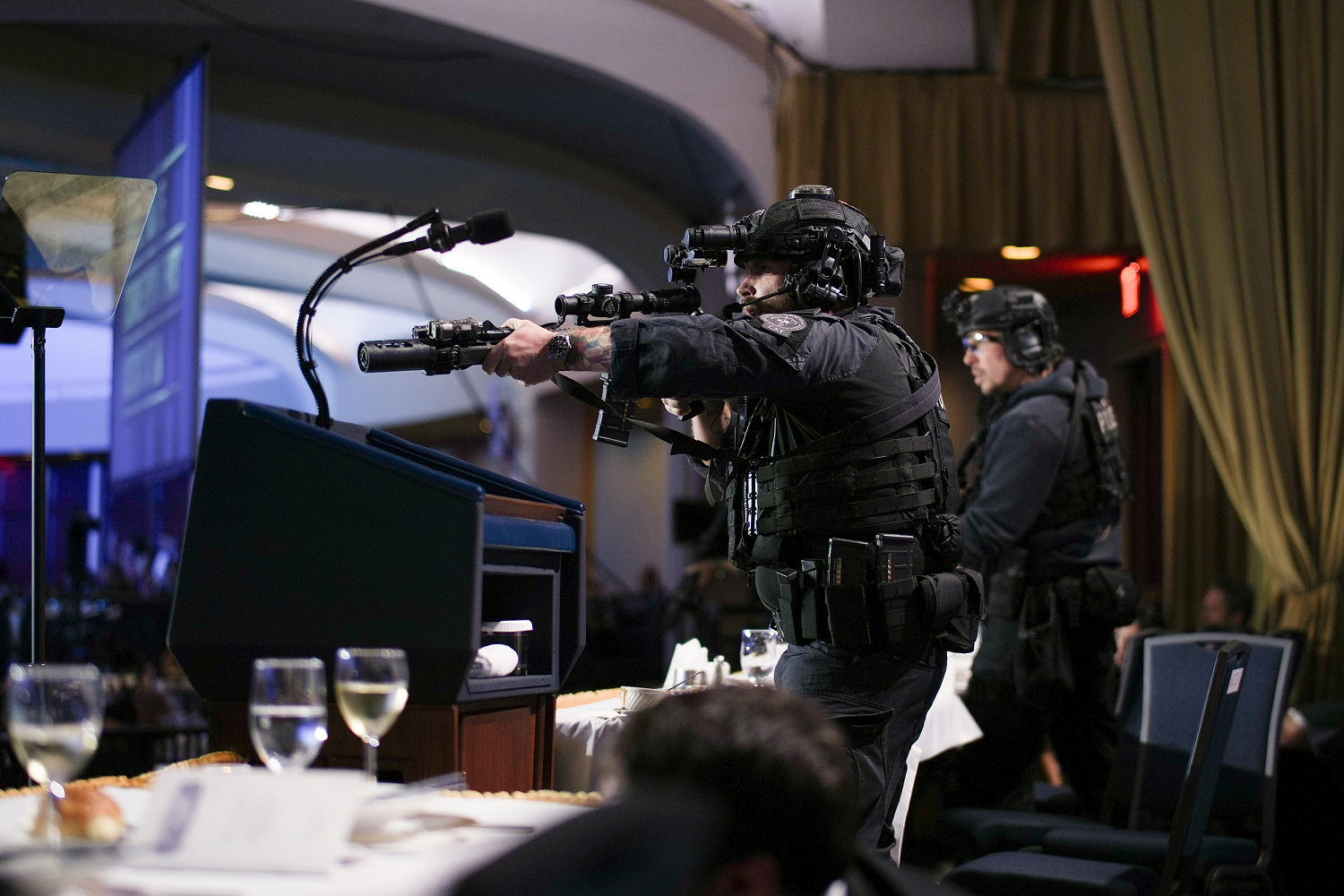
Hundreds of agents and more senior officials from the Secret Service, including the paramilitary Counter Assault Team that travels everywhere with President Donald Trump.
Secret Service snipers on the roofs of nearby buildings, who are part of a massive security contingent that has prepared for weeks, or even months for the annual event. Almost certainly drones flying overhead.
Start the day smarter. Get all the news you need in your inbox each morning.
And probably just as many officers and other personnel from Washington’s Metropolitan Police, who work “hand in glove” with numerous federal agencies to secure the building and create what is supposed to be an impenetrable perimeter in case anyone with bad intentions tries to do something.
That’s all according to A.T. Smith, a private security consultant who was deputy director of the Secret Service from 2012 to 2015 and has worked many events like this, including the annual dinner that’s traditionally attended by the president, vice president, Cabinet officials, senior White House aides, lawmakers and hundreds of journalists.
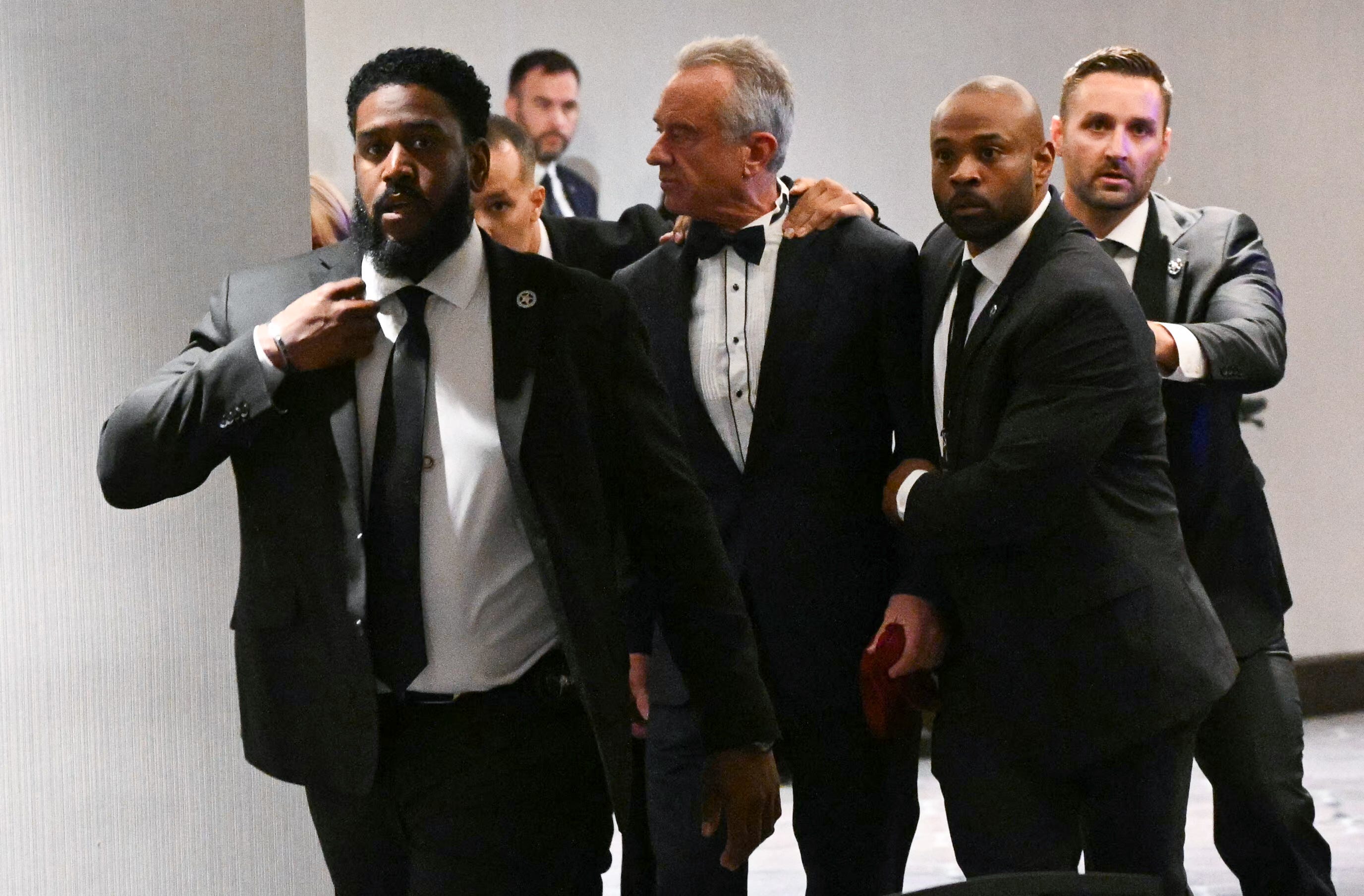
The president and first lady Melania Trump were rushed out of the dinner and attendees dropped to the floor after gunshots were heard inside the hotel where the event was taking place on April 25. Several US Secret Service agents yelled, “shots fired” during the event, according to pool reports.
The New York Times, CBS, the Associated Press and other outlets, citing anonymous law enforcement officials, identified the suspect as Cole Tomas Allen, 31, of Torrance, California. USA TODAY has not independently verified the suspect's name.
The president and law enforcement officials said a suspect is in custody and facing charges.
What security can look like at the White House correspondents dinner
The annual dinner is protected by one of the most extensive security operations outside of what’s known as a U.S. National Special Security Event like a presidential inauguration or political convention, Smith said.
“The security of this building should be at the absolute highest level,” Smith told USA TODAY soon after the incident. “On a scale of one to 10, this should be a 10.”
The Secret Service never says how it protects the president, including personnel deployed and technology used. The agency did not return a request for comment from USA TODAY.
But Smith said it was likely several hundred agents in total were on-scene at the dinner, which takes place at the same sprawling complex where a lone gunman tried to assassinate President Ronald Reagan as he was leaving the hotel on March 30, 1981.
How did someone get close to the ballroom?
So how did someone get a gun so close in?
Federal and local authorities will be reviewing that for days, weeks or even months, as per protocol, Smith said.
At a White House briefing April 25, Trump suggested the suspect was outside the most significant layer of the security perimeter, which is a bank of magnetometers that all guests had to go through outside the ballroom where the dinner was held.
Before that, anyone trying to enter the hotel had to show an invitation to the dinner itself or one of the many pre-parties hosted by media and other organizations in other parts of the building.
“A man charged a security checkpoint armed with multiple weapons, and he was taken down by some very brave members of Secret Service, and they acted very quickly,” Trump said.
“The room was very, very secure,” Trump said later in the briefing when asked if he was concerned about his safety at indoor events. “You know, he charged from 50 yards away, so he was very far away from the room.”
Secret Service spokesperson Anthony Guglielmi said in a post on X that the shots were fired near the main magnetometer screening area at the dinner.
Trump praised the Secret Service and other law enforcement agencies for their work Saturday night.
“You had to go through a lot” to get to the dinner itself, he said. “We had we had resources all over, resources sitting at tables," he added.
Trump also said the suspect “was moving, he was really moving. And the reaction time was great” by officers who took him down and into custody, the president said.
One officer was shot “from very close distance with a very powerful gun” but saved, Trump said, by his security vest.
Other VIPs, including Cabinet members, were grabbed and pushed down by two or even three agents, as photos emerging from the post-incident chaos showed.
Asked if he believed he was the target, Trump said, “I guess. I mean, these people, they're crazy. They're crazy. And you know, you never know. It was very far away from me.”
But Trump also noted that the suspect somehow found a way through the less secure layers of the security perimeter before getting to the lower level ballroom area where the dinner was held.
“It was not a particularly secure building,” Trump said.
Based on preliminary information, local and federal authorities said they believe the suspect in the shooting was a guest at the hotel. Law enforcement secured a hotel room believed to belong to the suspect and is investigating, according to Reuters, ABC News and other media.
An operator at the hotel told USA TODAY a person named Cole Tomas Allen was staying at the hotel on April 25.
When asked corrective measures he thought might be needed to protect him, Trump suggested someone can always find a way to get close to him.
“I don't care how many people you have, how good they are, they can be the greatest people you have, the greatest security in history,” Trump said. But, “If you have a whack job who's got a brain, but it's a little bit distorted, or a lot distorted, they can make trouble.”
This article originally appeared on USA TODAY: What we know about security after the White House press dinner shooting