Robert was at work when the call came.
It was his wife, and she was frantic. She said she'd just hung up with their daughter's therapist at Asheville Academy, the residential treatment center where they had sent their 14-year-old to live four months earlier.
The program was shutting down, she told him. They had 24 hours to pick her up.
Start the day smarter. Get all the news you need in your inbox each morning.
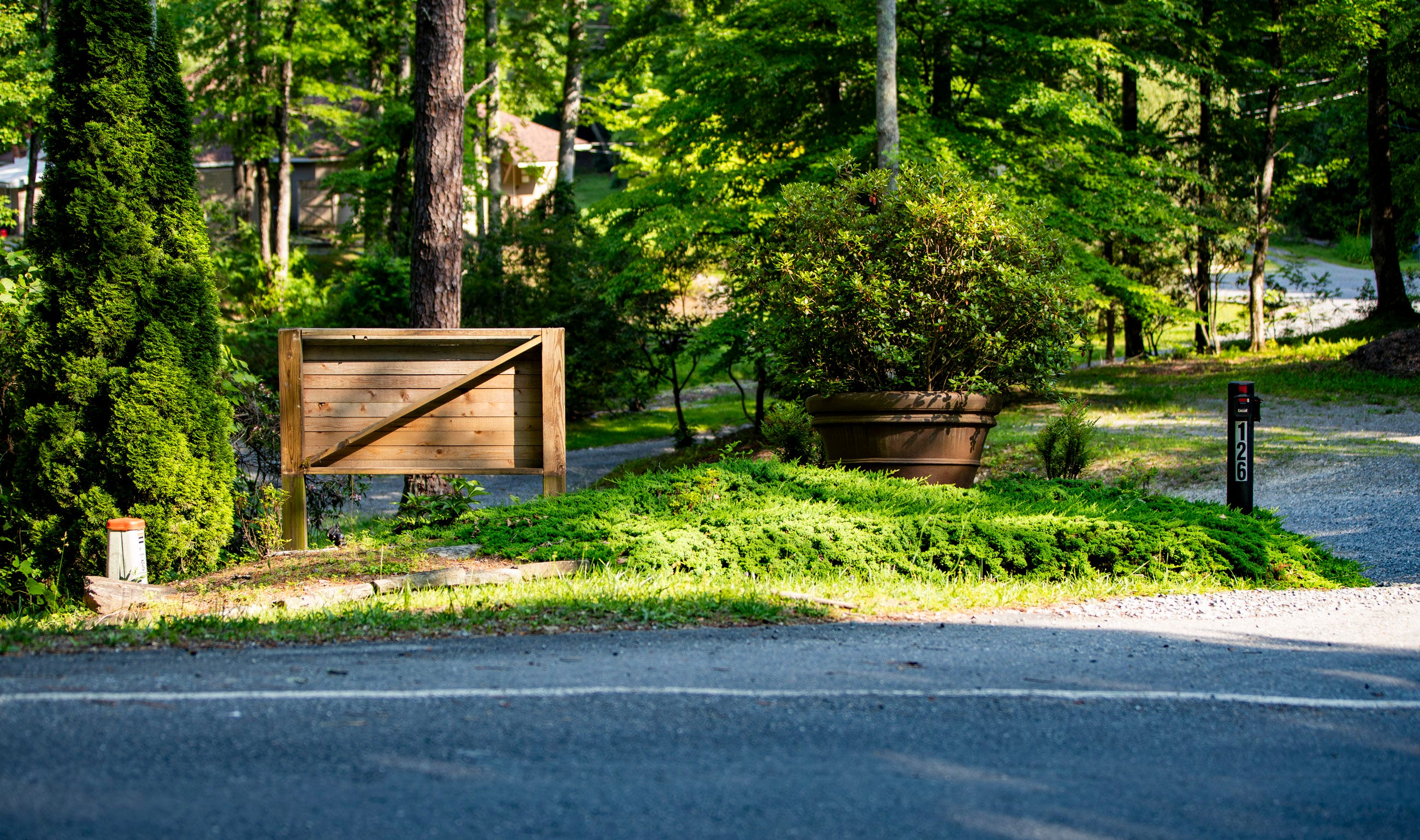
The family, based in Texas, dropped everything. Within hours, Robert’s wife purchased a plane ticket to North Carolina, then drove from Charlotte through a storm to reach the campus in Weaverville.
“We just packed her up and headed home, not knowing why we had to come get her,” says Robert, who stayed in Texas to prepare the house for his daughter's return. “All of a sudden, she's home, and it's like radio silence. We're not hearing anything from Asheville.”
It was May 31, 2025, and everything was unraveling.
Two days earlier, a 12-year-old girl at Asheville Academy had died by suicide. It was the second such death that month; a 13-year-old died on May 3. The North Carolina Department of Health and Human Services had suspended further admissions on May 27 as it began investigating. Then, the program shuttered.
Robert says they were stunned by news of the deaths on campus and felt clueless as to where to turn next to help their daughter.
“We honestly thought that this was going to be a wonderful place for her,” says Robert, who asked that USA TODAY withhold his last name to protect his daughter’s medical privacy.
Scenarios like these are not uncommon in the largely unregulated, vast industry of youth residential programs aimed at helping struggling kids, according to experts and organizations that track issues with the troubled teen industry. That umbrella term encompasses wilderness therapy programs, therapeutic boarding schools, boot camps and places like the now-defunct Asheville Academy. Entire websites and online databases track reviews of programs as well as which ones have been shut down, investigated or rebranded under a new name.
Proponents say these programs saved their children’s lives, and some parents feel strongly that sending their children to treatment stopped their kids from descending further down a destructive path. But critics argue that for each success story, there are also allegations of harm, some of which only surface after serious incidents or lengthy investigations.
When programs shut down, parents already navigating a child’s mental health crisis are left scrambling and with little clarity on where to turn next, according to Meg Appelgate, the founder of Unsilenced, a nonprofit that raises awareness about the troubled teen industry, connects survivors and helps them find legal resources.
More than 185 of these programs have closed since 2020, according to data from Unsilenced.
“Kids have completely, for better or worse, established their lives within the walls of these facilities, and their daily life is completely uprooted,” says Appelgate. “Chaos like that, it can wreak havoc, and it's usually going to last for a lot longer than just the chaos of the program closing.”
Robert and his wife had spent years trying to help their daughter, who had been through six emergency detentions and two partial hospital programs by the time she turned 14. They thought they had finally found somewhere that could help.
They took out a second mortgage and borrowed money from family members to pay the monthly tuition at Asheville Academy, which was more than $15,000.
They were floored to learn allegations of what happened there.
“We are amazingly fortunate that we got our daughter back in as good a shape as she is,” Robert says.
A spokesperson for Wilderness Training & Consulting, the company behind Asheville Academy, declined to comment. Former representatives for Asheville Academy did not respond to multiple requests for comment.
“Asheville Academy has made the difficult decision to voluntarily close its doors,” the facility previously told reporters in a June 3, 2025, statement. “We informed families of this decision and prioritized a smooth departure for all students by Saturday, May 31.”
A North Carolina Department of Health and Human Services investigation in June 2025 found Asheville Academy’s operator, Wilderness Training & Consulting, violated three state licensing and patient rights regulations, resulting in $45,000 in administrative penalties.
‘This sounded like legitimate mental health treatment’
Robert’s daughter's struggles began in middle school. She had issues maintaining normal, healthy friendships and began acting out. Things escalated and she struggled with suicidal ideation.
“We just were stuck in this cycle where she would go into the hospital, they would modify her meds for a couple days and send her back home and say, ‘Let's see how she does.’ And then we knew the clock would start ticking.”
By 14, the pattern repeated every two weeks.
Robert felt like they were out of options.
One professional they sought advice from suggested wilderness therapy. They sent their daughter on an eight-week program, and when that ended staff there recommended she be treated further at a residential boarding school, according to Robert.
Appelgate says Robert’s family isn’t an anomaly − kids are often funneled from one program to another.
When Robert spoke to Asheville Academy, a staffer sent the family a video of the facility. Robert recalls the employee said the footage was from an older campus.
But Robert noticed some details didn’t fully align. The video, he says, featured branding from Magnolia Mill School, the program’s former name. And he noted one staffer still used a Magnolia Mill School email address.
He says administrators told the family the program had once operated across two campuses but had since consolidated. But the program’s history was more complicated, a paper trail of its name changes shows.
The school then-known as Asheville Academy operated under multiple identities over the years. It was originally Solstice East, a residential treatment center that opened in 2012. In 2024, it was rebranded as the Magnolia Mill School, and in February 2025, that program merged with Asheville Academy for Girls.
Solstice East had previously been accused of abusive practices including placing kids in seclusion for days on end and overmedicating a student to the point of hospitalization. Solstice East denied the allegations.
Program rebranding is common within the industry, according to Appelgate. Families seeking treatment for their children during a crisis say these details can make it more difficult to track past issues with a given school or program.
“We had no prior knowledge about this whole troubled teen industry,” Robert says. “This sounded like legitimate mental health treatment, and we were having to make decisions quickly.”
A mom named April, like Robert, says she found Asheville Academy’s program when she was desperate to get help for her daughter, who by age 10 had been hospitalized multiple times for manic and suicidal episodes.
She says a virtual campus tour showed her a lodge on a lake, rolling hills and walls lined with student artwork. A brochure advertised a “welcoming environment” and “cozy” classrooms.
It looked idyllic, she recalls.
But April, whose daughter attended Asheville Academy for Girls from June of 2020 to January 2021 says when her daughter came home for Christmas, she was covered with bug bites and scars from manual labor.
When it was time to take her daughter back to the program, “There are no words to describe how much she was screaming and crying,” April says. USA TODAY is withholding her last name to protect her daughter’s medical privacy. Days later, April pulled her daughter from the program.
Katelyn, a Solstice East resident from 2019 to 2020, says she can’t fathom how Asheville Academy remained open for as long as it did.
While at Solstice East, she says she experienced physical restraint and was at times kept in seclusion for days in an underground basement with no sunlight as punishment, a practice other former residents say they also experienced.
Katelyn acknowledged students had a variety of experiences at the Weaverville program, depending on their primary therapist and the staff they interacted with.
“Not everyone had a terrible experience,” says Katelyn, who asked that USA TODAY withhold her last name. “There were a few girls I know that genuinely are grateful they went.”
For example, mom Jill Sanders, whose daughter attended Asheville Academy in 2025, told Spectrum News 1 that the residential treatment facility left a positive impact on her daughter. She said her daughter was treated with care by staff.
“It was a great place. And I really do think that I owe a lot to them," Sanders told the news station.
Katelyn, however, worried she would never leave the program. She tried to die by suicide.
“My self worth was absolutely just destroyed,” she says. “I just thought I was worthless.”
‘I felt like I'd been bamboozled’
School closures aren’t unique to mental health treatment centers, but when kids are living at these facilities, they can be far more destabilizing, experts say.
Robert’s family was left with minimal information from Asheville Academy, he says. His emails to staff began bouncing back as undeliverable. Links on the program’s website started disappearing.
Robert says when he asked whether parents would receive a conference call or explanation, a program director responded that the school was “effectively closed” and directed him instead to a billing email address for any remaining questions.
He began digging into reports and online forums about the troubled teen industry, where he came across accounts from other families who sent their kids to programs owned by Wilderness Training & Consulting, the company behind Asheville Academy.
“Is this just an industry where they basically just open up until they run its course and get found out, and they just close up like and leave like the circus?” Robert says. “I felt like I'd been bamboozled.”
Asheville Academy voluntarily forfeited its license on June 4, 2025. In the months that followed, former students began filing lawsuits alleging abuse and misconduct at the program.
Two former students who attended the school between 2023 and 2024 filed a lawsuit in August 2025, accusing the program and Wilderness Training & Consulting of violating their civil rights and attempting to cover up a report of sexual exploitation while the school cycled through multiple rebrands. In October, a third former student filed a separate lawsuit alleging abuse, neglect, sexual assault, forced labor and false advertising during her time at the program in 2020.
These lawsuits remain pending, and Wilderness Training & Consulting is fighting the lawsuits, according to court filings.
Gareth Purnell, an attorney representing several former Asheville Academy students, says his firm receives roughly two to three inquiries a day from people who say they were sent off to programs or schools where they were mistreated.
“It has exploded with how many people are aware of what's going on,” Purnell says.
‘These are years I will never get back’
For parents of teens dealing with serious substance abuse or mental health issues, navigating an ever-growing list of programs and treatment centers can feel cumbersome and convoluted. Some families fear for their children’s safety and rush to take action, as was the case for Robert’s family.
Appelgate says it’s important to track a program’s history before making any decisions.
She says parents should be wary of any place that claims to treat a wide range of mental illnesses without specialized clinical staffing to match each of those issues. She also suggests caregivers look closely at whether programs employ licensed clinical social workers, psychologists or psychiatrists − not just mentors or coaches.
Alec Stone, the executive director of the National Association of Therapeutic Schools and Programs, a trade organization representing programs in the therapeutic treatment field, argues these programs are a necessary lifeline for families.
“When dealing with a population with this level of acuity, there are going to be negative outcomes,” Stone says. “There are going to be people who are not satisfied with the process that they have.”
That’s the case for Robert’s family.
After spending what he estimates is nearly $100,000 on wilderness therapy and residential treatment programs, he says he and his wife are still trying to find the right help for their daughter. Many of her mental health issues persist. Some have worsened.
“She absorbed new ‘issues’ from the girls at Asheville Academy and the trauma of being there,” he says. “Ultimately, nothing changed for her.”
Rachel Hale’s role covering Youth Mental Health at USA TODAY is supported by a partnership with Pivotal and Journalism Funding Partners. Funders do not provide editorial input.Reach her at rhale@usatoday.com and @rachelleighhale on X.
This article originally appeared on USA TODAY: They sent their teens away for treatment. Then, everything unraveled.