The United Arab Emirates (UAE) and Saudi Arabia carried out secret military strikes on Iran, despite publicly claiming they were not part of the war against the Islamic Republic.
The two countries, both allies of the United States, had previously condemned Iranian aggression.
But it emerged on Tuesday that they carried out separate attacks in March and April, respectively.
Abu Dhabi said it maintained the right to respond to hostile attacks in a defensive manner, but denied any active interventions against Tehran throughout the conflict.
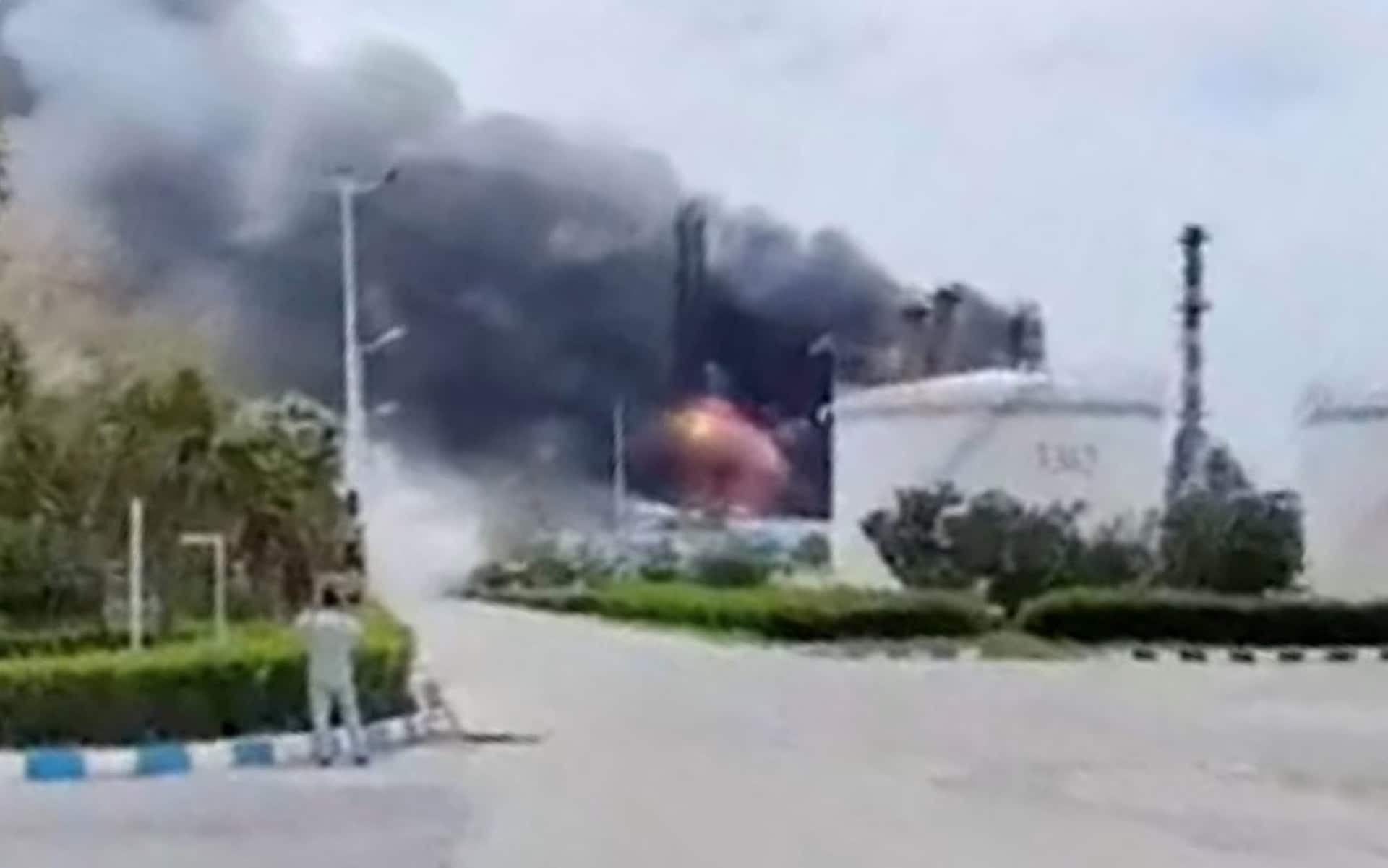
However, the UAE’s armed forces, which are equipped with American helicopters and fighter jets, reportedly attacked an oil refinery on Iran’s Lavan Island in the Gulf at the start of April, according to the Wall Street Journal.
Saudi Arabia’s attacks were launched by its air force and were carried out in late March, two Western officials said. One source said they were “tit-for-tat strikes in retaliation for when Saudi Arabia was hit”.
The target of Saudi Arabia’s attacks was not immediately clear.
The UAE’s strikes took place “around the time” that Donald Trump, the US president, announced a ceasefire in the war, after a five-week military campaign against the Islamic Republic.
It is believed the UAE’s covert attack was the assault on the island on April 8, which caused considerable damage to the site and disabled a significant portion of the facility’s production capacity.
On the day of the strikes on Lavan Island, the Iranian state broadcaster accused Abu Dhabi and Kuwait of being behind the attacks.
The assault came on the same day the US and Iran agreed to a two-week ceasefire, which was mediated by Pakistan.
However, Washington quietly welcomed the Emirati attacks, stating that any other Gulf states that wanted to join the war were encouraged to do so, an American official told the Wall Street Journal.
Iranian and Western officials said Saudi Arabia made Iran aware of its strikes and this was followed by intensive diplomatic engagement and Saudi threats to retaliate further, which led to an understanding between the two countries to de-escalate.
The disclosures threaten to draw the UAE and Saudi Arabia into the war as active combatants, at a time when Mr Trump describes the current ceasefire as on “life support” after he rejected Tehran’s latest proposal to end the war.
Recommended
Iran is on its knees, and can't demand anything significant from Trump
Saudi officials have become increasingly hawkish about Iran after the country fired dozens of drones and missiles at the beginning of the conflict.
The two countries were previously at loggerheads over their support for opposing groups in conflicts across the region.
At a press conference in Riyadh on March 19, Prince Faisal bin Farhan Al Saud, the Saudi foreign minister, said the kingdom “reserved the right to take military actions if deemed necessary.”
Three days later, Saudi Arabia declared Iran’s military attaché and four embassy staff members personae non gratae.
After the attacks, intense diplomatic efforts and engagement with the Iranian ambassador in Riyadh led to a fall in strikes.
From more than 105 drone and missile attacks on Saudi Arabia in the week of March 25-31, the number fell to just over 25 from April 1 to 6, according to a Reuters tally of Saudi defence ministry statements.
A senior Saudi foreign ministry official said: “We reaffirm Saudi Arabia’s consistent position advocating de-escalation, self-restraint and the reduction of tensions in pursuit of the stability, security and prosperity of the region and its people.”
On Tuesday, Mike Huckabee, the US ambassador to Israel, also revealed that Israel had sent the UAE an Iron Dome battery and staff to operate the air defence system.
It is the first time the system has been sent to a country other than Israel and the US, and is the first public confirmation of its existence in the UAE.
At an event in Tel Aviv, he spoke of the “extraordinary relationship” between Abu Dhabi and Israel, based on the 2020 Abraham Accords, which established close ties between the two nations.
The UAE said it had intercepted more than 2,250 drones, 29 cruise missiles and 551 ballistic missiles launched by Iran.
Iranian attacks are believed to be responsible for the deaths of at least 10 civilians in the UAE since the conflict began. More than 230 have been injured by the strikes and fragments from intercepted missiles.
Abu Dhabi has described the attacks as “blatant Iranian aggression”, but has maintained that it is not part of the war.
In March 2025, the US announced the sale of more than $1.4bn (£1.03bn) in helicopters and F-16 fighter jet parts to the UAE.
It is unclear whether the American equipment was used to conduct the UAE’s reported strikes on Lavan Island.
On Monday, Mr Trump gave a scathing response to Iran’s counter-proposal to the US’s 14-point memorandum of understanding to end the war.
He described Tehran’s counter-proposal as a “piece of garbage”, adding that the Iranian negotiators had ignored his demands to give up their enriched uranium and nuclear ambitions.
Mr Trump told reporters: “I would say the ceasefire is on massive life support, where the doctor walks in and says, ‘sir, your loved one has approximately a one per cent chance of living’.”
In their response to the US proposal, Iran’s negotiators demanded the release of billions of dollars in frozen assets to end the 10-week-long war with the US.
Tehran said the assets, worth up to $100bn (£73bn), had been “unjustly frozen” in banks across the world owing to US pressure.