The militants had disguised themselves as civilians to mingle among unsuspecting Christian mourners.
Those at the wake in the village of Ntoyo in eastern Democratic Republic of Congo (DRC) had no clue until it was too late. The fighters from the Islamic State (IS)-linked Allied Democratic Forces (ADF) group suddenly began killing: hacking with axes and machetes and opening fire.
One witness said he saw fighters kill his sister with an axe. Another described how fighters broke into her house and abducted her four daughters. A third witness found the bodies of her parents in the morning. Her father had been shot while her mother had been struck with a hammer.
“I’d never seen so many bodies,” she told researchers from Amnesty International for a new report.
The massacre in early September 2025 killed at least 60 people and was one of a string of such attacks. The ADF has killed, kidnapped and tortured across swathes of eastern DRC.
The great majority of victims are Congolese Christians, but the ADF also kills local Muslims who disagree with their interpretation of Islam.
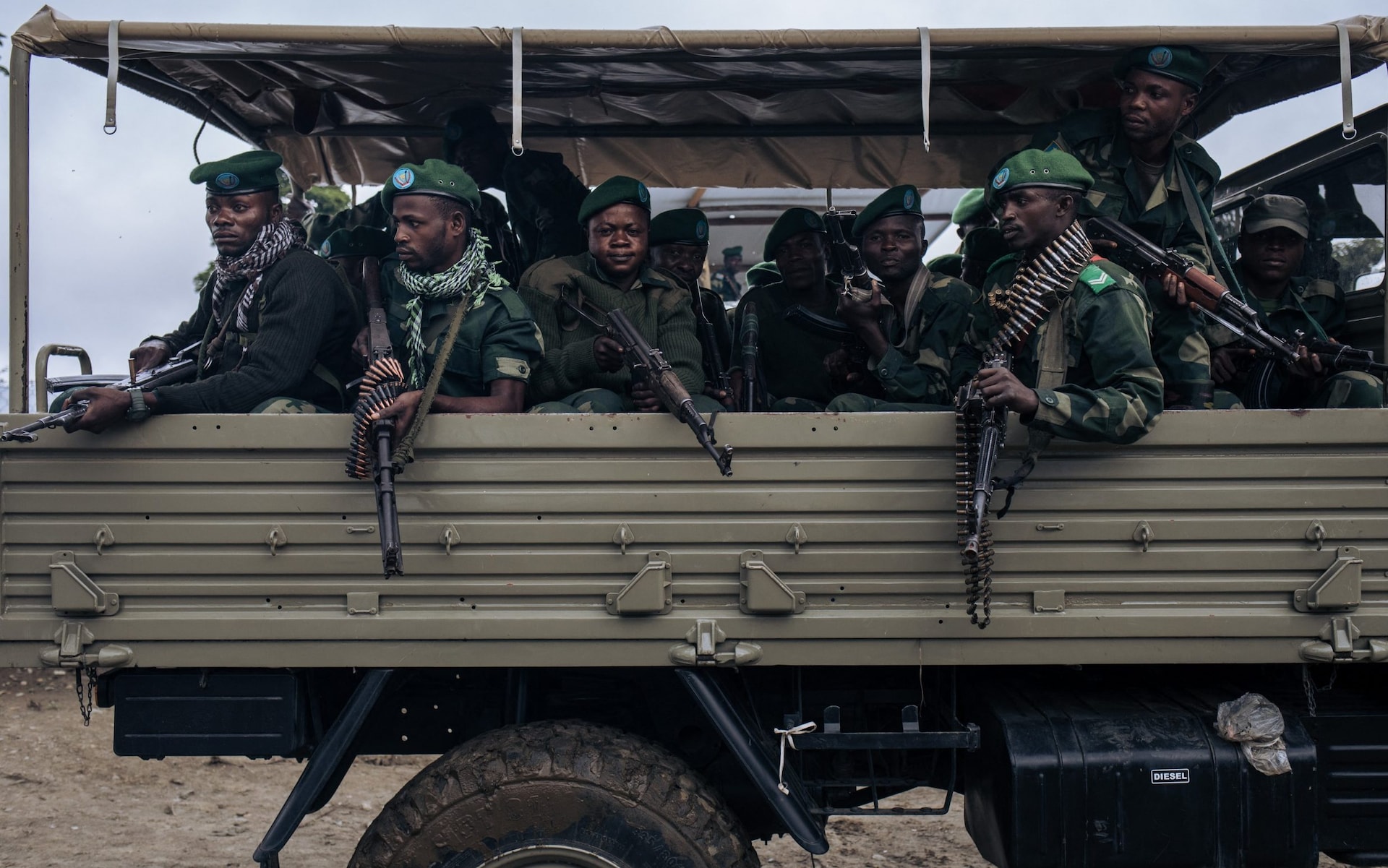
Advances by the separate Rwanda-backed March 23 movement (M23) militant group in the same region have left Congolese forces overstretched and the ADF has increased attacks in the resulting security vacuum.
Attacks by the group amounted to war crimes, but were being overlooked because of international focus on abuses by the M23 militants in the same region, the human rights charity said in the report.
Agnès Callamard, the charity’s secretary general, said: “Civilians in the eastern DRC have suffered extensive brutality at the hands of ADF fighters. They have been killed, abducted and tortured in a dehumanising campaign of abuse.”
The ADF was originally formed in Uganda in the 1990s by people accusing the government of persecuting Muslims. The army routed the group and the remnants fled across the border, starting a campaign of terror in DRC, before swearing allegiance to IS in late 2018.
The group has since become notorious for its bloody attacks on civilians, which Amnesty said amounted to war crimes or crimes against humanity.
Rawya Rageh, the charity’s crisis response researcher and report author, told The Telegraph: “The ADF has been operating in eastern Congo for years now and has been waging really horrific attacks on the civilian population.
“The vast majority of the ADF’s victims have been Christians, given the demographic composition in the area of its operations.
“That said, the group’s statements and claims of responsibility do make specific references to Christians being targeted, and the ADF’s leaders have stressed the permissibility of killing them.
“The group has also abducted and killed Muslims who do not espouse their version of their religion.”
On July 12 2025, the ADF killed eight people during a raid in Otmaber in Irumu territory in Ituri. One woman said fighters shot her, her husband and their seven-year-old son.
She said: “After shooting us, they proceeded to burn houses… [My son and] I crawled slowly into a house that wasn’t burned and spent the night there.
“Even in the morning, [the military] didn’t come. Everyone had to take care of themselves.”
Then in November 2025, the ADF attacked a health centre in the village of Byambwe, killing at least 17 civilians and setting four wards on fire.
One survivor who escaped by crawling out said: “You couldn’t stand, they shot at anything that moved.”
The capture of Goma and Bukavu early in 2026 by the M23 movement has also stretched the DRC army, and created a security vacuum being exploited by the ADF, analysts said.
Ms Callamard said: “The group’s relentless attacks underscore the extent of insecurity and overlapping crises in the eastern DRC and highlight the urgent need for the government and the international community to intensify efforts to protect civilians and bring those responsible to justice.”