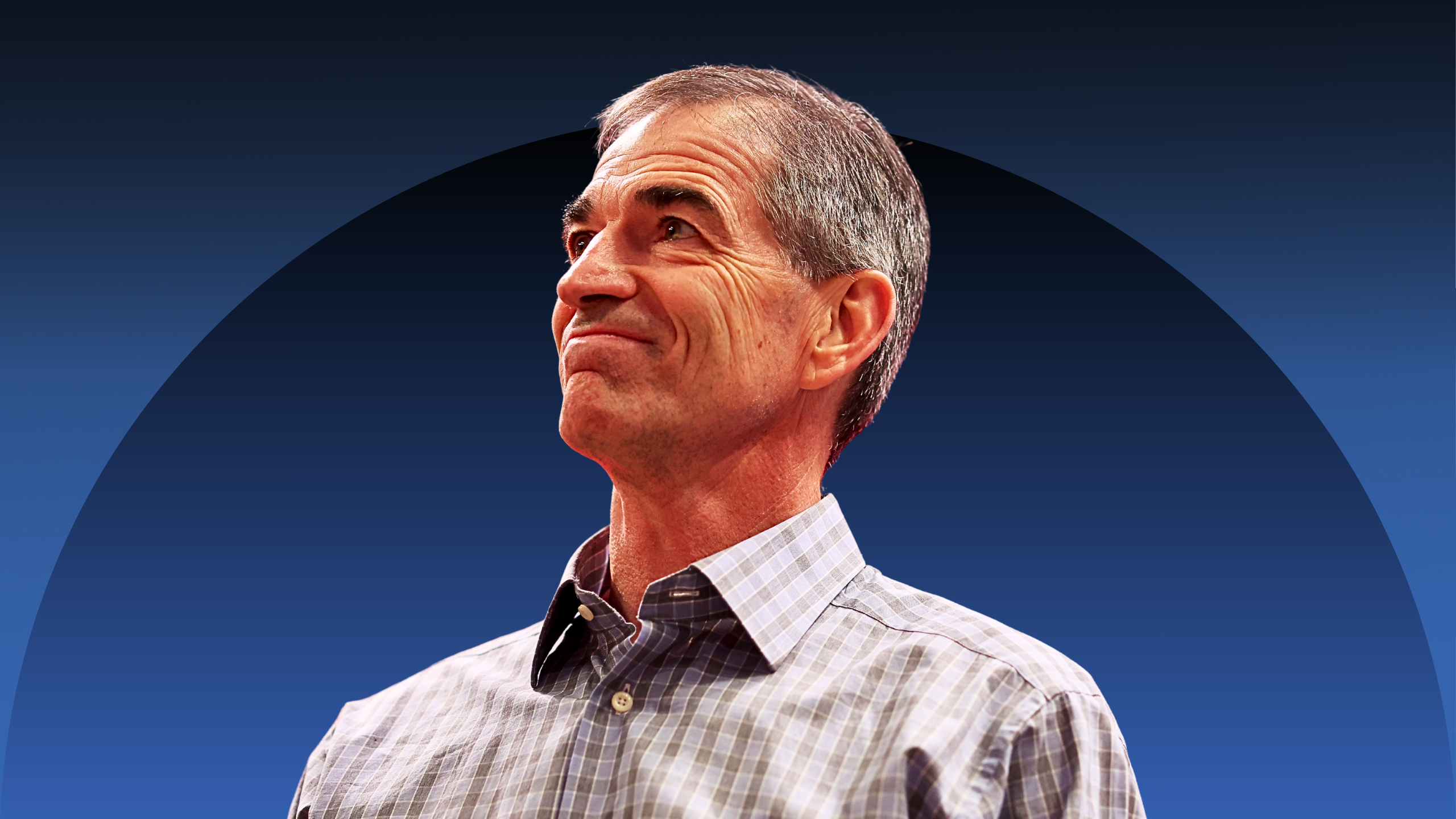
The U.S. Supreme Court this week denied Basketball Hall of Famer John Stockton's petition for review of a First Amendment case he and others brought against Washington state officials for instituting disciplinary proceedings against medical doctors who presented alternative viewpoints-dubbed "dangerous information" by state officials-about COVID-19 and its vaccines.
Stockton, 64, played 19 seasons in the NBA, his entire career spent with the Utah Jazz. He is the NBA's all-time leader in both assists and steals and was a 10-time All-Star. Stockton, who formed a formidable tandem with fellow Jazz superstar Karl Malone, is widely regarded as one of the greatest basketball players of all time.
In recent years, Stockton's public persona has been shaped less by basketball and more by advocacy of controversial positions. He co-hosts a podcast, The Ultimate Assist, with Dr. Ken Ruettgers, in which they discuss medical views and personal liberty.
Stockton is a vocal critic of COVID-19 vaccines, asserting they are unsafe and ineffective, even though the Centers for Disease Control says hundreds of millions of people in the U.S. have safely received the vaccinations, and studies have shown as many as 19.8 million deaths were prevented worldwide by the vaccine in the first year of use. He also was opposed to mask policies during the pandemic, so much so that his alma mater, Gonzaga University, suspended his basketball season tickets in 2022 because of his refusal to wear a mask.
Two years ago, Stockton, along with two physicians and the Children's Health Defense (a nonprofit previously chaired by U.S. Health and Human Services Secretary Robert F. Kennedy Jr.), sued state officials. The group claimed the Washington Medical Commission violated the First Amendment and due process by investigating physicians for expressing viewpoints about COVID-19 the commission regarded as dangerous.
Stockton argues the First Amendment protects the public's right to hear "the public soapbox speech of Washington licensed physicians who disagree with the mainstream COVID narrative" and that the government shouldn't be able to silence dissenting views. He maintains that state investigations into physicians for viewpoints on COVID-19 could have a chilling effect. After all, other physicians might refrain from offering a dissenting perspective for fear of becoming government targets as well.
A federal district judge in Washington and later the U.S. Court of Appeals for the Ninth Circuit rejected Stockton's claims.
The courts stressed the "Younger Doctrine," which is from the 1971 U.S. Supreme Court case Younger v. Harris. Under the doctrine, federal judges should refrain from entertaining constitutional challenges to a state's action when there are ongoing state proceedings.
Here, the Washington Medical Commission was investigating "complaints from the public about doctors providing dangerous misinformation about COVID-19." The doctrine thus applied.
Another problem with Stockton's case is that, as courts have held, states have a protected interest in regulating the medical profession as part of promoting public safety. The ability of a state to regulate medical professionals and the practice of medicine is consistent with that interest and has been deemed compliant with the First Amendment.
In addition, Stockton was found to have lacked standing, meaning he didn't suffer an actual, concrete injury allegedly caused by Washington government officials.
Stockton's "avid interest in, and affection for" one of the doctors under investigation was portrayed as speculative and insufficient for standing purposes. The Ninth Circuit also worried about precedent, specifically that if Stockton-a podcaster who majored in business administration and who isn't a doctor-has standing to challenge laws that restrict a doctor's speech, it could open the door to "any listener" with a similar interest in a speaker's speech to claim standing to try to stop a government investigation.
In his group's petition to the Supreme Court, Stockton argued the district court and Ninth Circuit misconstrued the law. He maintained the Washington Medical Commission's "actual interest" is "not in regulating how doctors treat patients, but in impermissibly suppressing the public speech of physicians where the Commission does not agree with its content and viewpoint."
Stockton also insisted he has standing due to what he terms a "concrete and ongoing" injury: the chilling of a medical doctor's viewpoint on COVID-19, thus restricting his ability "to hear and share that speech."
Washington Attorney General Nick Brown and other state officials offered a starkly different viewpoint in their brief urging the Supreme Court to deny review.
The brief knocked Stockton as a mere "former NBA player who claims an interest in hearing alternative theories about COVID-19." It also maintained that Washington officials had a duty to investigate "COVID-19 misinformation" since it "posed dramatic risks to patients and to public confidence in the medical profession."
The Supreme Court issued no explanation in denying the petition of Stockton's group, a move that leaves in place the Ninth Circuit's order. At least four of the nine justices must vote in favor of granting a petition for the Court to take a case. Stockton faced long odds: The Court only agrees to review about 1% of petitions.