Investors are ready to move on from the Iran war as it approaches a ninth week, with U.S.-Iran talks expected over the weekend and military operations in the Persian Gulf potentially winding down.
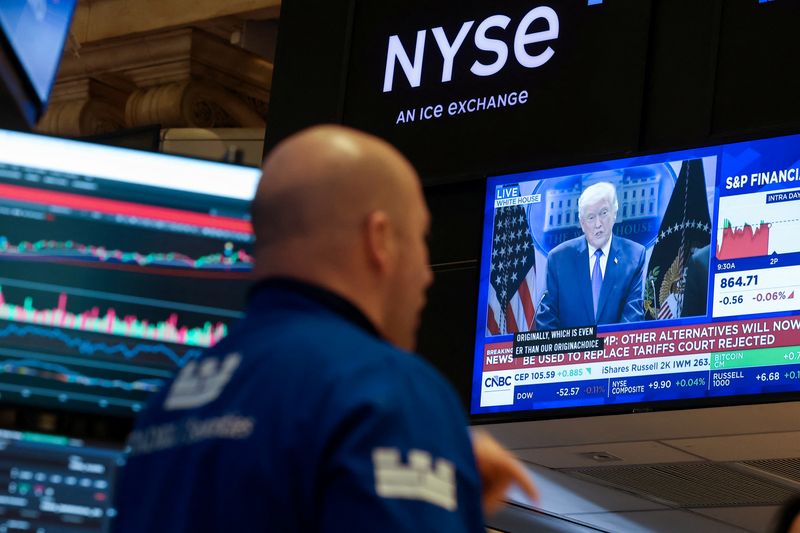
That had the bulls on Friday pushing the S&P 500 and Nasdaq Composite Index to new records and the Dow Jones Industrial Average only 1.9% off its prior peak.
The rally in stocks comes as investors focus on a renewed rally in tech shares and megacap tech earnings on deck next week — instead of roughly $100-a-barrel global oil prices, lost Middle East crude production and the lack of tanker traffic coming out of the Strait of Hormuz.
“This is a market that’s anxious [over] — or simply tired of — the ups and downs of this conflict,” said George Catrambone, head of fixed income for the Americas at DWS. He noted that instead of hostilities lasting only a few weeks, as it was initially described by the White House, the war now seems to be on a month-to-month trajectory.
For investors, it likely helped that jet-fuel shortages and other real-world effects of the eight-week-old conflict still feel fairly distant in the U.S., even as they disrupt daily life elsewhere in the world.
Yet the market’s strength — and absence of $200-a-barrel oil — seem to be a head-scratcher even for President Donald Trump, who told CNBC this week that he thought stocks would have dropped 20%.
See: Gas prices may still be low enough for Trump to keep talking tough on Iran
To help take inventory of all that’s unfolded since the U.S. and Israel started the war on Feb. 28, here are some key figures Wall Street is closely monitoring to help gauge whether the blistering rally over the past four weeks looks sustainable:
- Global Brent crude-oil prices have gained 45.3%.
- U.S. West Texas intermediate crude oil has climbed 40.9%.
- To date this month, Brent has lost 11% and WTI has dropped 6.9%.
- Spot Brent for immediate delivery was up 45% through April 20.
Here are some figures for the stock market:
- The S&P 500 has surged 29.4% from a year ago.
- Estimated S&P 500 tech-sector profit margin of 29.1% in first quarter.
- Profit margin of13.4% for the broader index — which would be its highest in more than 15 years.
While the tech complex has been putting up enviable earnings, a handful of top companies are poised to allocate an estimated $4.5 trillion in capital expenditures to the AI data-center buildout through the 2030 fiscal year, according to Goldman Sachs.
That should help the economy grow, even as the AI boom raises the specter of more white-collar job losses. Meta said this week it plans to cut 8,000 jobs.
Tech companies might be fairly insulated from higher oil prices, but higher gasoline and diesel prices can pinch households and push up the price of nearly everything.
That makes control of the Strait of Hormuz all the more important, given that the cumulative loss of oil supply is expected to reach roughly 700 million barrels by the end of April, according to Matt Smith, Kpler’s U.S. head analyst.
Historic emergency-reserve releases, Persian Gulf reroutes and temporary sanctions relief on Russian and Iran have played parts in keeping oil prices around the $100 level, said Michael Lynch, president of Strategic Energy & Economic Research.
Yet Brent prices moved up 16.5% this week, while U.S.-traded WTI gained 14.3%. Those were their biggest weekly gains since the first week of the war, according to Dow Jones Market Data.
“Iran looks like they can play the long game and, with more military troops headed to the Middle East, it is hard to see an end to the deadlock at this moment,” June Goh, senior oil-market analyst at Sparta Commodities, told MarketWatch.
Still, Goh said, “the biggest oil-supply shock in modern history has not yet been met with the same movements in Brent price.”
Back in the U.S., DWS’s Catrambone pointed to households already paying $4 a gallon for gas nationally — and $5 for potato chips. The hope initially was that bigger tax refunds this year might spur more spending and boost the economy. But families could simply end up spending those refund checks on things like energy, shelter and healthcare, he said.
Read on:
The U.S. inflation picture hasn’t been this bleak in nearly four years
The ‘simple math’ reason oil prices will need to rise a lot more
Why crude-oil prices won’t fall back to pre-Iran-war levels anytime soon
Trump is swaying the market like no president has in decades, analysis shows