Fill in those bare patches.
A healthy lawn helps reduce erosion, prevent weeds, and holds up to foot traffic. Repairing patches, bare spots, or damage doesn’t have to be a long process. Whether your grass is recovering from a fungal disease, drought, or heavy foot traffic, it’s possible to fill in bare areas fast so you can enjoy a thick, lush lawn in time for summer. If you need to add some oomph to your growing grass, these tips and tricks can help make it grow faster.
Choose A Fast-Growing Grass Seed
Overseeding can help thicken thin grass and fill bare patches, but make sure to use the right grass seed specific to the conditions of your lawn. Look for fast-growing grass seeds that germinate within days and only take a few weeks to fill in. Perennial ryegrass is a good, quick-growing option, but it can struggle in super hot climates or droughts. It doesn’t tolerate cold weather as much as other grasses, but it holds up well to heavy foot traffic from pets and kids. Other cool-weather grasses like turf-type tall fescue can handle a little more heat. It’s a good choice for transition zones.
Bermudagrass quickly fills in lawns in hotter climates, which makes it a good choice for the South. It germinates in one to two weeks and is fully established in four weeks. It thrives in heat and can handle direct sun. Regular fertilizing can help maintain its appearance. For shadier lawns, fast-growing St. Augustine grass can handle heat and humidity.
Tips
If your lawn has been treated with a pre-emergent herbicide, you’ll need to wait before spreading grass seed on your lawn. The ingredients that prevent weeds from growing will also keep new seeds from germinating.
Prep The Soil
Grass seed germinates when it’s in direct contact with the soil. Clear any debris from the surface, like dead grass, rocks, sticks, and weeds. Loosen the top few inches of compacted soil with a rake or aerator, and mix in compost to enrich the soil with nutrients. Covering the seeds lightly with soil or compost after application helps retain moisture that will help with germination and keep the seeds from washing away during rain.
Soak Your Seeds
Pre-germinating your grass seeds can speed up the process, especially for seeds that are slower to germinate, like Kentucky bluegrass. It’s not required, but it can help if you need to cut down on your waiting time or want to reduce the amount of water needed to establish the grass. It’s helpful when you have a smaller window to get grass started before extreme heat or cold arrives.
To start, soak the seeds in a bucket for 12 to 24 hours. Change the water every 12 hours, then move the seeds to a damp bag for a few days until you see small white sprouts. For even spreading, combine the wet seeds with fertilizer or sand. Don’t soak the seeds too long to avoid rotting.
Water Properly
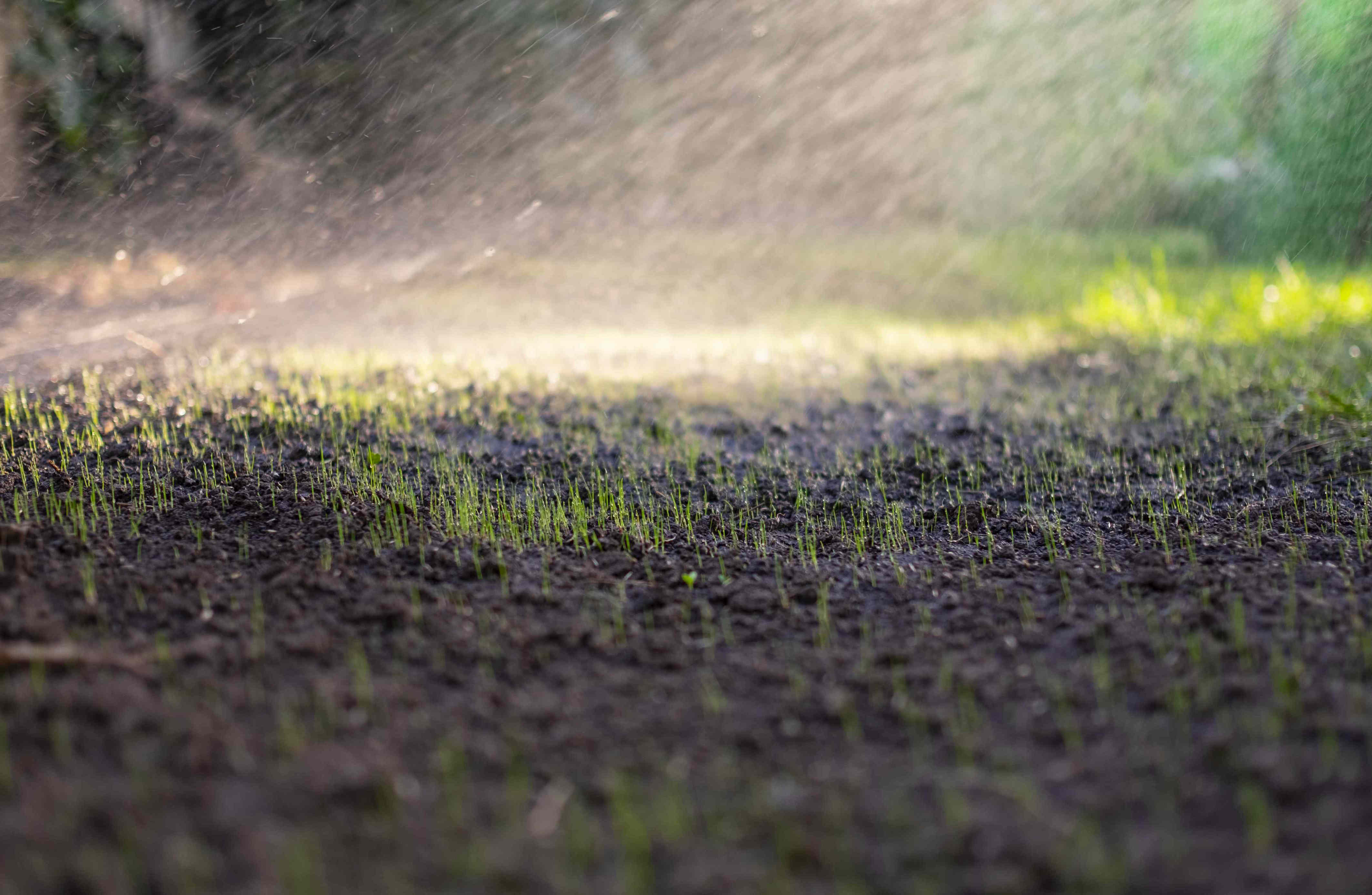
You’ll need frequent light watering to help grass seeds germinate and become established. You may need to water a few times a day to keep the soil from drying out. Once the seeds are established, you can cut back on watering. To get your lawn to grow quickly, it needs an inch of water each week. Watering twice a week for 30 minutes each time should be enough without overwatering or not watering enough. Water in the early morning so any moisture has time to soak into the soil rather than evaporate in the sun. Watering early also provides time for moisture on the leaves to dry before nightfall. Wet grass can develop fungal issues and mold.
Fertilize On A Schedule
After spreading seeds on your lawn, you need to provide proper nutrients and help the roots grow quickly. Starter fertilizer has a higher proportion of phosphorus than standard fertilizers to promote root growth and help grass grow faster and thicker. Follow up by applying fertilizer again in four to six weeks. To keep your lawn healthy, you’ll want to keep it on a fertilizing schedule—in early spring, late spring, summer, and fall.
Mow Regularly
Mowing your lawn encourages grass to continue to grow rapidly. Once new grass reaches 3 to 4 inches tall, it can be mowed. Regular mowing will help it fill in and look thicker. A lush lawn crowds out weeds, so you’ll spend less time trying to fight them.
Read the original article on Southern Living