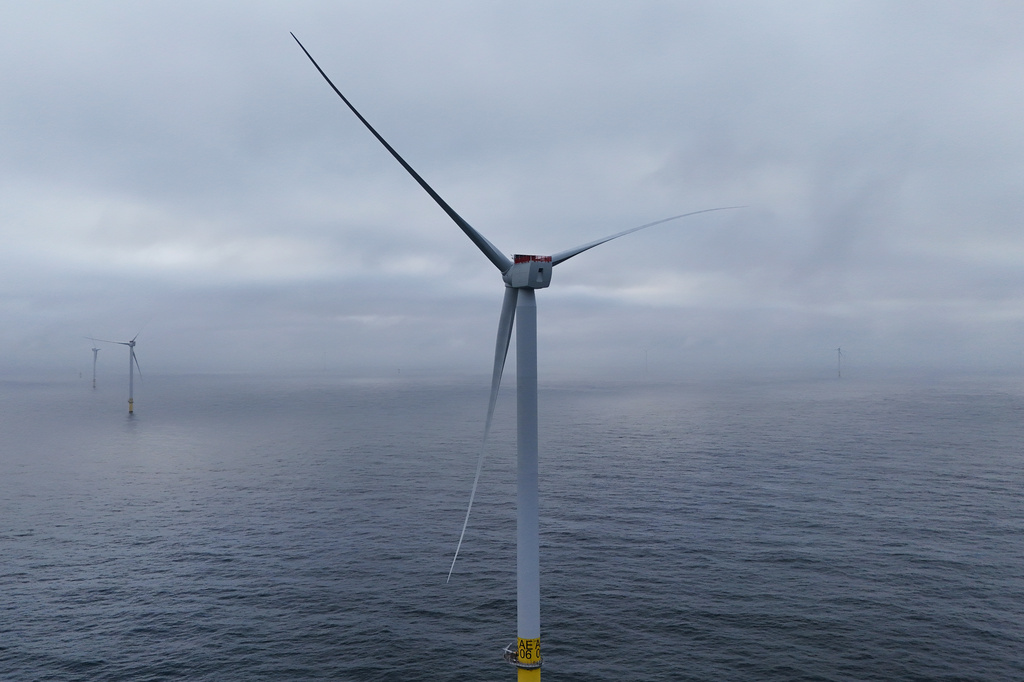
The Trump administration is spending nearly $2 billion to get energy companies to walk away from U.S. offshore wind projects. Democrats in Congress are investigating.
The Republican administration adopted this strategy after federal courts thwarted President Donald Trump’s efforts to stop offshore wind development through executive action. Three agreements have been announced.
U.S. Reps. Jared Huffman of California, the top Democrat on the House Natural Resources Committee, and Jamie Raskin, the ranking Democrat on the House Judiciary Committee, are demanding information about the first and largest of the three. Under a deal made public in March, French company TotalEnergies is getting $1 billion — essentially a refund of its leases for offshore wind projects off North Carolina and New York— if it invests the money in fossil fuel projects instead.
Huffman said that is a “scam” and the administration is going to "light a lot of federal taxpayer money on fire if we let them."
In a letter sent Wednesday to TotalEnergies and provided to The Associated Press, Huffman and Raskin are letting the company know that Democrats have begun an investigation, are demanding documents and communications and are advising the CEO not to take the money. The letter outlines the ways they think the deal appears to be illegal.
“You can’t come into the United States and do a backroom deal like this, that just essentially treats the treasury as a slush fund, and walk away with a billion dollars," Huffman said.
Asked for comment, TotalEnergies pointed to its news release when the payout was announced. CEO Patrick Pouyanné said at the time that TotalEnergies renounced U.S. offshore wind development in exchange for the reimbursement of the lease fees, “considering that the development of offshore wind projects is not in the country’s interest.”
Nearly $2 billion in payouts so far
In the latest deals announced Monday, the administration said Bluepoint Wind and Golden State Wind agreed to end their leases in exchange for reimbursements totaling nearly $900 million, provided they invest equally in fossil fuels. Trump has gone all in on fossil fuels for generating electricity, which he says will lower costs for families, increase reliability and help the U.S. maintain global leadership in artificial intelligence.
Both Bluepoint and Golden State are co-owned by Ocean Winds, a joint venture of EDP Renewables and French energy giant Engie. Michael Brown, CEO of Ocean Winds North America, said that when market conditions change, “we must adapt.”
Opponents of offshore wind projects praised the administration for being creative.
“This is the latest strategy and we think it’s a winner,” Robin Shaffer, president of Protect Our Coast New Jersey, said Wednesday. Shaffer said the administration “is well within their rights to do this and private businesses can’t be forced to build anything.”
But to the top Democrat in the U.S. Senate, Chuck Schumer of New York, it is a "bailout for fossil fuel donors dressed up as a deal.”
“Donald Trump spent years calling offshore wind subsidies a waste of taxpayer money," Schumer said in a statement. “Now his administration is handing nearly $2 billion of those very same taxpayer dollars to companies to abandon clean energy projects that would have powered millions of American homes and created thousands of good-paying union jobs.”
Once the deals are complete, Ocean Winds will have one remaining U.S. offshore wind project, SouthCoast Wind off Massachusetts. Its development has slowed under Trump.
Amber Hewett, senior director of offshore wind energy at the National Wildlife Federation, said forcing developers to abandon offshore wind energy for more oil and gas sets the U.S. further behind in efforts to curb climate change. Burning coal, oil and gas is the largest contributor to global climate change by far.
Lease buyouts are part of a campaign against offshore wind
When Trump returned to office in January 2025 he ordered a temporary halt to leasing and permitting for wind energy projects. His administration has paused work wind farms under construction, canceled plans to use large areas of federal waters for new offshore wind development and added an extra layer of review for wind and solar projects.
Federal judges allowed construction on the wind farms to resume, struck down the Day One order blocking wind energy development, and stopped the administration from requiring that all solar and wind energy projects on federal lands and waters be personally approved by Trump's interior secretary.
Energy law expert Kristoffer Svendsen said that after the administration's losses in the courts, the lease buyouts appear to be a last attempt to close down as many offshore wind projects as possible. He was not aware of any other arrangements where energy projects owners have been paid to walk away.
“This saga never ends. They continue to surprise the industry and those of us following the industry,” said Svendsen, assistant dean for energy law at the George Washington University Law School.
Svendsen said he expects to see energy companies head to markets in Europe and Asia because the future for new offshore wind development in the United States is “quite bleak.”
“At this point if you’re interested in offshore wind, you’ll most likely go to a jurisdiction where they want you,” he said.
The global wind industry installed a record 165 gigawatts of onshore and offshore wind last year, with 138 countries now powering their economies with wind energy, the Global Wind Energy Council said last week in its annual report. That is enough to power 118 million households. The Asian market, led by China and India, had 80% of the global total.
David Carroll, CEO and chief renewables officer for Engie North America, also thinks offshore wind will not advance in the United States in the next few years. He cited the administration's pulling of permits that were granted after years of work and much money spent, and the stopping of fully permitted projects under construction, eroding business certainty.
“The offshore wind industry does not have a strong future here in the U.S. And that’s unfortunate,” Carroll, who is chair of the board at the American Clean Power Association, said in an interview this month. “The Northeast needs more energy and that is one of the very key ways we can get energy in the Northeast.”
___
The Associated Press’ climate and environmental coverage receives financial support from multiple private foundations. AP is solely responsible for all content. Find AP’s standards for working with philanthropies, a list of supporters and funded coverage areas at AP.org.