The right oven heat can help you achieve the best texture.
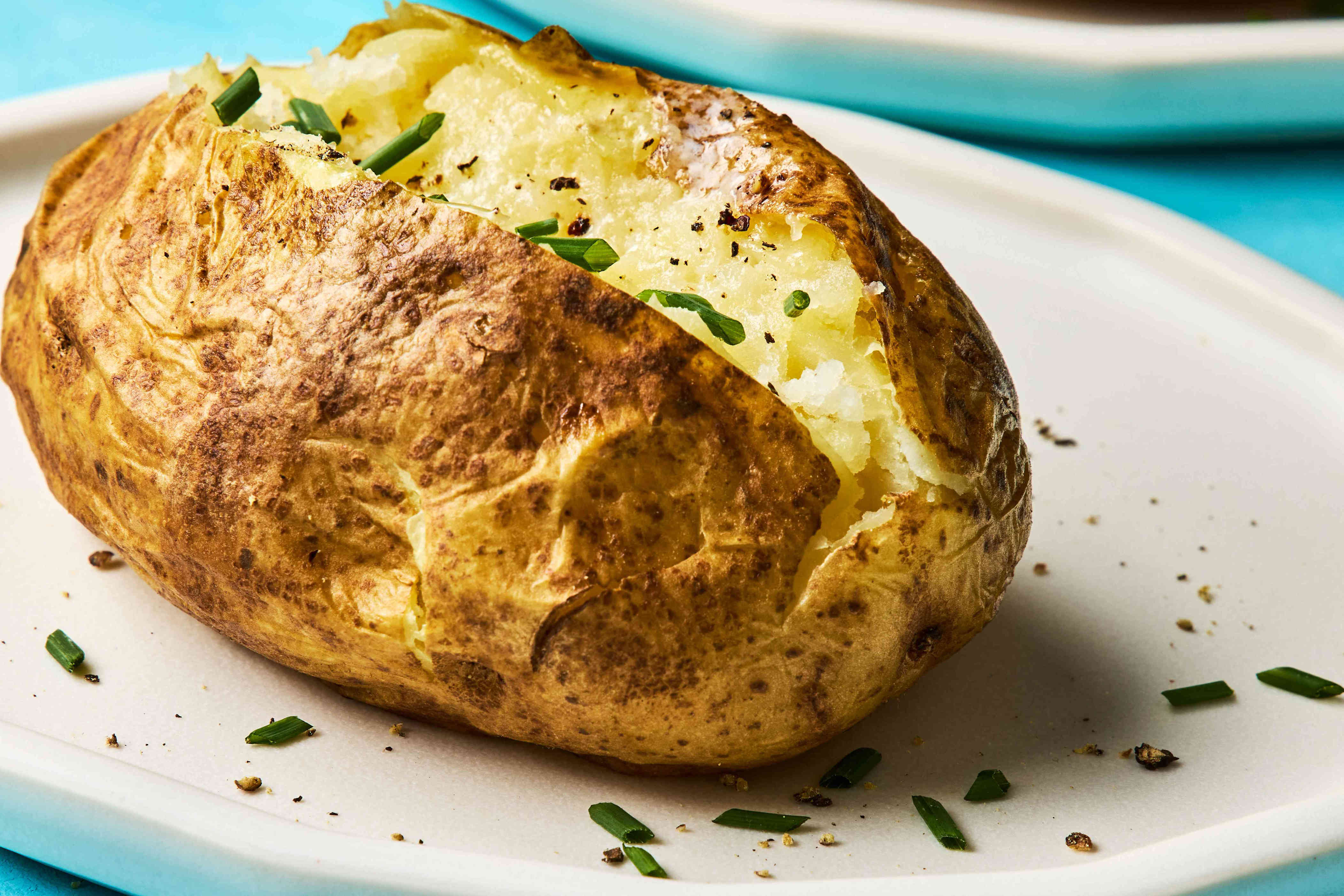
A simple baked potato—whether you keep it minimal with butter and salt or load it up with sour cream, shredded cheese, bacon, and scallions—is one of life's purest comfort foods. That contrast between its creamy, fluffy interior and crispy skin is what makes baked potatoes so satisfying, and also makes them one of the most versatile side dishes around.
But achieving that ideal texture isn't just about how long your potatoes bake in the oven, or the type of potato you choose. Understanding the best baking temperature can help you achieve consistently delicious results every time.
Why Oven Temperature Matters For Baked Potatoes
Oven temperature determines how heat penetrates the potato, affecting how the starches inside gelatinize and soften. At the right temperature, the interior bakes up light and fluffy, while the skin crisps up. If the oven runs too cool, the potatoes can take longer to cook, developing a more dense, gummy texture. Higher heat encourages better skin texture, but balance is key to keep the potato from scorching before the interior softens through.
The Ideal Temperature For Baking Potatoes
You'll notice that most baked potato recipes call for a baking temperature around 400°F. This temperature (or a little higher or lower) is a sweet spot for the ideal baked potato texture inside and out. At this temperature, the potatoes should be ready in about 50 to 60 minutes, depending on size.
If you bake a little higher, at around 425°F, you may end up with a crispier, more blistered skin and slightly faster bake. A little lower at 375°F will yield a slightly softer skin, with a creamy interior but slightly longer bake time.
Does the Type Of Potato Affect Baking Temperature?
The type of potato you choose does influence the texture and baking time of your baked potato, though not necessarily the temperature you should bake it at. Here are some commonly used types:
- Russets: Russet potatoes have a high starch content and low moisture, which creates a light, fluffy interior and sturdy skin.
- Yukon Golds: Slightly lower in starch and higher in moisture, they bake up creamy and dense, with a naturally buttery flavor.
- Sweet potatoes: These contain more sugar and moisture, meaning they'll bake a little faster and develop caramelized notes as they cook.
- Purple potatoes: Colorful and slightly waxy, these potatoes have a dense interior and earthy flavor.
- Red potatoes: Lower starch and higher moisture than russets, producing a denser, creamier texture with thinner skins.
You won't need to adjust your oven temperature based on the type of potato you choose, but you will need to check the baking time, cooking until they're tender throughout. High-starch potatoes will take a little longer to soften fully, while waxier or smaller varieties may cook faster.
Convection Vs. Conventional Baking
If you opt to use the convection setting on your oven, you may notice some benefits. Convection ovens circulate hot air continuously, promoting more even cooking and enhanced browning. That constant airflow helps dry out the skins of your baked potatoes, making them extra crispy.
Because convection heat is more intense, lowering the temperature to 375°F instead of 400°F may help prevent over-browning while still achieving crisp skins and tender centers.
Signs Your Potato Is Properly Baked
A perfectly baked potato should feel tender all the way through, with a crisp exterior. You can test to see if your potato is ready by inserting a knife or skewer into the center—it should slide in without resistance. The skin should look dry and slightly blistered, the potato should give with a gentle squeeze, and after cutting in, the flesh should look fluffy and steamy.
Tips For Perfect Baked Potatoes Every Time
Beyond baking at the right temperature, a few other small steps make a big difference in the final texture of your potato:
- Scrub and dry the potatoes: Dry thoroughly to prevent steaming and softening of the skins.
- Pierce lightly before baking: To allow steam to escape.
- Rub with oil and salt: For crisp, flavorful skins.
- Bake directly on the rack: This allows hot air to circulate fully around the potato for even cooking. Place a sheet pan below to catch any drips.
- Slice open right away: Cutting the potato immediately after baking releases trapped steam, keeping the interior fluffy instead of dense and gummy.
And while you might be tempted to wrap your potatoes with foil before baking, it's best to skip it. Foil traps moisture and steams the potato, rather than helping it crisp up on the exterior.
Read the original article on Southern Living