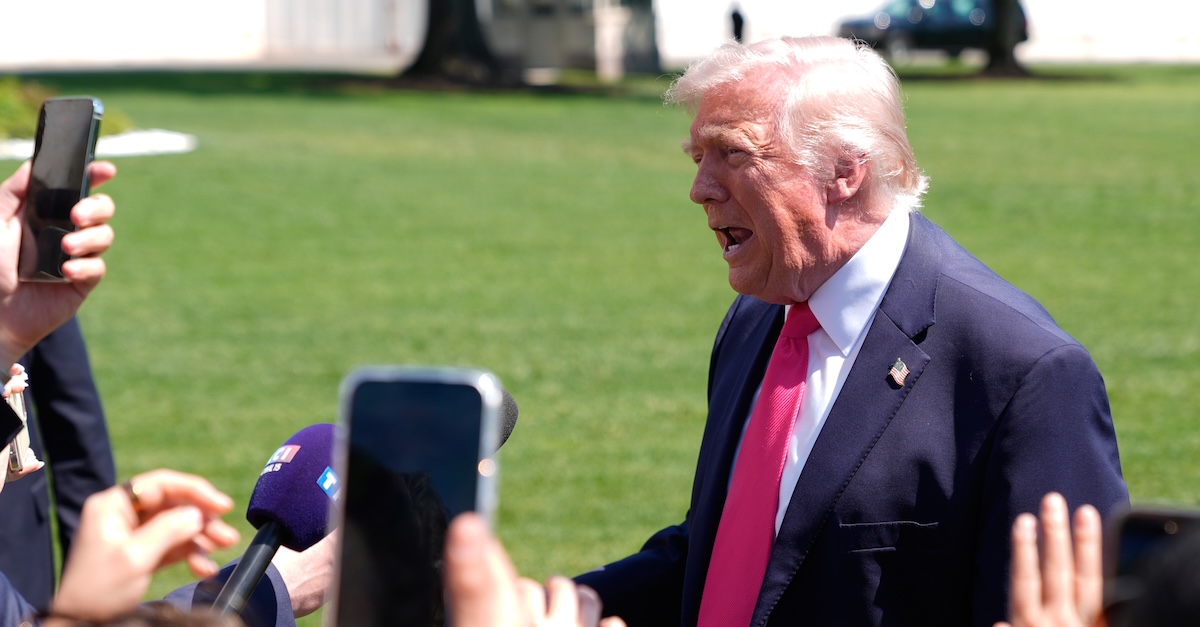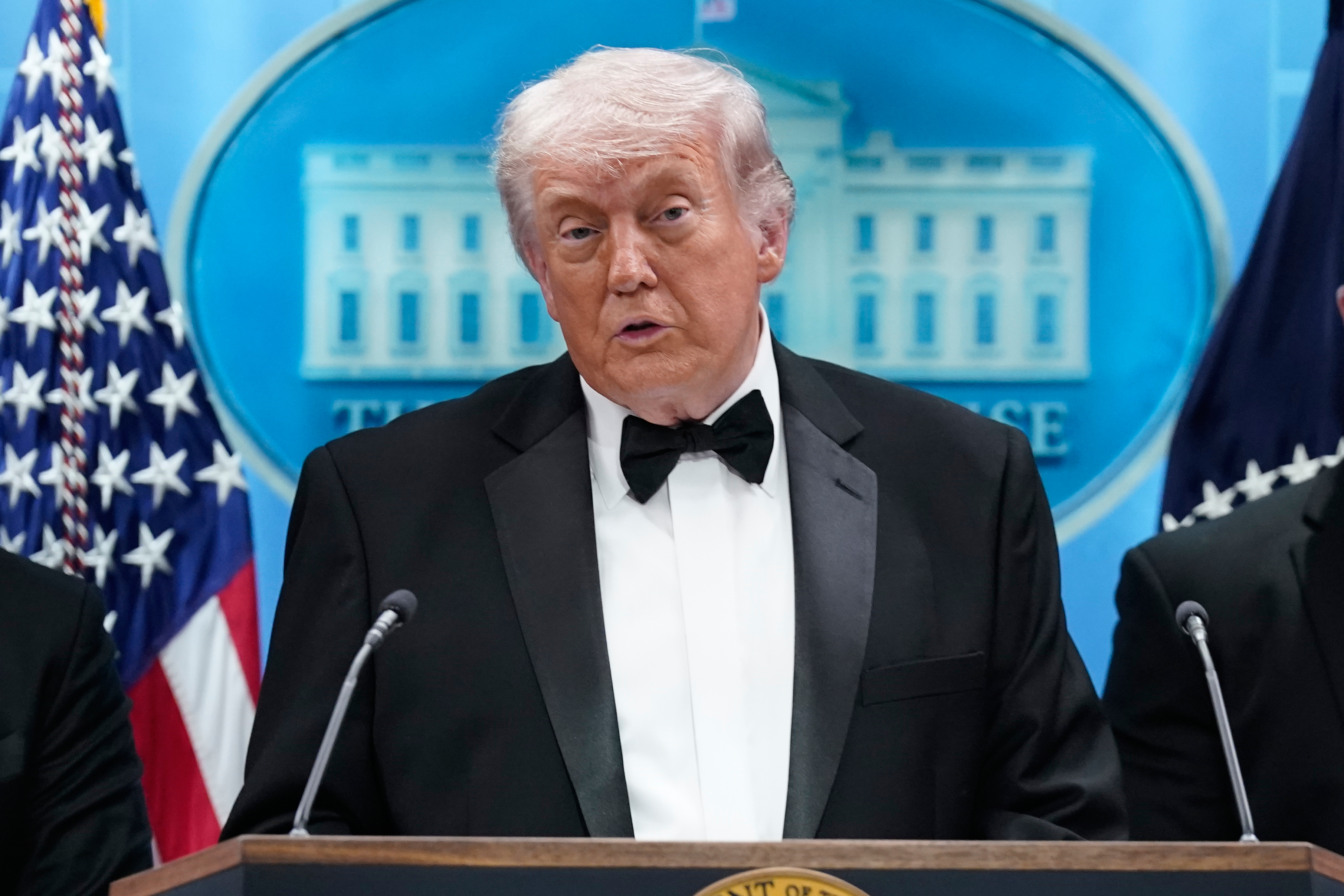
President Donald Trump clashed with 60 Minutes correspondent Norah O’Donnell during a Sunday interview about the White House Correspondents Association (WHCA) dinner shooting after she read aloud a passage from the suspect’s manifesto in which he described his target as a “pedophile, rapist, and traitor.”
Trump rejected the characterization, repeatedly told O’Donnell she should be “ashamed” for reading the passage, and called her “a disgrace.” The exchange came during a wide-ranging interview about the Saturday night attack at the Washington Hilton, in which 31-year-old Cole Tomas Allen breached a Secret Service checkpoint armed with a shotgun, a handgun and multiple knives.
Why It Matters
The interview marked Trump’s first detailed public account of the shooting and his evacuation and offered the most extensive insight yet into the suspect’s manifesto and motives. The exchange between Trump and O’Donnell over the document also became one of the most viewed moments of the broadcast, raising broader questions about how news organizations should handle the writings of mass-attack suspects — particularly when those writings include allegations against the target.
Trump has long accused mainstream media outlets of bias, and the clash reflected those tensions playing out in real time during a moment of national security significance.
What Happened in the Interview
O’Donnell read aloud a passage from Allen’s manifesto in which he wrote: “Administration officials, they are targets,” and “I am no longer willing to permit a pedophile, rapist, and traitor to coat my hands with his crimes.” She asked Trump for his reaction.
“Well, I was waiting for you to read that because I knew you would because you’re horrible people,” Trump said. “Yeah, he did write that. I’m not a rapist. I didn’t rape anybody.”
When O’Donnell asked whether Allen had been referring to him, Trump pushed back forcefully. “I’m not a pedophile. Excuse me. Excuse me. I’m not a pedophile. You read that crap from some sick person? I got associated with all stuff that has nothing to do with me. I was totally exonerated.” Trump went on to reference Jeffrey Epstein, suggesting people on “the other side of the plate” had closer ties to Epstein than he did.
“You shouldn’t be reading that on 60 Minutes. You’re a disgrace,” Trump said. “But go ahead. Let’s finish the interview.”
O’Donnell continued to ask about other aspects of the manifesto, including Allen’s apparent surveillance of the Washington Hilton in the days before the attack, his political affiliations and his social media activity. Trump answered each question, though he repeatedly pushed back on the framing.
Trump’s Account of the Evacuation
Trump described in detail what happened inside the ballroom as the attack unfolded. He said he initially resisted being moved by Secret Service agents because he wanted to assess the situation himself. “It was a little bit me. I wanted to see what was happening, and I wasn’t making it that easy for ’em,” Trump said. “I probably made them act a little bit more slowly. I said, ‘Wait a minute, wait a minute. Lemme see.'”
He said he was eventually told to drop to the floor as he was being escorted out. “I was walking halfway and then I dropped down at the final because we had a little ways to go where you’re exposed to the ballroom,” he said. “Then I got up and we went to a hold room for a while and I tried to get them to continue the event, if possible.”
Trump also reflected on his prior experiences with assassination attempts. “My thought was, ‘You know, I’ve been through this before a couple of times.’ She has not to this extent,” Trump said of First Lady Melania Trump. He described her as “very strong, smart” and said she “handled it great.”
When asked about the gunman’s speed, Trump praised both the suspect’s athleticism and law enforcement’s response. “His speed was rather incredible, actually. He was like a blur. I think the NFL should sign him up,” Trump said. “But it was amazing ’cause as soon as they saw that you could see them draw their guns. They were so professional. Aimed their guns, and then they took him down immediately.”
On Allen’s Politics and Motive
When O’Donnell raised Allen’s reported affiliation with the Wide Awakes group and his attendance at a “No Kings” protest in California, Trump connected the suspect’s politics directly to opposition movements against him. “The reason you have people like that is you have people doing No Kings. I’m not a king,” Trump said. “If I was a king I wouldn’t be dealing with you.”
The Wide Awakes were originally a Republican political organization founded in Hartford, Connecticut, in March 1860 to support Abraham Lincoln’s presidential campaign, according to the National Park Service (NPS). A modern Wide Awakes network launched in 2020, drawing inspiration from the original — describing itself as a network of artists, cultural workers and activists organizing around social and political issues. Allen’s sister told Secret Service and Montgomery County Police on Sunday that her brother often made “radical statements” and frequently referenced a plan to do “something” to fix what he saw as problems in the country, adding that he was part of “The Wide Awakes.”
Trump described Allen as having undergone a personal transformation. “He’s radicalized. He was a Christian believer, and then he became an anti-Christian, and he had a lot of change,” Trump said. “His brother complained about him and I think reported him to the police. And his sister, likewise, complained about him. His family was very concerned. He was probably a pretty sick guy.”
Acting Attorney General Todd Blanche said officials believe Allen traveled by train from California to Chicago and then on to Washington, D.C., where he checked in as a guest at the Washington Hilton. “We’re still investigating a motive,” Blanche said, adding that the investigation could take “a couple of days at the least.”
On Political Violence
‘Donnell noted that several attendees at the dinner had personal experience with political violence — including Health and Human Services Secretary Robert F. Kennedy Jr. and his sister Kerry Kennedy, both of whom witnessed the assassinations of their father and uncle; Erika Kirk; and House Majority Leader Steve Scalise.
She asked Trump what could be done to change the trajectory.
“You go back 20 years, 40 years, 100 years, 200 years, 500 years, it’s always been there. People are assassinated. People are injured. People are hurt. And I’m not sure that it’s any more now than there was,” Trump said. “I do think that the hate speech of the Democrats much more so is very dangerous. I really think it’s very dangerous for the country.”
On Rescheduling the Dinner
Trump told O’Donnell he is committed to attending a rescheduled WHCA dinner and wants it held within 30 days.
“I don’t want to have a crazy person — I think it’s really bad for a crazy person to be able to cancel something like this,” Trump said. He acknowledged that “for the most part, it’s a very liberal or very progressive — let’s use the word liberal. Liberal press.” But he praised the unity in the room after the incident: “I was really happy to see the relationship, the friendship, the spirit after a very bad event took place.”
Trump said the wounded Secret Service agent, who was struck in the vest, did not initially want to go to the hospital. “He didn’t want to go to the hospital. He really didn’t. They asked him to go, and he said, ‘I don’t need to go to the hospital.’ But he went because they asked him to go.”
What Happens Next
Allen faces charges of two counts of Using a Firearm During a Crime of Violence and one count of Assault on an Officer Using a Dangerous Weapon, with U.S. Attorney Jeanine Pirro saying additional charges could follow.
The full text of Allen’s manifesto has been made publicly available, and Trump told reporters Sunday morning that more details would be released.
Related Articles