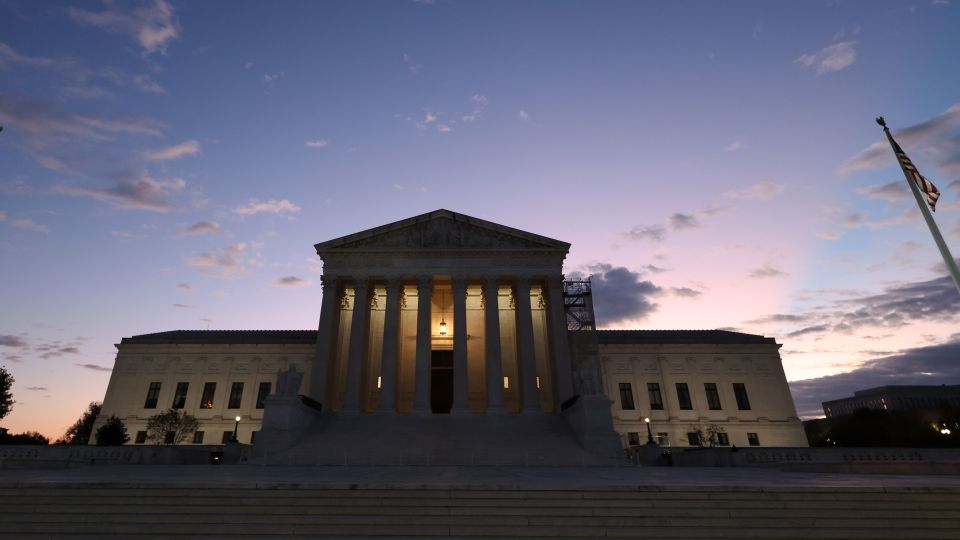
Democrats haven’t been fans of the US Supreme Court since it became a 6-3 conservative majority in 2020. And they certainly haven’t been fans since it overturned Roe v. Wade in 2022 and gave Donald Trump a large grant of presidential immunity in 2024.
But after a pair of rulings allowing red Southern states to eliminate majority-Black districts — which Republicans are openly using to try and save their House majority — Democrats’ rhetoric has taken a turn.
Increasingly, they’re not just sharply criticizing the court; they’re attacking its legitimacy, calling it corrupt, painting it as overtly political and warning it will live in infamy.
Given recent court actions that have clearly benefitted Republicans, Democrats think that’s a fair and valid argument. But it’s not yet clear it’s a winning political one — and it’s one that, like President Donald Trump’s rhetoric about the justices, risks delegitimizing a key branch of government.
Some big-name Democrats’ comments have been remarkably pitched, signaling that they’re trying to apply pressure to the court or run against it, or both.
“The Supreme Court is rigged,” posted Sen. Ruben Gallego, a potential 2028 contender. The Arizona Democrat also called it the “most partisan Supreme Court in the history of the nation.”
The office of California Gov. Gavin Newsom, another potential 2028 hopeful, posted on X that the court was “doing raw power politics” and, in the case of its Alabama ruling Monday, “meddling in elections AFTER votes have been cast.”
(The Alabama ruling came even though the state’s primaries had been scheduled for next week and absentee ballots had already gone out.)
“There’s a reason so many Americans have lost faith in the Trump Court and now view it as a partisan political entity — they have eyes,” Newsom’s office wrote.
Sen. Cory Booker of New Jersey, who ran for president in 2020, called the Supreme Court “a corrupt court” on NBC’s “Meet the Press” on Sunday.
And plenty of other Democrats weighed in with similar thoughts:
- Rep. Ted Lieu of California called Chief Justice John Roberts “a political actor who is leading the most partisan Supreme Court in American history.”
- Fellow California Rep. Ro Khanna called it a “morally bankrupt Court.”
- Sen. Bernie Sanders of Vermont (an independent who caucuses with Democrats) called it a “reactionary Supreme Court.”
- Maine Senate candidate Graham Platner said the “corrupt, far-right Supreme Court is busy remaking Congress in their image.”
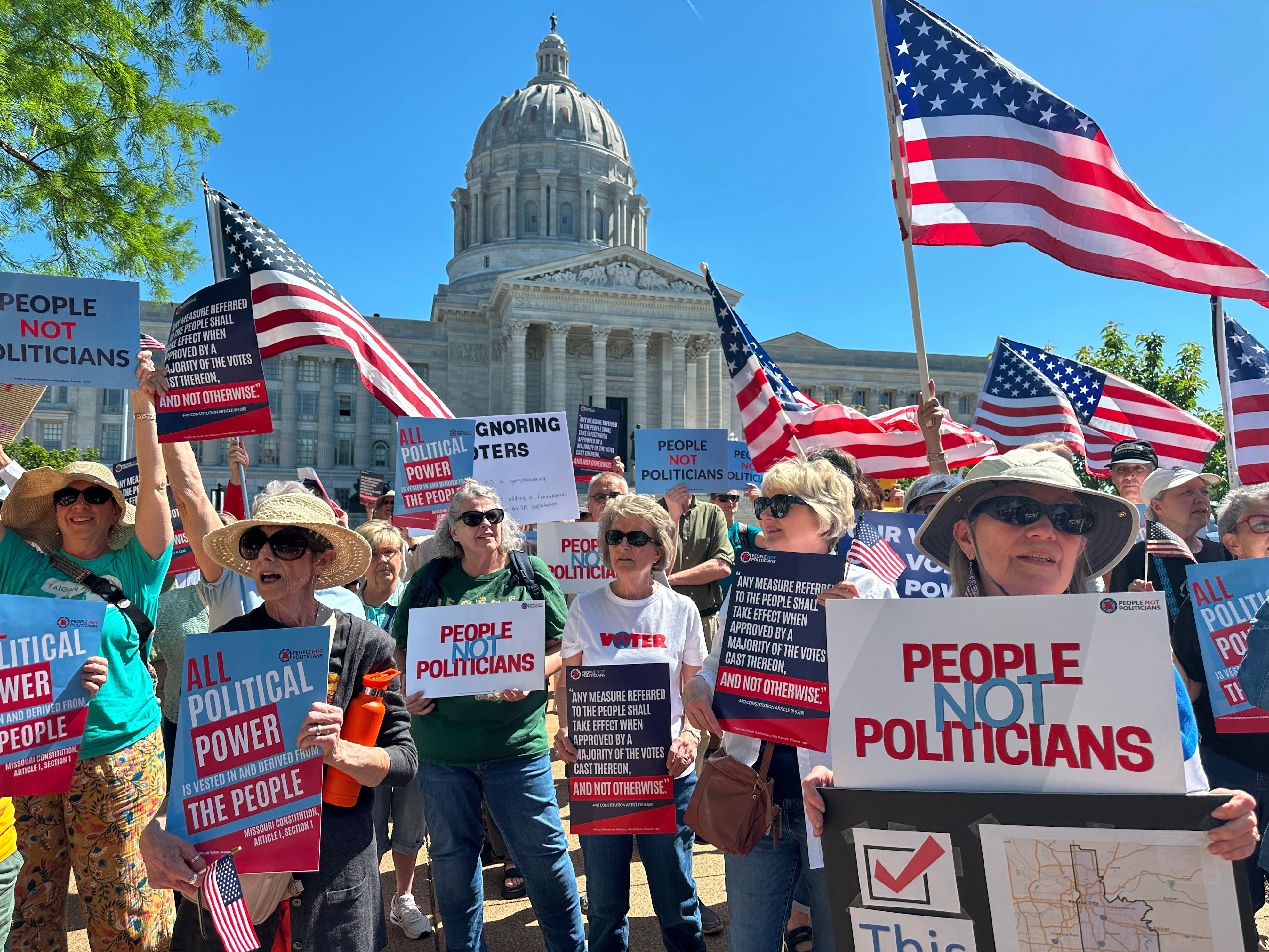
The Supreme Court’s late-April ruling in a Louisiana case severely weakened the Voting Rights Act, giving Republicans a new tool in their overt effort to draw more GOP-leaning districts for the 2026 midterms.
And between the Louisiana and Alabama decisions, a pair of prominent Black Democrats compared the Roberts Court to the one led by Chief Justice Roger Taney, which wrote the infamous 1857 Dred Scott decision ruling Black people could not be citizens.
“I think that Justice Roberts is going to take his place alongside some other infamous justices like Taney,” Rep. James Clyburn of South Carolina, the former No. 3 House Democrat, told CNN’s Jake Tapper on Sunday.
After the Louisiana decision, former Democratic National Committee Chairman Jaime Harrison called the Roberts Court “the worst Supreme Court in American history. Yes, worse than the Taney Court. Full stop.”
(Harrison has been making this comparison for months, arguing the Roberts Court’s rollback of civil rights is more subtle and insidious than the Taney Court, but not less dangerous.)
It’s not totally new for Democrats to question the legitimacy of the court, especially after the end of Roe and the Trump immunity ruling, and knock it for being too far-right.
But today, a more pointed response — that often invokes the justices’ motives — seems to be more or less the standard talking point among many former and would-be Democratic presidential candidates.
Of course, Trump has spent years undercutting the legitimacy of the courts and savagely attacking rulings he dislikes. As recently as Sunday, he was publicly suggesting the three justices he appointed should be loyal to him (which isn’t how it’s supposed to work).
And there is a fine line between harsh criticism and unwarranted criticism. Democrats would argue the Supreme Court has earned what it’s getting from them.
The is no question that the court’s recent decision was a major win for Republicans. But beyond that, critics have noted the court has repeatedly set aside and overturned its own precedents — that is, cases that are supposed to guide how legal issues are decided — in ways that have frequently favored Republicans.
The limits – and potential impact – of Democrats’ strategy
Right now, there is much more skepticism of the court on the left. But it doesn’t yet appear that large swaths of the country have bought into the idea that the court is hopelessly captured and illegitimate.
A poll last month from Reuters and Ipsos, which was conducted shortly before the Louisiana decision, showed Americans viewed the Supreme Court unfavorably 53%-43%.
The most recent polls from Gallup and Marquette Law School have shown the court with a similarly negative split.
That’s not great, but it’s not unusual given Americans have lost faith in many institutions.
For instance, the Reuters-Ipsos poll showed just 21% overall and 33% of Democrats had a “very unfavorable” view of the Supreme Court. The Marquette poll showed just 23% of Americans and less than a majority of Democrats (43%) strongly disapproved of the court.
Both surveys were notably conducted after the Supreme Court struck down Trump’s tariffs, a decision polls showed about two-thirds of Americans agreed with.
But it’s not clear an argument about the court’s illegitimacy speaks to swing voters — or at least, that it spoke to them before the Louisiana decision — even if it could motivate passionate portions of the Democratic base. It’s possible an argument about the court rolling back civil rights too quickly and helping Republicans decimate Black representation in Congress could ultimately register more broadly.
Still, Democrats are firing a Trump-esque warning shot to the court that they are willing to go there.
But the downside of that strategy is that it could further damage the court’s credibility in the eyes of the public. An NBC News poll in March showed a record-low 7% of Americans had a “great deal” of confidence in the Supreme Court, while about 4 in 10 had “very little” or no confidence in it.
In a body politic in which Congress doesn’t do much anymore, the big questions often boil down to whether the Supreme Court will check the president.
And if Americans don’t trust the courts to be that final arbiter, that’s a big problem for US democracy.
For more CNN news and newsletters create an account at CNN.com