If you’re one of the roughly 1.6 million who took a cruise in Alaska last year, chances are you sailed through the Tracy Arm fjord. The picturesque, narrow fjord is a popular sightseeing area and is part of the Tongass National Forest, about 40 to 50 miles south of the capital city of Juneau.
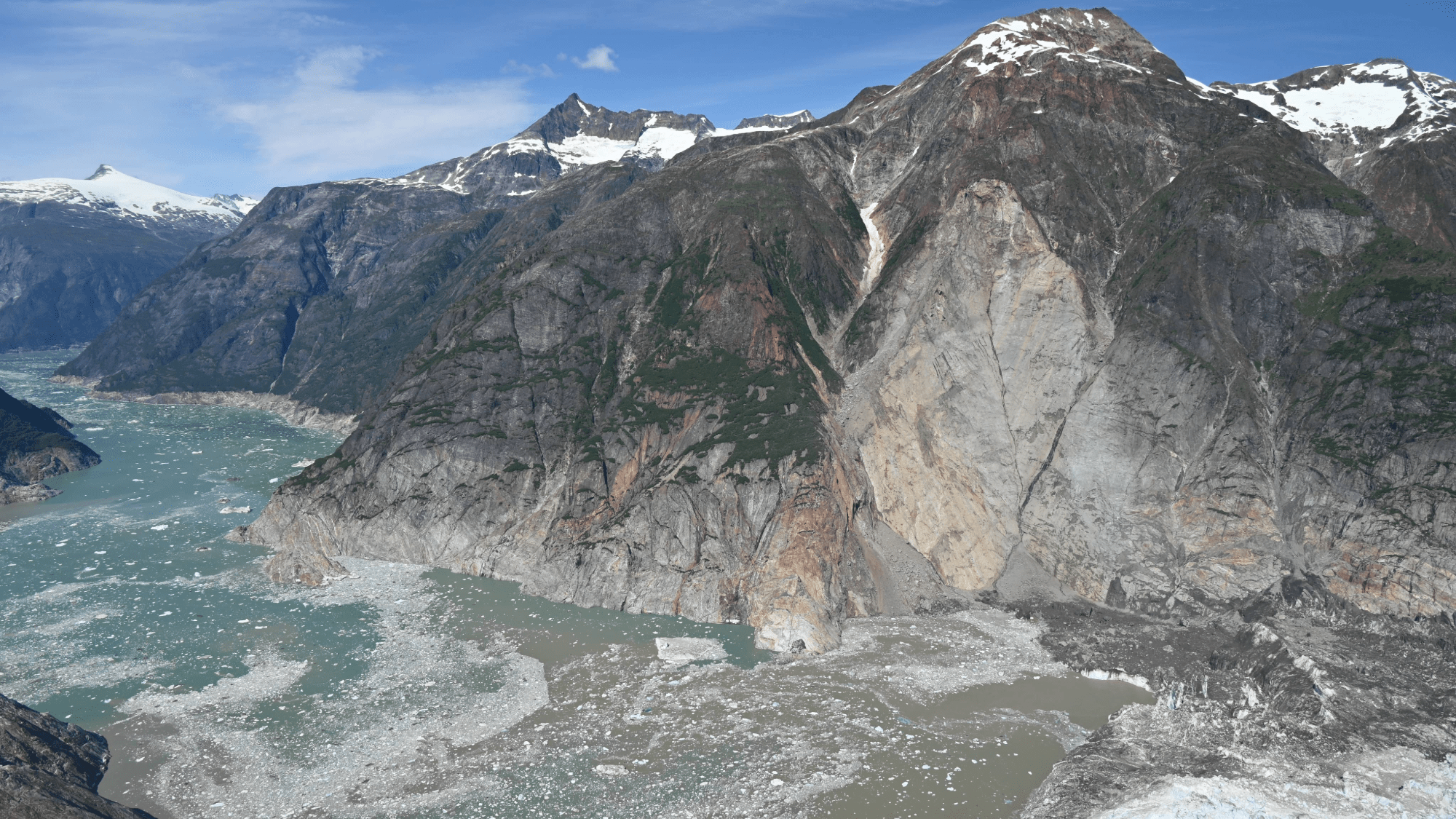
In the early hours of August 10, 2025, an enormous landslide triggered a massive tsunami down the fjord. The tsunami was 1,578-feet-tall, or one-and-a-half times the height of the Eiffel Tower. Fortunately, no one was caught in the wave since it hit around 5:30 a.m. local time. If the tsunami hit later that day, about 20 cruise ships and numerous recreational boaters and kayakers could have been impacted by the giant wave.
In a study published today in the journal Science, researchers studied this “near miss” event, finding that the continued effects of climate change were likely the cause.
The team studied several eyewitness stories from that day. In one account, a group of kayakers reported waking around 5:45 a.m. to water flowing past their campsite and carrying away a kayak and much of their gear. Another observer aboard a cruise ship near the mouth of the fjord saw currents and white water with no wave, while another eyewitness described a six-foot wave along the beach.
The team of researchers also studied satellite data with NASA’s new Surface Water Ocean Topography satellite before and after the event, in addition to seismic data and numerical modelling to understand exactly what happened that August morning.
“Until now, we simply didn’t have a way to observe these waves directly, but our study has demonstrated that using data from the new Surface Water Ocean Topography satellite can reveal the full sea-surface structure of these events, even if no one witnesses them directly,” Dr. Thomas Monahan, a study co-author and engineer at the University of Oxford in the United Kingdom, said in a statement.
Monahan and the other study authors also found that there was not much warning before the landslide hit.
“Normally with these gigantic rock avalanches, they often give some sort of warning signs in the weeks, months, years prior, when the slope is slowly moving down the mountain. It’s sagging and then it catastrophically gives way in a rock avalanche,” said Dr. Dan Shugar, a geomorphologist at the University of Calgary in Canada. “In this case, that didn’t happen.”
Instead, there was some minor seismic noise that was so slight it went completely undetected
“This one was truly a surprise,” Shugar added, noting that this presents some challenges for disaster reduction in high-risk areas.
Importantly, they found that the glacial retreat in the Alaska fjord led to the tsunami. From 1985 to 2020, glacier-covered areas in Alaska decreased by 13 percent. As temperatures continue to rise, glaciers will melt more and begin to retreat or shrink. These frosty mountainsides then can become unstable if the ice that has been in place for centuries melts away.
As cold regions continue to warm, glacier retreat increases the risk of hazards like this landslide, the study argues. Landslide-generated tsunamis like this can produce extreme, localized water inundation that is even bigger than those caused by the tsunamis generated by earthquakes. The size of the waves and narrowness of the fjords can be a recipe for disaster.
However, carefully monitoring glaciers could help catch these kinds of tsunamis before they happen. This is especially important as climate change continues to affect these regions. The Tracy Arm fjord alone sees upwards of 500,000 visitors per year, so catching tsunamis early is crucial for public safety
“Ultimately what we hope is that coastal municipalities, the cruise ship industry, and other stakeholders take these threats seriously,” said Shugar.
At least six cruise lines, including Carnival Cruise Line, have altered their itineraries in Alaska for 2026 due to the hazards that remain in the Tracy Arm fjord. Additionally, the United States Geological Survey warns that steep, mountainous landslide areas are “inherently unstable.” The Tracy Arm fjord tsunami will likely continue to change the landscape for years to come.