
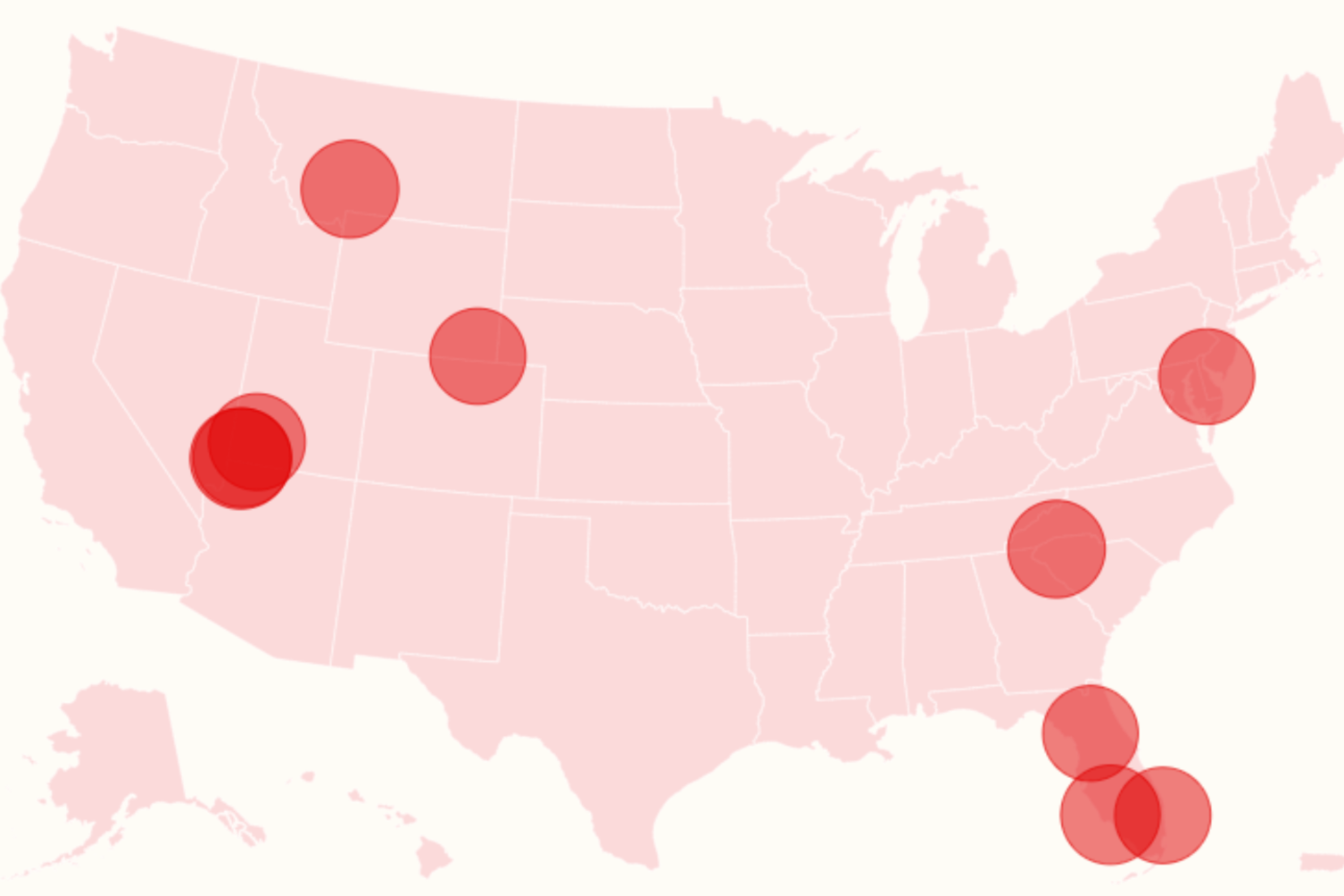
St. George, in Utah, is the best small city to start a business while Pacifica, in California, is the worst, new analysis shows.
Personal finance website WalletHub looked at just over 1,300 small American cities and determined which are the best to launch start-ups based on multiple metrics, including the growth rate of the number of small businesses, investor access, and labor costs.
After St. George, Fort Myers in Florida and Washington in Utah were ranked second and third by the analysis published Monday. Ranked last, after Pacifica, was Danville and Castro Valley in California. In fact, all cities in the bottom 10 were in California.
Why It Matters
The WalletHub results highlight how geography can shape entrepreneurial success, especially in a tougher economic climate.
What To Know
Cities were ranked based on their business environment (which looked at aspects including the average growth in the number of small businesses, commute time, and the average revenue of businesses), their access to resources and business costs.
The top 10 best small cities to start a business, according to WalletHub’s analysis, are:
- St George, Utah
- Fort Myers, Florida
- Washington, Utah
- Bozeman, Montana
- Greenville, South Carolina
- Cedar City, Utah
- Boca Raton, Florida
- Cheyenne, Wyoming
- Ocala, Florida
- Dover, Delaware
The 10 worst small cities to start a business, according to WalletHub’s analysis, are:
- Pacifica, California
- Danville, California
- Castro Valley, California
- Saratoga, California
- Belmont, California
- Morgan Hill, California
- Martinez, California
- Brentwood, California
- Los Gatos, California
- San Carlos, California
St George, Utah
St George ranked highly for both startups per capita and growth in the number of small businesses, WalletHub found. It also has cheaper office space, at around $10.73 per square foot as opposed to nearly $62 per square foot in the most expensive city. Commutes are short, around 17 minutes on average.
“All of these factors allow entrepreneurs to minimize costs while maximizing their chances of success,” WalletHub said.
Why Small Cities?
Marketing professor Scott Thorne, of Southeast Missouri State University, said it is often easier to start businesses in small cities because “small cities are more welcoming to new businesses which may have a greater impact on the city’s economy than would opening in a large city.”
“There are generally fewer bureaucratic obstacles to opening a business and there are more networking possibilities and opportunities to integrate with other businesses through local organizations,” he said. “Taxes are usually lower in smaller cities as well.”
But he also added that smaller cities “tend to have smaller markets and do not have the infrastructure in place that a larger city does.” They can also pose more challenges to distribution logistics.
Related Articles