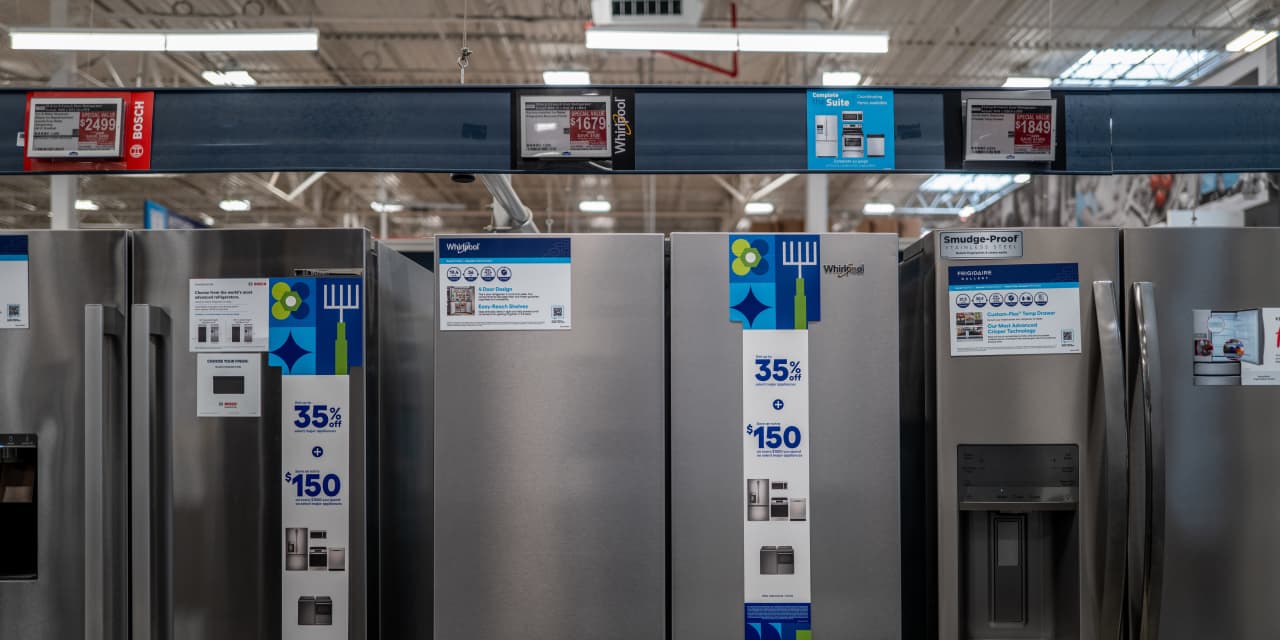
Appliance demand has deteriorated significantly, according to Whirlpool, which is now warning that trends look worse now than during some recessionary times of the past.
Specifically, customers seem to be cutting back on discretionary purchases of appliances. Whirlpool which makes goods like refrigerators and washing machines, noted Thursday that industry data showed a 7.4% drop in appliance demand during the first quarter.
”This level of industry decline is similar to what we have observed during the global financial crisis, and even higher than during other recessionary periods,” CEO Marc Bitzer said on the earnings call, according to a FactSet transcript.
See also: Restaurants really don’t want to sell fake meat — and Beyond Meat is suffering
Whirlpool shares were down more than 12% in morning trading on Thursday.
Typically more than 60% of appliance-industry demand comes from consumers replacing items under “duress,” meaning that their existing products have broken down and they have little choice but to buy new ones. Since “duress replacement” was relatively stable in the latest quarter, the sharp overall appliance-industry decline “gives you a sense about how dramatic the impact on discretionary demand was,” Bitzer said.
Don’t miss: Cheaper protein shakes are crushing this industry stalwart
He noted that consumer sentiment “was already on a very low level by any historical standard” before the Iran war. That conflict then “amplified consumer concerns about the cost of living” and sent sentiment even lower.
“The negative industry demand in March was somewhat of an outlier,” according to Bitzer, but management doesn’t believe the market will fully rebound. The company now forecasts a 5%-plus drop in U.S. demand for the full year.
March-quarter results from Whirlpool, put out after Wednesday’s closing bell, badly missed the mark. Revenue was down 10% to $3.27 billion, while analysts were modeling $3.44 billion. The company swung to a surprise 56-cent per-share adjusted loss, after recording $1.78 in adjusted earnings per share in the same period a year before. Analysts tracked by FactSet were forecasting 38 cents in adjusted EPS for the latest period.
“We acted decisively to address pricing and costs in the face of rapid deterioration in macroeconomic conditions,” Bitzer said in a statement.
See also: Beef prices are near record levels. The DOJ wants to know if something shady is afoot.