
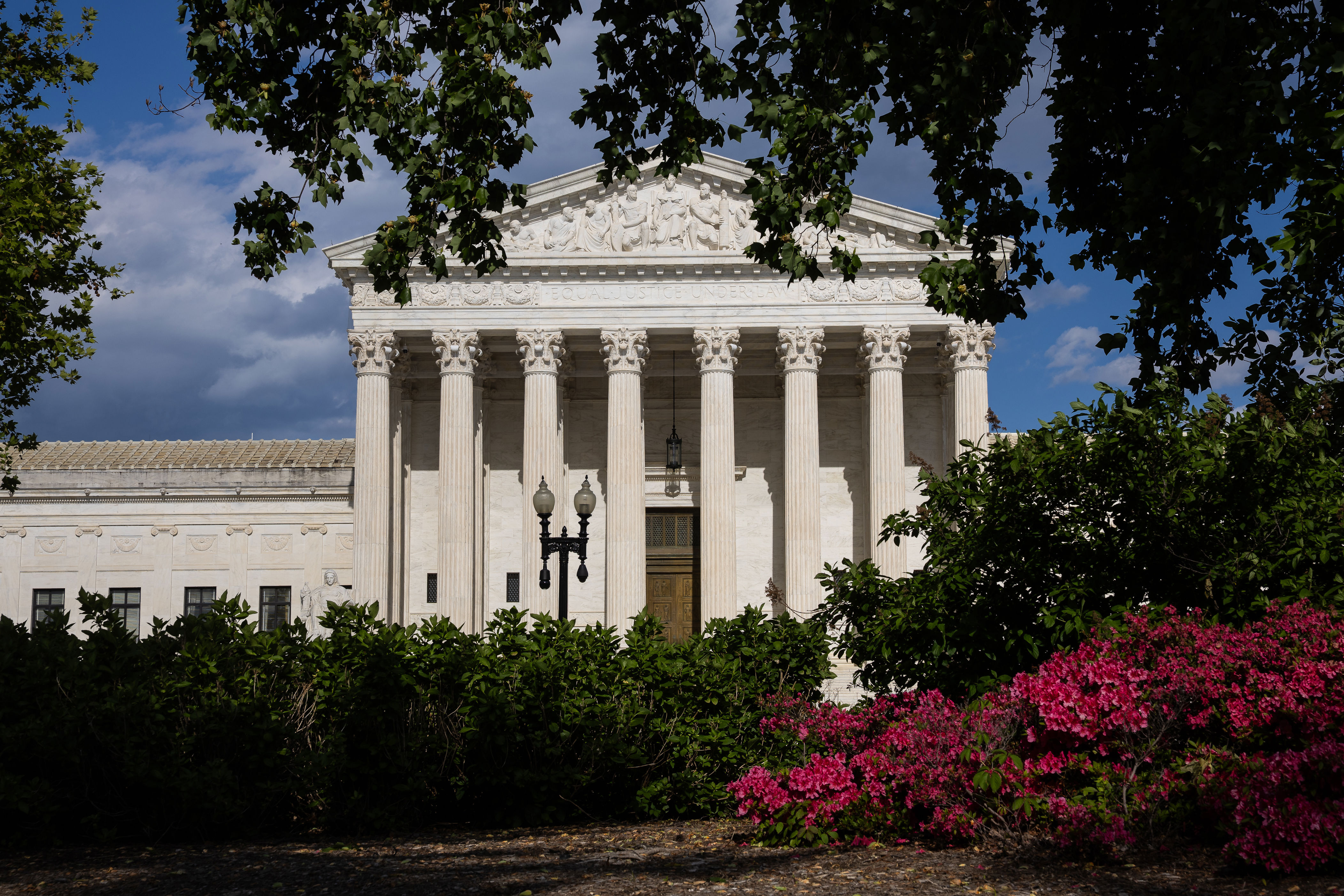
The U.S. Supreme Court on Monday received an emergency appeal from Virginia Democrats seeking to revive a voter‑approved congressional map struck down by the state’s highest court, even as the justices separately allowed Alabama to move forward with its own redistricting plan in a ruling released the same day.
The dual developments underscore how the court continues to shape the nation’s political boundaries heading into the 2026 elections.
The Virginia ruling also blocked new congressional districts that would have given Democrats a stronger chance to win four additional U.S. House seats. The emergency appeal followed a 4-3 decision Friday by the Virginia Supreme Court, which found that lawmakers improperly advanced the amendment after early voting had already begun in the fall’s general election.
The ruling wiped out a rare Democratic gain in the nation’s mid‑decade redistricting fight, a contest supercharged by President Donald Trump’s push for Republican‑led states to redraw their maps and by a recent U.S. Supreme Court decision that sharply weakened the Voting Rights Act.
Losing the Virginia map deprives Democrats of four competitive seats at a moment when Republicans claim to have netted more than a dozen through redistricting nationwide. The appeal also highlights the political stakes surrounding a Supreme Court that has repeatedly shaped the congressional landscape heading into this year’s midterms.
What to Know About Virginia Ruling
Democrats argue the Virginia court “overrode the will of the people” who narrowly approved the amendment last month, saying the state must use the new map rather than revert to districts voters rejected.
The state court ruled the amendment invalid because the legislature began the ballot‑placement process after early voting had started, a procedural violation under the Virginia Constitution.
Democrats counter that U.S. Supreme Court precedent defines an election as occurring on Election Day, not during early voting.
The amendment was intended to blunt GOP gains in states such as Texas, Missouri, North Carolina, Ohio and Florida, and briefly brought the national redistricting race to a partisan draw before the Virginia ruling unraveled it.
The fight comes as the national redistricting landscape shifts rapidly.
Just last week, federal courts issued major rulings in Texas and Louisiana that further reshaped the congressional map.
In Texas, a court allowed Republicans to move forward with a redrawn map that civil‑rights groups say weakens the influence of Latino voters. In Louisiana, the U.S. Supreme Court permitted the state to proceed with a GOP‑backed plan after striking down a majority‑Black district as an unconstitutional racial gerrymander—a decision that immediately strengthened Republican prospects in the Deep South.
Together, those rulings have given Republicans additional advantages in the mid‑decade redistricting scramble, while Democrats have lost ground in states where they had hoped to offset GOP gains.
What to Know About Alabama Ruling
The U.S. Supreme Court on Monday allowed Alabama to move forward with its latest congressional map, a plan that eliminates the state’s prior second opportunity district for Black voters and replaces it with a configuration civil‑rights groups say weakens minority voting strength.
The ruling effectively ends a yearslong legal fight over Alabama’s compliance with the Voting Rights Act, coming less than two years after the court had ordered the state to draw a second district where Black voters could elect a candidate of their choice.
This time, the justices sided with Alabama’s Republican‑controlled legislature, which argued that its newest map cured the legal defects identified in earlier litigation.
By declining to block the plan, the court signaled it would not revisit the state’s latest approach, even though it significantly reduces the electoral influence of Black voters who make up more than a quarter of Alabama’s population.
The decision is part of a broader shift in redistricting law following the Supreme Court’s recent ruling that sharply weakened the Voting Rights Act’s protections against racial gerrymandering.
That ruling has already reshaped maps across the South, including in Louisiana, where the court last week allowed Republicans to proceed with a plan that dismantled a majority‑Black district.
Together, the Alabama and Louisiana decisions have strengthened GOP prospects in the region and added to the national imbalance Democrats are trying to counter through legal challenges in states like Virginia.
What Happens Next
The U.S. Supreme Court has not indicated when it will act on the emergency request for Virginia, but election officials say they need clarity soon to avoid disruptions to the 2026 congressional primaries.
This article contains reporting from the Associated Press.
Related Articles