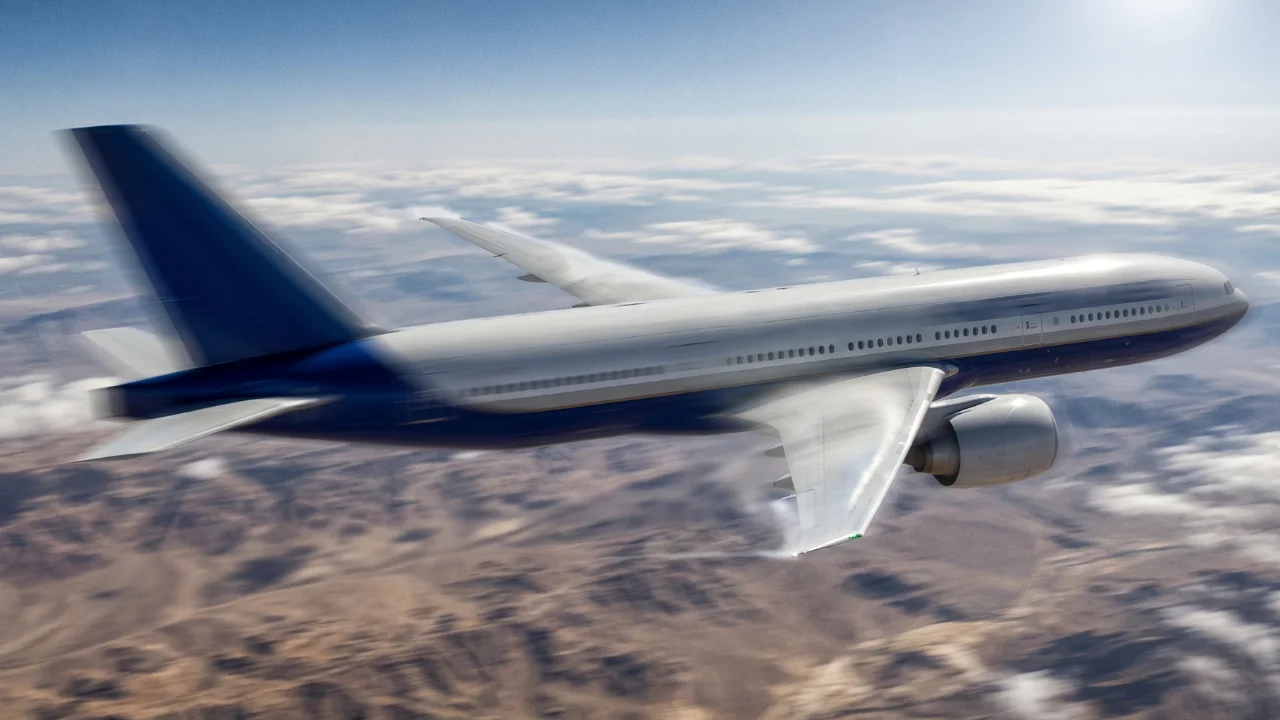
While it is technically possible for planes to fly faster than 600mph, they don’t – and for good reason.
For as long as we’ve been flying in planes, someone has always been working on a way to make them faster.
After all, who doesn’t want to get to a vacation destination in a shorter time?
But commercial flight speeds have remained roughly the same for the last 50 years, and that’s due to complex reasoning that includes physics, economics, and engineering.
What’s keeping planes from going faster than 600mph?
We’ve all heard about fast planes in action, whether it’s the Global 8000 from Bombardier or a secret supersonic jet from NASA.
And of course, there’s the iconic Concorde.
But despite all the fanfare, commercial planes have kept at speeds of between 500mph and 600mph, not exceeding the latter.
Why is that? There are a lot of factors to consider.
Drag and energy – the physics of the matter
Air resistance, otherwise known as drag, plays a huge part in limiting the speed of commercial planes.
The faster a plane goes, the higher the drag – doubling the speed of a plane would quadruple the drag, for example.
This, in turn, requires a huge increase in fuel and engine power.
As a plane approaches the speed of sound (767mph), a wall of compressed air builds up in front of it.
Think of it as if the air can’t move out of the plane’s way fast enough.
This goes some way to explaining why commercial jets generally fly at 80 to 85 percent of the speed of sound.
It’s not so much that planes aren’t capable, it’s just that it’s more efficient if they limit their speed.
Private jets and military planes are wholly different cases from commercial planes, we should point out.
The former carry fewer people and often carry people wealthy enough to foot the pricey fuel costs.
In the case of the latter, the high speeds are usually reserved for short bursts to preserve fuel.
How economics play a part in limiting speed
But it’s not just physics that plays a part in all of this.
After all, aviation is a multi-billion-dollar business, and every penny counts.
As you’ll no doubt know, the Concorde was the only supersonic passenger jet.
Anyone who flew on board it had fond memories of it, as did people who got to view it in action from the ground.
But there’s no two ways about it, the Concorde burned through fuel and was costly to fly on.
Most people couldn’t afford it at all, and the skyrocketing operating costs coincided with declining passenger demand.
In the end, it was financially unsustainable and was retired in 2003.
Perhaps this has served as a cautionary tale for a lot of the aviation industry, and explains why we’re not seeing planes fly faster than 600mph.