NEW BRITAIN, Conn. —The city seal shows a beehive, seven bees and a Latin motto that translates to: “Industry fills the hive and enjoys the honey.”
The bees represent the companies that helped build New Britain into a robust manufacturing town, and the busiest of all was Stanley Black & Decker. Its factories once stretched for nearly a mile down Myrtle Street, pumping out millions of screwdrivers, drills and other tools that, without exaggeration, helped build America over the past two centuries.
All that is left is a tape-measure plant, but not for long. Production has ended, layoffs have begun and the factory will close for good on May 18, taking 300 jobs with it.
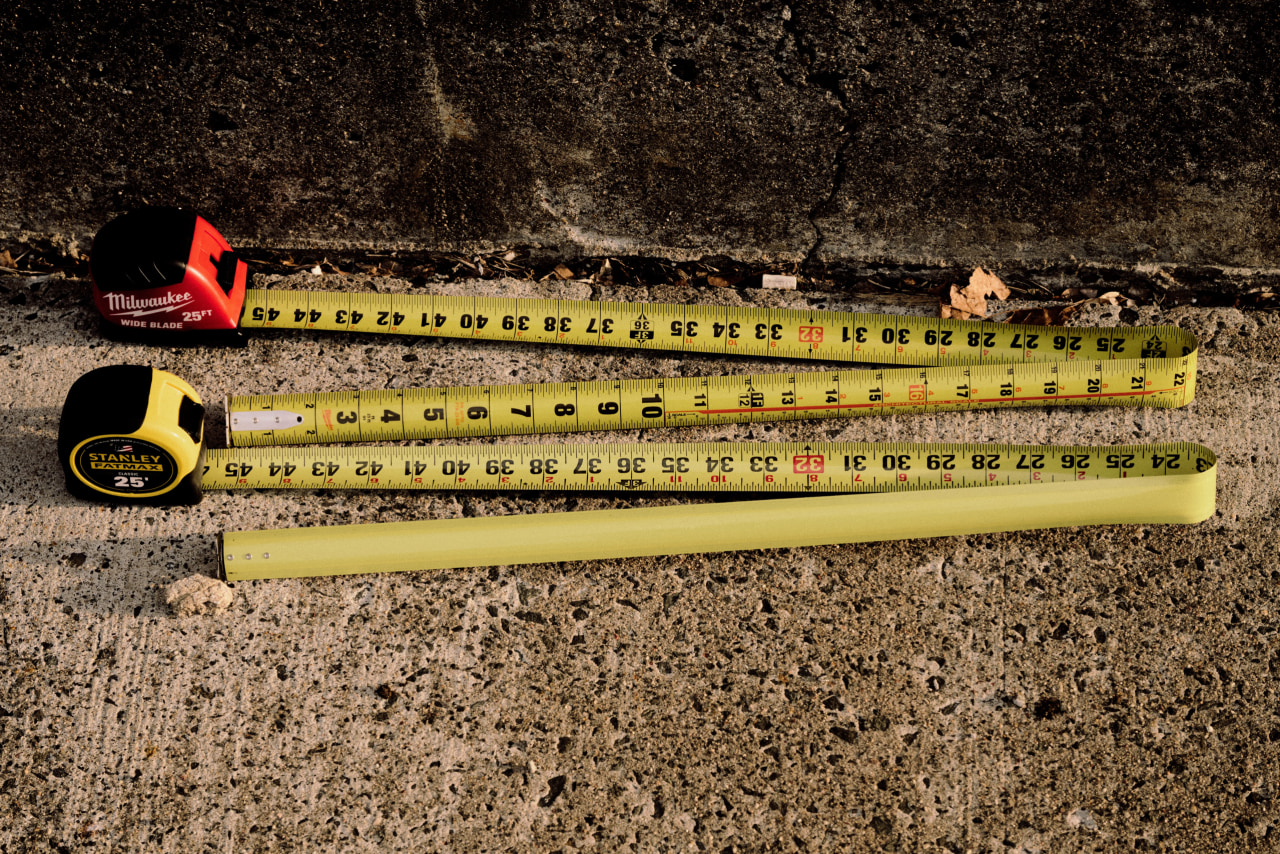
The tape measures coming out of the plant were the best money could buy, say some trade workers, but their measurements were printed on only one side of the yellow, curved metal tape, known as the blade. Stanley said buyers these days want tape measures with numbers on both sides of the blade, a feature intended to make the tools easier to use at any angle.
Stanley didn’t equip the New Britain plant with the machinery needed to do double-sided printing. It does that at a factory in Thailand, and the company said it wasn’t fiscally prudent to make the same kind of investment in New Britain.
The idea that single-sided tape measures are becoming obsolete has provoked skepticism, starting with devotees of Stanley’s products. Scott Bagley, owner of Mulberry Woodworking in Frankfort, Ind., said he uses the company’s tried-and-true model every day.
“I can’t think of a single situation where a double-sided tape measure would have given me any kind of advantage in the last 20 years,” he said.
Current and former workers at the plant described the obsolescence rationale as camouflage for a cold-eyed decision to offshore manufacturing to a lower-cost country.
“There has never been a point in time where we ever heard anything about there being an issue with single-sided vs. double-sided,” said Pete Cayer, 48 years old, who worked in the plant’s testing lab before being laid off last year.
Stanley said production at the New Britain plant slumped as demand shifted to double-sided tape measures. The factory, which once ran around the clock, cut a shift last year, in addition to other layoffs.
Current and former workers said Stanley explored adding two-sided printing to the New Britain plant as late as last year, but abandoned the effort because of technical challenges. Stanley said it explored all options to keep the plant open.
Stanley has closed other U.S. factories to cut costs, boost profit margins and thin an inventory glut built up during the Covid-19 pandemic. One casualty was a Texas plant built to make Craftsman-brand wrenches and ratchet sets that had been coming from China. The company shut it down in 2023, stymied by problems with its automated manufacturing systems.
Former New Britain Mayor Erin Stewart, who is running for governor of Connecticut, said she had suspected Stanley’s last hometown plant was marked for closure but never got a straight answer from the company.
“It was, like, ‘You guys are staying, right?’” she said. “And they were always beating around the bush, like, ‘Yeah, we’re here for now.’”
Hardware city
Stanley’s worldwide manufacturing empire began in a corner of Connecticut that had no business becoming a manufacturing center—a landlocked region about 85 miles from Manhattan with no rail service, no waterway and few raw materials.
Regardless, the brothers Frederick and William Stanley established Stanley’s Bolt Manufactory in 1843 and built a thriving business in wrought-iron bolts and door handles.
Other factories sprouted, making such products as door hinges and coffee pots. In 1850, the community was incorporated as New Britain, and Frederick Stanley was the first elected mayor.
His manufactory was renamed The Stanley Works, and over the next century it boomed, employing 5,000 people in and around New Britain and helping to give it the nickname “Hardware City.”
In the early 1960s, Stanley’s manufacturing campus added an ultramodern factory that made an ultramodern product, the PowerLock. The silver-bodied, soon-to-be ubiquitous tape measure was the first to have a slide that held the blade in place.
Within a few years, though, Hardware City, like other U.S. industrial regions, began to fade.
Some companies sent production to states and countries where labor was less expensive. Stanley closed many of its redbrick buildings, some longer than a football field, as it expanded its manufacturing abroad.
Offshoring yielded waves of layoffs and shrank the company’s unionized workforce in Connecticut. In 2003, workers went on strike for 10 days over job security and pay. “Love the U.S.A., not China, Mexico and Thailand,” said one placard of a striking worker. The two sides eventually settled, but the lure of lower-cost overseas production endured.
As much of the tool industry migrated to Asia, New Britain’s tape-measure factory held its own with an innovative product introduced in 1999. The Stanley FatMax hit the shelves with a blade a quarter-inch wider than the norm, allowing it to extend for 10 feet or more without buckling. That feature made it easier to take measurements while perched on a ladder or working on a roof.
TV commercials showed construction workers jousting with FatMaxes, and Stanley sued copycat competitors for alleged patent infringement. The FatMax became an industry standard, prized for its precision and ruggedness.
“I’ve dropped it off three-story buildings and it just bounces,” said Niall Buryk, a Toronto carpenter.
It turned out that some of the stiffest competition faced by the New Britain plant came from within Stanley itself. A company factory in Thailand, where labor is roughly a quarter the cost of its U.S. equivalent, started making tape measures in the 1990s. Many were exported to the U.S.
About six years ago, Stanley equipped the Thailand plant with machinery to produce blades with numbers on both sides. The company said it invested in the manufacturing equipment there because demand for double-sided tape measures started in overseas markets.
The feature is now common on the shelves of U.S. hardware stores, though people who use tape measures professionally are split over its advantages.
Marc Bernstein, who frames and hangs fine art in Charleston, S.C., views it as a novelty for which he has no use. But Dallas-area electrician Paul Bruderer said it can be vital when taking measurements at an awkward angle.
“A single-sided tape measure works 90% of the time, but anytime you’re on a construction site, saving that other 10% is worth the cost,” Bruderer said.
Stanley has boosted its tape-measure imports from Thailand in recent years, going from roughly 555 shipping containers in 2019 to 789 last year, according to ImportGenius, a U.S.-based trade-data aggregator.
The shelves at a Chicago area Home Depot didn’t reflect Stanley’s claim that double-sided tape measures are what buyers really want. Of the 24 different Stanley tape measures that displayed a country of origin, 17 were made in Thailand, but only five of those were double-sided.
Slowly vanish
In late February, company officials called New Britain’s workers into a meeting and told them Stanley was going to close the plant because of waning demand for its products. The shutdown would affect about 300 workers, including 204 members of the International Association of Machinists and Aerospace Workers.
The union’s local directing business representative, Jeff Santini, said many didn’t believe the company’s explanation. “They just figured [Stanley] didn’t want to invest in the membership and themselves here in Connecticut,” he said.
Jori Sackin, owner of Epstein Hardware in Kansas City, Mo., pointed out that double-sided tape measures have been around a long time. Milwaukee, the tool maker that is Stanley’s main rival, began to offer them in 2004. Sackin didn’t understand why Stanley never built the capability into its U.S. factory.
“It’s like having a T-shirt company and only being able to print on one side of the shirt,” Sackin said.
Some factory neighbors in New Britain have a fatalistic view. Andrew Krol, 53, said the company had already sent so much production overseas that “we were waiting for it to close.”
Stewart, the former mayor, said closing Stanley’s last local factory would levy an emotional toll in a town built on blue-collar work. New Britain has a museum dedicated to its industrial history. Above the public library’s checkout desk is a mural of shirtless laborers toiling among smokestacks.
“People who live in New Britain are very proud of their history, of where we came from, of what our story is,” Stewart said. “To know that that’s just slowly disappearing in front of our eyes, it’s sad.”
Stanley declined to say what will happen to the building that houses the tape measure factory. Much of its adjoining campus is in rough shape. Chunks of facade have disappeared from two towers that house company equipment.
The largest structure, a six-story building with dozens of broken windows, is sealed shut with rusting metal grillwork. It was meant to house a data center, but the project has struggled to find a tenant, Stewart said.
Other Stanley facilities have found new life. The former headquarters hosts a health clinic and another building houses a nonprofit serving people with disabilities. A former office building was converted into upscale apartments.
Stanley is giving the plant’s workers job-hunting assistance and severance packages that Santini deemed “fair, given the circumstances.” New Britain Mayor Bobby Sanchez said he was optimistic workers would find new opportunities.
Manufacturing still accounts for 15% of the city’s employment, thanks to smaller companies that make everything from airplane parts to shotguns. Sanchez noted that Connecticut-based General Dynamics Electric Boat, which recently won a $15 billion Pentagon contract to build submarines, is seeking 8,000 new workers in the area.
“I think they’ll be taken care of,” Sanchez said.
Jonathan Grande, 41, spent eight years at the factory and last worked as a “coater,” applying the signature yellow paint to the tape measures’ blades.
He was laid off soon after the February announcement, and though he quickly found another manufacturing job, he said the pay is significantly lower than what he made at Stanley. He is now thinking about becoming a sailor on cargo ships.
“A lot of us came from nothing,” Grande said, “so working in a plant like that, making $30 an hour, that’s everything.”
Write to John Keilman at john.keilman@wsj.com