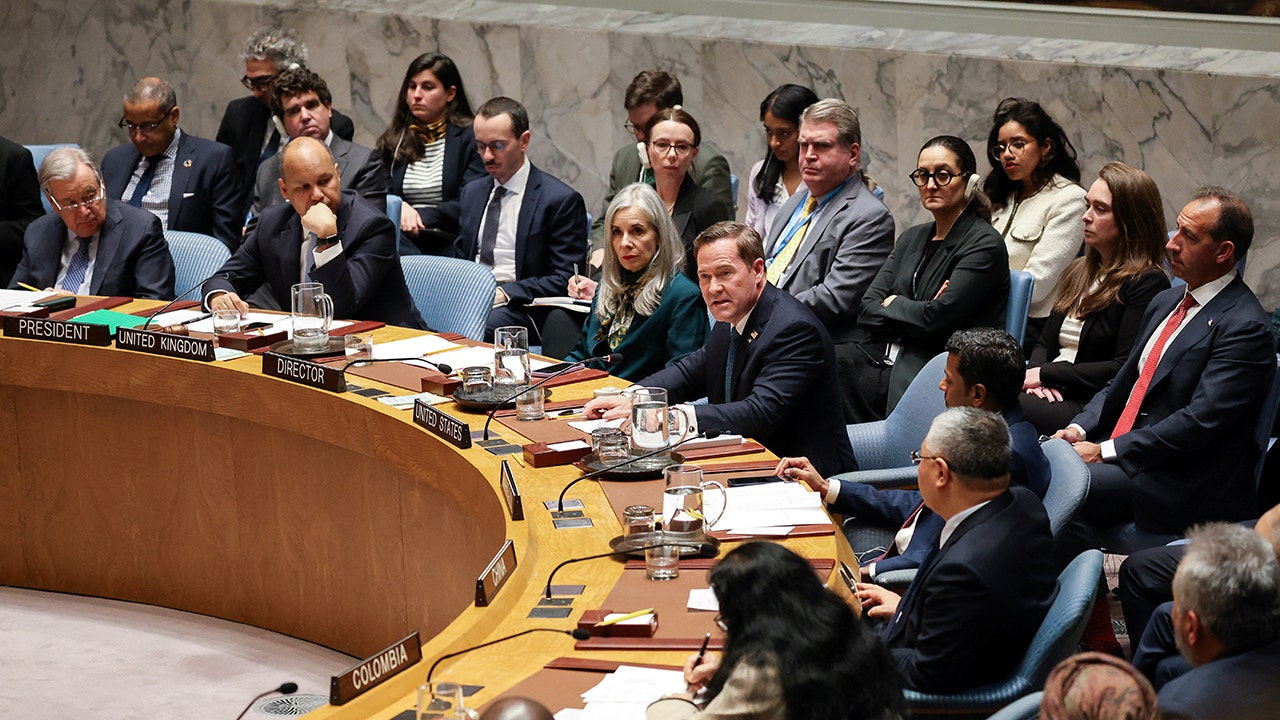
Senate Republicans voted Tuesday to defeat a resolution sponsored by Senate Democrats to stop President Trump from launching military operations against Cuba without authorization from Congress.
The resolution sponsored by Sens. Ruben Gallego (D-Ariz.), Tim Kaine (D-Va.) and Adam Schiff (D-Calif.) would block Trump from using military force to topple Cuba’s regime, something that Democrats fear is a growing likelihood after Trump ordered a naval blockade of the island nation.
Democrats sought to force the measure to the Senate floor under the expedited procedures laid out by the 1973 War Powers Act.
But Republicans voted 51 to 47 to sustain a point-of-order objection raised by Sen. Rick Scott (R-Fla.) against the Democrats’ motion to discharge the resolution from the Senate Foreign Relations Committee.
“The measure we’re talking about is completely out of touch with the facts in Cuba nor is it relevant to anything actually happening in Cuba right now,” Scott said. “President Trump has never suggested we put troops on the ground in Cuba. So this entire effort is moot.”
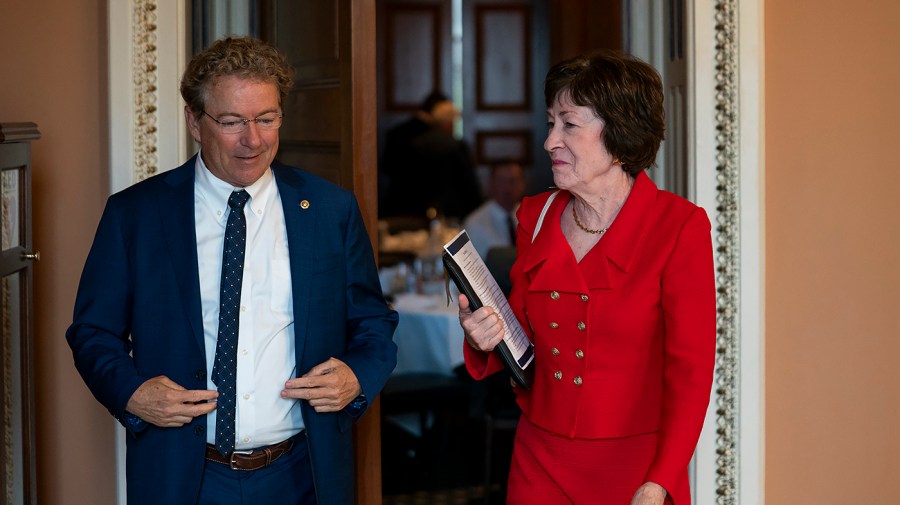
Sen. Susan Collins (R-Maine), who faces a tough reelection race in a Democratic-leaning state, and Sen. Rand Paul (R-Ky.), who typically votes to give Congress more authority over military engagements, were the only two Republicans who voted in support of the Democratic war powers resolution.
Centrist Sen. John Fetterman (D-Pa.) was the only Democrat to vote for the point-of-order objection against the resolution.
The Democratic sponsors of the bill urged their colleagues to rein in Trump’s military authority preemptively, pointing to the U.S. naval blockade of Cuba and Trump’s comments at an event last month predicting, “Cuba’s next.”
“As if the disaster of the Iran War and the resulting spike in oil prices weren’t enough, Trump is threatening to intervene in Cuba as well,” Gallego said in a statement before the vote. “The American people want nothing to do with it — they want lower prices, good health care and affordable homes, not a new war to satisfy neoconservatives in South Florida.
Trump said “Cuba’s next” last month during remarks about U.S. efforts to change Venezuela’s government at the Future Investment Initiative summit in Miami.
“We have been very, very successful. You know, when I went into Venezuela … I built this great military, I said, you’ll never have to use it, but sometimes you have to use it,” Trump said, adding, “And Cuba’s next, by the way.”
Kaine argued that Cuba doesn’t pose a national security threat to justify U.S. strikes.
“Once Donald Trump said, ‘Cuba’s next,’ and the effects of this blockade on Cuban society — hunger, lack of medical supplies, lack of energy — if somebody was doing this to us, we’d consider it an act of war. That’s why now,” Kaine said.
“What would the American public say about a war against Cuba?” he said, emphasizing that the administration has “never said Cuba poses a threat to the United States.”
“This would be a war for one thing: regime change. That’s not a reason for the United States to go to war, certainly without a congressional debate,” he added.
Senate Republicans have voted six times to defeat Democratic-sponsored resolutions on under the War Powers Act to halt military operations against Iran without congressional authorization.
Paul, the libertarian-leaning conservative, has been the only Republican to consistently vote for the resolutions to stop further military operations against Iran.
Senate Democrats had their most success in attempting to curb Trump’s authority as commander in chief when they convinced five GOP colleagues to vote for a motion to discharge from committee a resolution to block further military operations against Venezuela without congressional authorization.
Five Republicans voted for that resolution in January: Paul, Collins, Sens. Lisa Murkowski (R-Alaska), Todd Young (R-Ind.) and Josh Hawley (R-Mo.).
Young and Hawley later reversed their support for that war powers resolution related to Venezuela after Secretary of State Marco Rubio pledged to them that the administration would not deploy troops to Venezuela without permission from Congress.
Copyright 2026 Nexstar Media, Inc. All rights reserved. This material may not be published, broadcast, rewritten, or redistributed.For the latest news, weather, sports, and streaming video, head to The Hill.