The findings suggest certain less-refined types retain more bioactive lipids, including FAHMFAs and LNAPEs, that may support metabolic health and anti-inflammatory activity.
Key Points
- A 2026 study identified 196 lipid molecules in japonica rice, including FAHMFAs — found in rice for the first time — and LNAPEs, compounds linked to anti-inflammatory and metabolic effects.
- Pigmented rice varieties — black, brown, and green — contain more diverse lipids and antioxidants than white rice and may better support metabolic health.
- Experts say choosing less-refined, colorful rice can provide a wider range of nutrients, reinforcing that whole foods offer more than a single macronutrient.
It’s easy to think of foods as fitting into a single category, such as a source of protein or fat. But new research has uncovered previously undetected beneficial fats in certain types of rice, making the case for viewing this food as more than “just” a source of carbohydrates.
The 2026 study out of Hokkaido University, published in the journal Food Research International, conducted a deep dive into the nutritional content of japonica rice (also called Japanese rice) — investigating brown, red, green, and black varieties. The researchers subjected the rice to various nutritional tests and identified 196 distinct lipid (or fat) molecules across five major groups of Japanese rice.
The researchers found that pigmented types of rice — black, brown, and green in particular — had distinct, healthy lipid profiles that they didn’t see in other types of rice.
“This is further evidence that the foods that we eat have so many different components,” said Jessica Cording, RD, CDN, author of The Little Book of Game-Changers. “We tend to think of rice as a carbohydrate, but there is so much other stuff in there.” Here’s what dietitians want you to know about these hidden healthy fats in rice, plus why the findings matter.
What are the “hidden” healthy fats in rice?
The researchers detected two compounds in certain types of pigmented rice: FAHMFAs (Fatty Acid Esters of Hydroxy Fatty Acids) and LNAPEs (N-acyl-lysophosphatidylethanolamines). This is the first time FAHMFAs have been detected in rice.
“These substances have been linked to anti-inflammatory effects and improved insulin sensitivity,” said Sonya Angelone, PhD, RDN, a nutritionist and registered dietitian based in San Francisco. “Although there aren’t long-term human studies evaluating health outcomes from these substances specifically, certain varieties of rice may provide anti-inflammatory and metabolic benefits.”
FAHMFAs were most abundant in brown and green pigmented rice, while LNAPEs were detected in black rice.
How rice-derived fats may support metabolic health
Each healthy fat serves a slightly different purpose in the body. “N-acyl phosphatidylethanolamines are the building blocks to compounds that regulate appetite and fullness,” said Scott Keatley, RD, co-founder of Keatley Medical Nutrition Therapy. “This can make it easier to consume smaller portions and possibly feel less hungry throughout the day,” said Lisa Moskovitz, RD, CDN, chief executive of NY Nutrition Group.
Related: Meet the Ancient, Drought-Resistant Grain Poised to Be the Next Superfood
Data on FAHMFAs is evolving. However, they are “a class of lipids that show anti-inflammatory and insulin-sensitizing activity in early research,” Keatley said. As a result, this healthy fat may have a positive effect on your blood sugar, Moskovitz said.
How different types of rice compare nutritionally
From white to black to wild, different types of rice vary widely in their nutritional profiles. While all can fit into a healthy diet, pigmented varieties tend to deliver more fiber, antioxidants, and bioactive compounds, Cording says. Here’s what to know about each:
- Basmati rice. This is a refined white rice that, according to Angelone, contains fewer lipids and phytochemicals than its pigmented counterparts. It also has a lower glycemic index than some other forms of white rice, such as jasmine, she said.
- Black rice. This rice is rich in LNAPEs. “It’s rich in antioxidants and the lowest on the glycemic index, so it’s better for metabolic health and blood sugar control,” says Angelone.
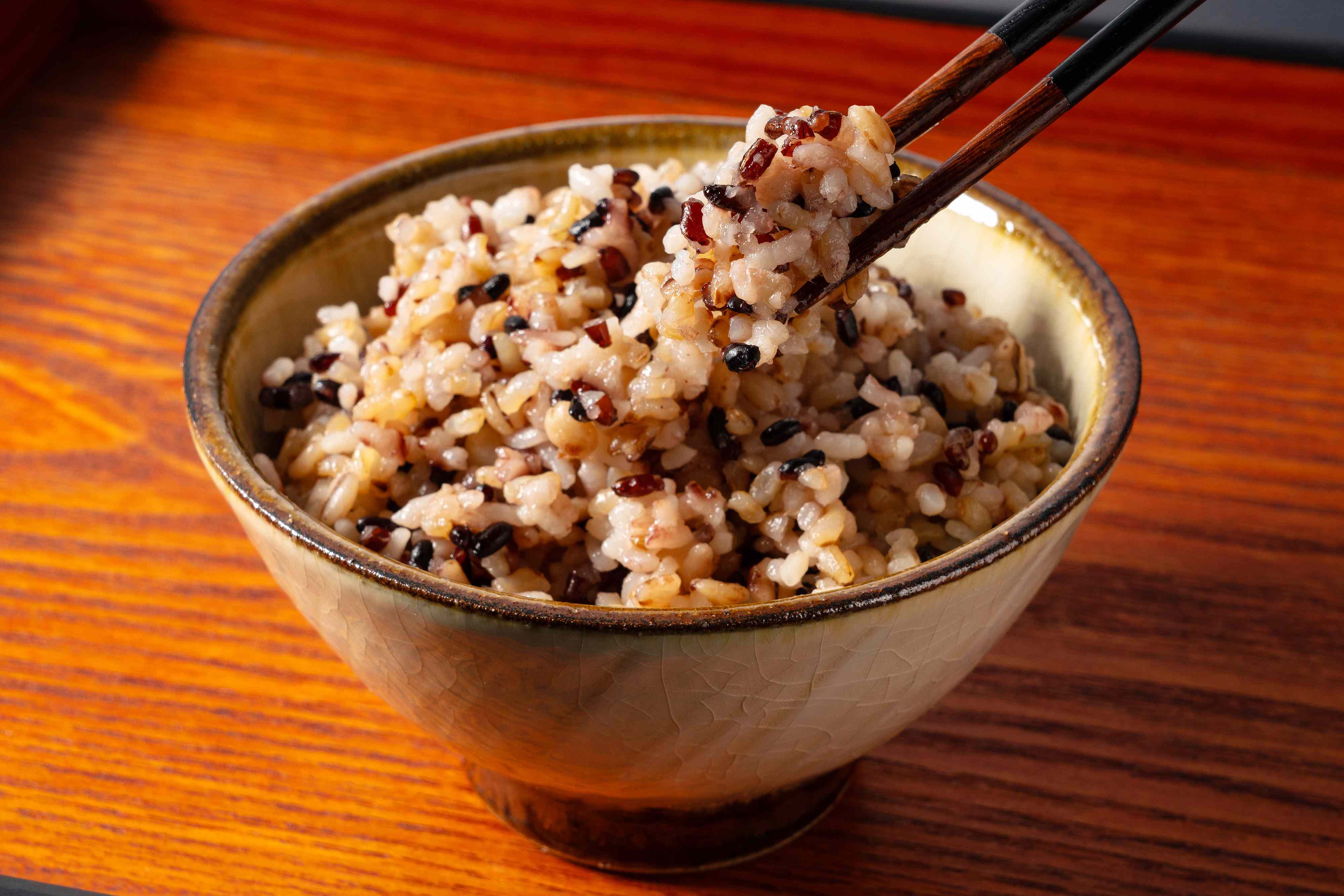
- Brown rice. This variety contains FAHMFAs. It has plenty of fiber, vitamins, and lipids because the germ and the bran (the high-nutrient outer layer of rice) remain intact, Angelone said. “This is a nutrient-dense rice compared to white rice,” she added.
- Purple rice. Purple rice has plenty of antioxidants. “It’s similar to black rice, with similar health benefits,” says Angelone.
- Red rice. Red rice is a good source of fiber and is also rich in polyphenols and antioxidants compared to white rice, Cording says.
- Sticky rice. Sticky rice has a higher starch content than other white rice. “It is lower in fiber and bioactive compounds, but higher in glycemic effect,” Angelone said.
- Wild rice. Technically, wild rice isn’t rice — it’s the edible seed of a semi-aquatic grass called Zizania palustris. “It’s higher in protein, fiber, and minerals,” says Angelone. “It’s good for variety in the diet.”
Why pigmented rice may offer more nutritional benefits, according to dietitians
There are health benefits to eating any kind of rice. But in general, you may get even more benefits from pigmented rice. “Pigmented rice tends to contain more nutrients,” Cording said. “A lot of that color is coming from different antioxidants and bioactive compounds.”
White rice is refined to achieve its signature color, a process that removes part of the grain containing certain vitamins, minerals, and bioactive compounds, which may lower its nutritional value, Cording said. And Angelone agrees. “The rice color, or pigmentation, seems to correlate with a richer diversity and quality of lipids,” she added.
Cording emphasizes that this doesn’t mean white rice is “bad” or without real nutritional benefits. “If somebody grew up eating white rice as their primary carbohydrate, you can still eat that,” she said. “You just might want to be more intentional about getting certain nutrients from other foods.”
Moskovitz recommends viewing this data as a reminder that nutrition is complex. “Just because rice is considered a starch or a high-carb food doesn't mean it's automatically bad for blood sugar, weight, or metabolic health,” she said. “It's about what other nutrients come with those calories and carbohydrates that matters most.”
Related: Turns Out, Chilled Carbs May Support Easier Digestion, Deeper Sleep, and Clearer Thinking
Keatley said this reinforces a broader pattern in nutrition. “Choose foods in their least refined form and include a range of naturally occurring colors,” he said. “Those pigments often signal different nutrient profiles, including compounds we’re still learning how to characterize.”
Reviewed by
Lauren Manaker MS, RDN, LD, CLEC: Lauren is an award-winning registered dietitian and three-time book author, with more than 22 years in the field.
Read the original article on Food & Wine