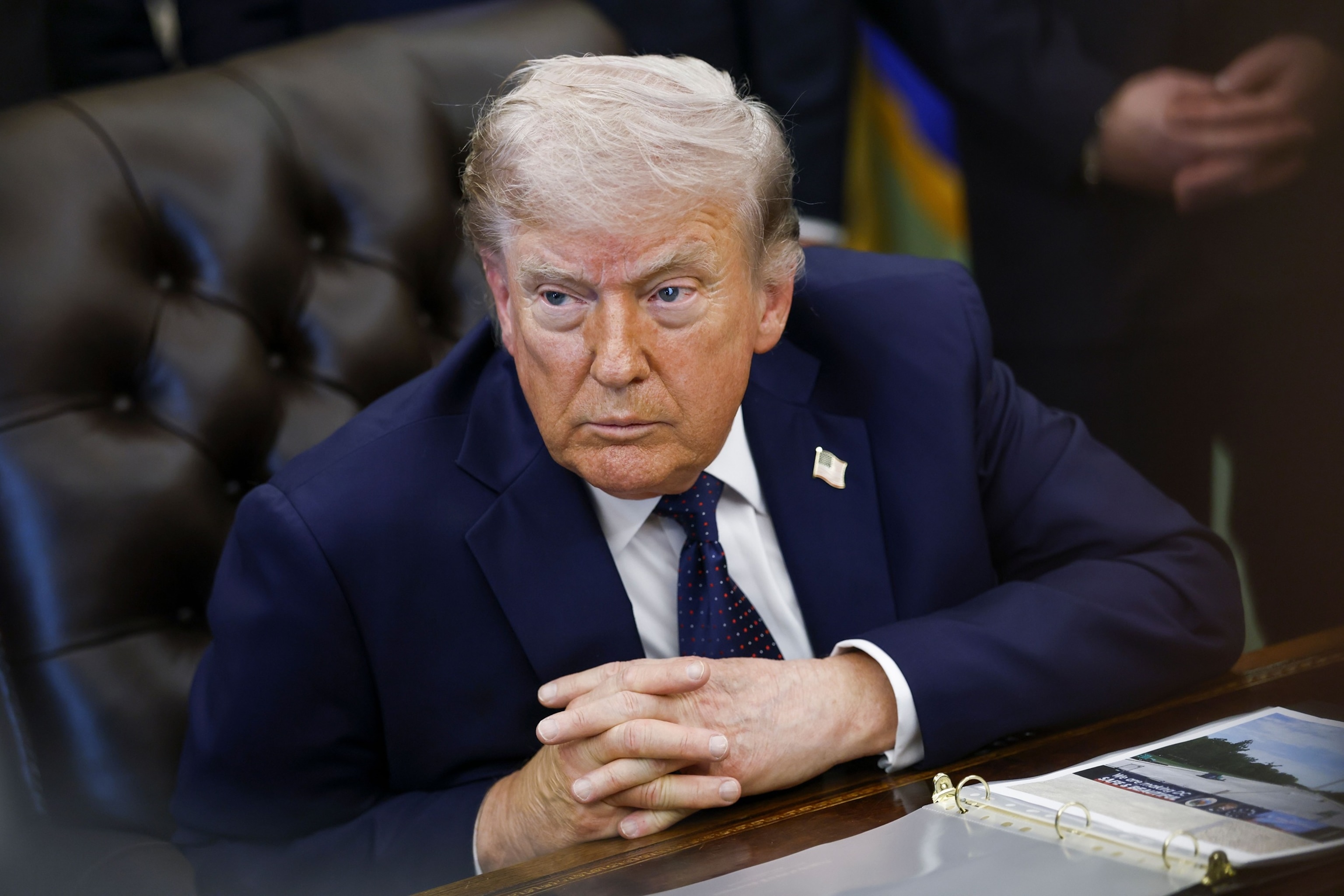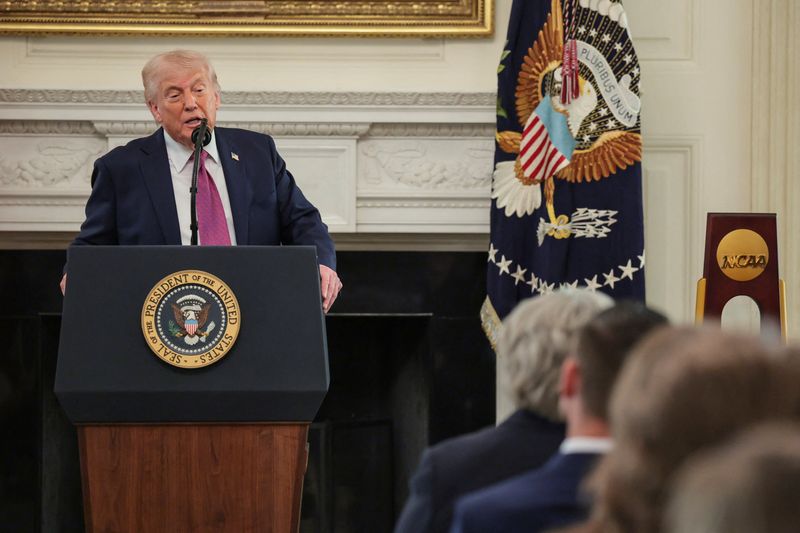
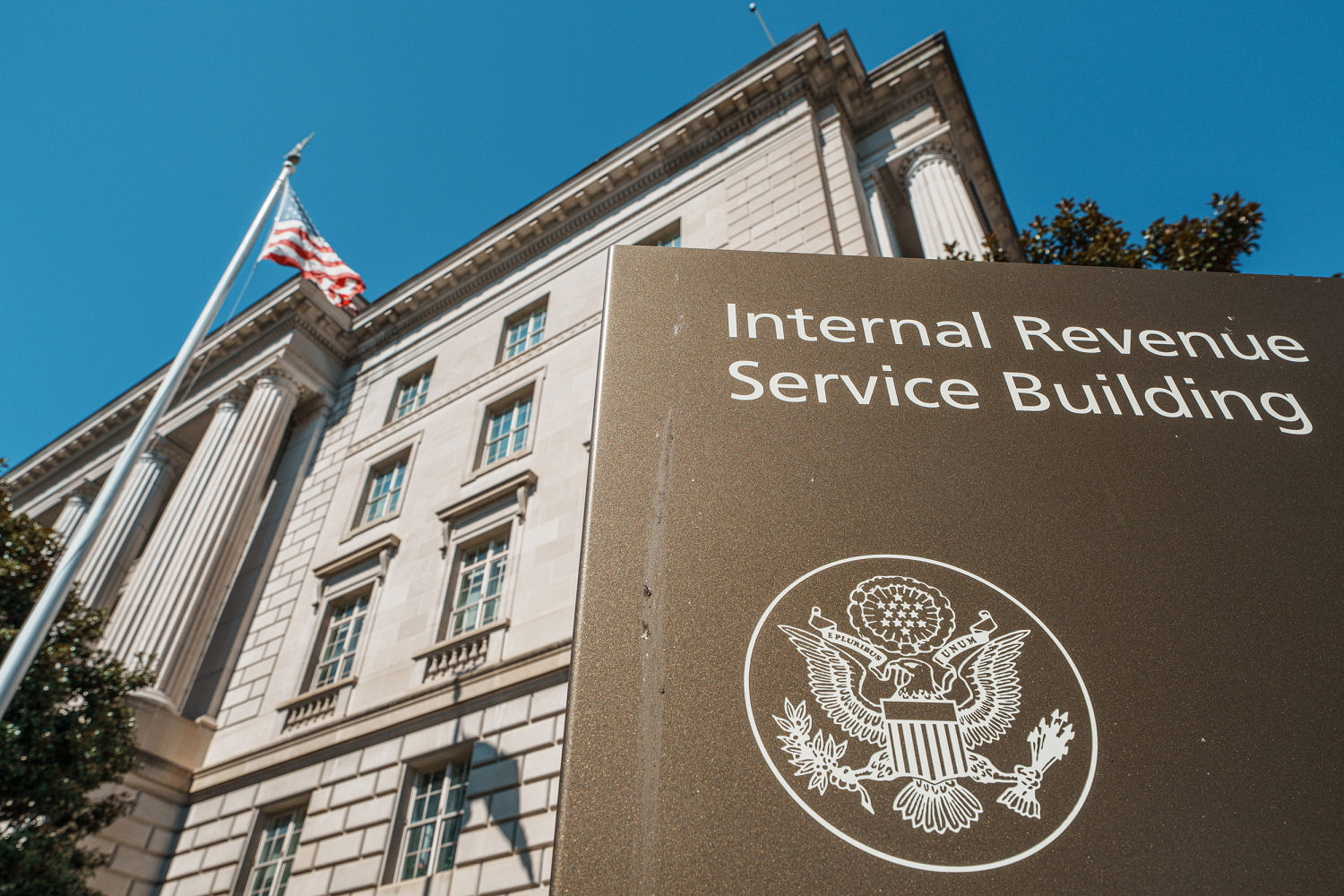
A federal judge is asking the Justice Department and President Donald Trump's private attorneys to explain whether his $10 billion lawsuit against the Internal Revenue Service, an agency he oversees as president, is the type of dispute federal courts can consider.
U.S. District Court Judge Kathleen Williams called into question whether an actual disagreement between the two parties exists in a Friday order, writing that a case can only stand if there is adverseness that fulfills a controversy requirement.
“Typically, adverseness is found in a situation where one party is asserting its right and the other party is resisting,” Williams wrote. “Consequently, if there is no adverseness, there is no case or controversy.”
The judge ordered both parties to explain "whether a case and controversy exists" by May 20. Williams set a hearing on the matter for May 27 in Miami.
The order comes as both sides seek to resolve the dispute. Attorneys representing Trump and the IRS asked a federal court in a joint filing last week to pause proceedings for 90 days, writing that the parties were in talks to find a resolution.
Trump sued the IRS and Treasury Department in January alleging that the agency was at fault for the unauthorized release of his tax documents by a government contractor who shared them with news outlets. Trump argued that the IRS did not take the necessary steps to prevent actions of the contractor, Charles Littlejohn, who was sentenced to five years in prison in 2024 following a guilty plea.
In her order, Williams did recognize that Trump sued the IRS in “his personal capacity,” rather than as president, but wrote that “he is the sitting president and his named adversaries are entities whose decisions are subject to his direction.”
The IRS referred NBC News to the Justice Department when asked for comment on Williams’ order. The Justice Department and the White House did not immediately respond to requests for comment.
Acting Attorney General Todd Blanche declined to speak on the status of the case when asked about it during an unrelated press conference earlier this week. Blanche did offer a response on how the Justice Department handles cases with “competing interests.”
“The Department of Justice handles complicated decisions involving those type of issues every day, all day, and not just this Department of Justice,” Blanche said.
“I mean, you have decisions that an attorney general or his or her staff have to make that are difficult and complicated, and we do it. Attorney Generals before me have done it, and we’ll be able to handle it in an appropriate and ethical manner,” Blanche continued.
Williams was nominated to the bench by former President Barack Obama in 2011.
Trump has said that he would donate any money earned through this lawsuit to charity, but those funds would still be coming from taxpayer dollars.
The complaint against the IRS, filed by Trump alongside two of his adult sons, Donald Trump Jr. and Eric Trump, and the Trump Organization, argued that the leak caused the plaintiffs “reputational and financial harm” and “public embarrassment.” The lawsuit followed a report from the New York Times that found Trump had only paid $750 in federal income taxes in 2016 and 2017.
This article was originally published on NBCNews.com