Tensions between Iranian leaders over talks with the U.S. spilled into the open this week, highlighting how difficult it will be for President Trump to secure the diplomatic win he wants to end the war.
The disagreements were apparent in the first round of talks earlier in April. Mediators said Iran became vague when pressed by the U.S. for specifics on issues it had said it was willing to discuss, people familiar with the matter said.
It’s now becoming clearer that there are deep divisions within the country’s leadership over how far to go to strike a deal with the Americans—a concern as mediators scramble to arrange a second round of talks after the U.S. and Iran abandoned a planned meeting midweek amid rising tensions in the Strait of Hormuz.
U.S. envoys Steve Witkoff and Jared Kushner will go to Islamabad for talks with Iranian officials, White House press secretary Karoline Leavitt said Friday on Fox News. Vice President JD Vance will be on standby to travel in case there is progress in the negotiations, she said. Iranian Foreign Minister Abbas Araghchi arrived in Islamabad Friday, but Iranian state media said no meeting was planned.
Tasnim, a news service affiliated with the Islamic Revolutionary Guard Corps, accused the U.S. of telling stories.
“There is basically no negotiation with the Americans at the moment, and Mr. Araghchi’s trip to Islamabad is not to negotiate with the Americans,” Tasnim said.
During the fighting, Iran’s leadership showed unity in its political messaging and maintained tight command and control over its armed forces. But that cohesion appears to be fraying as it turns to the task of securing sanctions relief by cutting a deal with the U.S., which likely will require making difficult concessions.
A tug of war is pitting newly empowered hard-liners in the Revolutionary Guard—the paramilitary force tasked with defending the regime and running the war—and elsewhere in the political system against top officials who are more focused on repairing Iran’s battered economy.
Hard-line leaders in Iran are increasingly putting pressure on its representatives not to compromise. They have taken to the domestic press and social media to blast Iran’s top negotiators—parliamentary speaker Mohammad Bagher Ghalibaf and Araghchi—for engaging in discussions about Iran’s nuclear program in the first round of talks.
Mahmoud Nabavian, an ultraconservative lawmaker who was part of the Iranian delegation in Pakistan, openly attacked the way Ghalibaf led the talks.
“In the Pakistan negotiations, we made a strategic mistake,” he told the Student News Network, an official news agency aligned with the hard-liners. “We should not have put the nuclear issue up for negotiation. By doing so, the enemy became bolder.”
Ahmad Vahidi, who leads the Revolutionary Guard, also has been opposed to compromising too much, people familiar with the matter said.
Differences within the Iranian government over how much to concede appear to be making it difficult for Iran to negotiate, analysts said.
The first round of talks went late into the night in Pakistan. At one point, Kushner stepped out to call Trump and Secretary of State Marco Rubio, who were about to watch a mixed martial arts fight in Miami, some of the people said. When he returned, the U.S. insisted that Iran agree to a 20-year halt to uranium enrichment, the people said. The talks ended later.
“The decision-making machine at the highest levels suffers from pause and hesitation,” said Mohamed Amersi, a Middle East expert on the Global Advisory Council of the Wilson Center, a Washington think tank. “The internal debate about what’s in Iran’s best interests delays the time it takes to reach a consensus.”
Iran’s political leadership, speaking in unison Friday, was quick to reject any division. “In Iran, there are no extremists or moderates,” Ghalibaf said. “We are all ‘Iranian’ and ‘revolutionary.’” Araghchi and President Masoud Pezeshkian issued almost identical statements.
It’s hard to draw firm conclusions about the opaque inner workings of Iran’s leadership. The hard-line bluster could be aimed at getting the U.S. to back off its blockade of Iranian ports or make other concessions at the negotiating table.
“Different centers of power are trying to extract better concessions before any formal meeting,” said Saeid Golkar, an expert on Iran’s security forces and an assistant professor at the University of Tennessee at Chattanooga. “It is performing reluctance in order to increase leverage.”
The recent public debate was at least the third between the two camps, including early hard-line moves to shout down efforts by more pragmatic officials to ease tensions with Gulf Arab neighbors and in the Strait of Hormuz. Trump has cited the divisions as an impediment to continuing the talks.
Raz Zimmt, director of the Iran research program at Israel’s Institute for National Security Studies, said the highly unpopular regime risks looking vulnerable at home if it lets the perception of divisions persist.
The divergences are exacerbated by the absence of a strong, present supreme leader to take the risk of tough decisions and bring factions into line, he said.
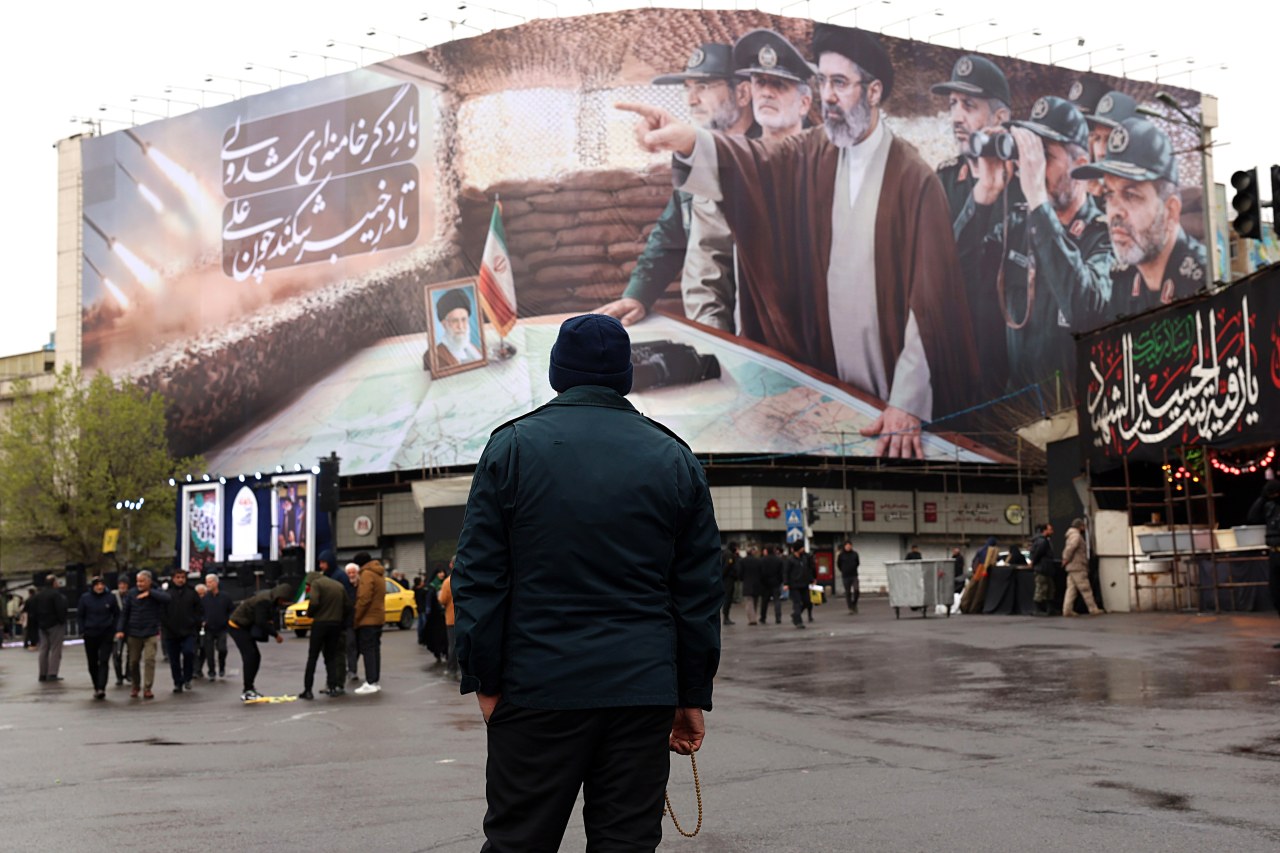
Mojtaba Khamenei hasn’t been seen or heard since he took the top job after his father was killed at the beginning of the war. There is broad consensus among U.S. and Israeli officials and mediators in the talks that he is secluded, possibly injured, and unable to communicate freely.
Khamenei’s absence as the debate has raged highlights how Iran currently lacks the sort of figure who in the past would have been the final arbiter of major national security decisions.
To end the Iran-Iraq war, Supreme Leader Ayatollah Ruhollah Khomeini made the difficult call during a high level of debate to end the fighting, a decision he likened to drinking from a poisoned chalice.
“Unlike in 1988, there is no one to drink the chalice of poison,” Zimmt said.
Write to Benoit Faucon at benoit.faucon@wsj.com, Laurence Norman at laurence.norman@wsj.com and Summer Said at summer.said@wsj.com