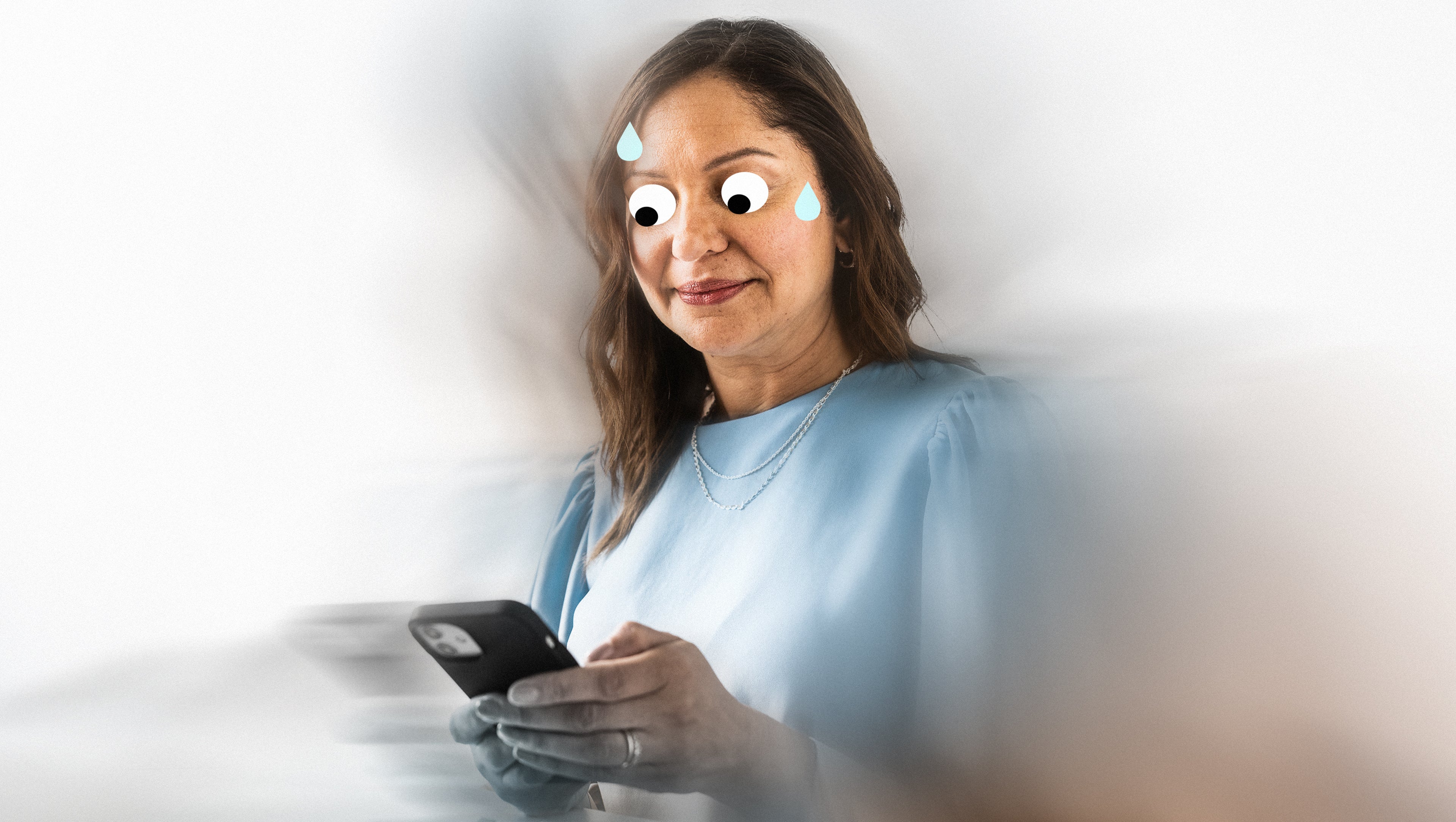
The text Julie Story received from her mom about a sick relativewas urgent and frustratingly context-less.
“She’s got another infection,” the text read, followed by a photo of the infection itself. Later, Story — a Florida-based comedy creator — learned her relative was already on antibiotics and doing completely fine. But in the moment, she had no idea who her mom was talking about or how serious the situation was.
Family: These Were The Most Popular Baby Names Of 2025
The text was alarming, but Story said these kinds of urgent, context-free updates from her mom are nothing new.
“Out-of-the-blue texts like this used to flood my nervous system with panic, but now I remind myself that what I just read is likely an exaggeration of the facts and isn’t the full story,” she said. “I’ve gotten so many ‘URGENT SOS’ text messages that I’ve mentally renamed them ‘clickbait’ because that’s how they read.”
Story recently made a viral TikTok lovingly poking fun at boomers’ knack for delivering bad news, dressed in a ’90s mom wig and clutching a coffee mug. The video struck a nerve: “OMG. Have you been spending time with my mom?” one person wrote.
Online, millennials, Gen Xers and Gen Zers often discuss their boomer parents’ penchant for sharing bad news in the worst possible ways: Texting “he is gone” along with a photo of the family’s dead cat, or calling and saying, “Welp, he dead,” without specifying who the “he” in question actually is. (Your grandfather in his 90s? Your dad with health issues? Some neighbor you lived near in the ’80s?)
Family: 38 Questions To Ask Your Mom Right Now
Some on Reddit wonder if boomers take a certain pleasure in being the “first to inform anyone and everyone of someone else’s bad medical news.”
The cliffhanger, clickbaity messaging style is such a common experience, it might as well have a name: The Boomer Bad News Drop.
Oftentimes, the Boomer Bad News Drop is about someone you hardly know. But it’s always bad news.
Mike, a millennial with a 70-year-old mom, is often on the receiving end of that. He told HuffPost he calls his mom once a week to check in and fill her in on how he and her grandchildren are doing. When he asks how she’s doing, it’s never anything good. It’s also usually nothing about her.
Family: 43 Raw Photos Of Moms Helping Their Daughters Give Birth
“I’ll call and say, ‘Our baby just discovered her hands ― it’s so exciting! How is everything going in your world?’” he said. “Then my mom will say, ‘Remember our neighbor from when you were in elementary school? Yeah, unfortunately, her husband passed away recently in a car accident. It was a big thing. The car flipped over on the highway. The other driver was drunk. Several times the legal limit.’”
“It reminds me of the Debbie Downer SNL skits,” said Mike, who asked to use his first name only in order to dish on his mom in this article.
The other impulse boomers have is just as frustrating to their kids: While they love to divulge other people’s bad news, they’ll exercise extreme discretion when it comes to their own health diagnoses ― a tendency Bustle recently referred to as “The Boomer Hospital Reveal.”
“Oh, I was in the hospital earlier this month for a prostatectomy,” your dad will tell you over the phone. “It’s OK, I Ubered back.”
Why do boomers do this?
To speak tremendously broadly about a generation ― we know not all boomers are guilty of this ― why are some post-50 folks so bad at delivering bad news? Oversharing about others, undersharing about themselves?
“I would say that boomers dropping bad news so casually is a combination of generational communication style and emotional coping patterns,” said Jennifer Chappell Marsh, a marriage and family therapist in San Diego.
“Many boomers were raised in environments where emotions, especially grief, fear or vulnerability, weren’t processed out loud, so instead of framing bad news in an emotional context, they tend to deliver it as a piece of information,” Marsh told HuffPost.
For many boomers, being sensitive, emotional or vulnerable can feel like unfamiliar territory, since many grew up in environments where those qualities were framed negatively. As a result, some of those emotional communication muscles may simply be a little underused.
“Because of these challenges with sensitivity and vulnerability, I have to wonder if that contributes to it seeming like they want to be bearers of bad news,” said Jess Sprengle, a therapist in Austin, Texas. “It might just be that they don’t recognize that what they’re sharing is sensitive, potentially traumatic information,” she said.
Like this article? Keep independent journalism alive. Support HuffPost.
As for the sheer number of depressing texts or phone calls you might get from a boomer in your life, let’s state the obvious. At a certain age, there’s a surplus of bad news: people getting sick, people dying, unexpected gray divorces between couples you thought were solid as a rock.
That’s bound to stir up anxiety and existential reflection. And if someone doesn’t have an outlet for those feelings — a therapist, for example, or a close friend willing to dissect the latest tragedy on their Facebook feed — their adult kids are probably going to hear about it.
Children of boomers have their own theories on why the Boomer Bad News Drop is such a common experience.
“I firmly believe they want to be seen as the person ‘in the know,’” Mike said. “It’s important to them. With their social status changing, roles in life changing, and the amount of in-person socialization they do decreasing, they want to be seen as a knowledgeable, connected figure.”
“It’s like the drama and gossip [go] through them, even if I have never heard of the person they’re talking about,” he added. “Facebook gives them a perfect free chance to acquire as much bad news as possible.”
Story thinks these older adults just want a little attention sometimes.
“I wonder if our boomer parents have felt unheard in their close connections and compensate by telling shocking stories to engage others faster or to get someone’s attention,” she said.
As for not disclosing their own bad news, especially when it’s health-related, it may come from a desire to protect their children from pain, said Mary Beth Somich, a therapist in North Carolina. She told HuffPost that she hears about this dynamic regularly from the millennial and Gen X clients she works with.
“It always follows a pattern: important or painful information is withheld with the intention of ‘protecting’ the adult child, and then revealed later, often abruptly or in emotionally loaded moments,” Somich said.
She recently had a client share that they found out a grandparent had died weeks or months after the fact because, as their parents explained it, “you had a lot going on and we didn’t want to upset you.” Another client learned during a holiday visit that a family pet had died long ago, but no one told them.
“This leaves children not only catching up to a loss, but doing so without the context, preparation or support that would help them process it,” she said. “For many, it lands less like protection and more like a rupture in trust and emotional consideration.”
Here’s how to curb your Boomer Bad News Drop ways.
The issue is often less about intent and more about a generational mismatch, Somich said: one generation coping with distress in the way they were taught, another, more therapized generation expecting more transparency, preparation and emotional context when receiving upsetting news.
The goal for boomer parents, Somich said, is to share important news sooner rather than later, to avoid letting it build up until it feels heavier and more emotionally charged in your own mind. From there, it can help to give adult children a little emotional framing before diving into the details.
“Something as simple as, ‘I need to share something difficult’ signals care and helps the other person prepare,” Somich explained. “That small pause is often what turns a blunt disclosure into an attuned one. You want to make sure the person on the receiving end feels considered, not just informed.”
It may seem like a small thing, but consider how it might affect your kid in the moment to hear about a fatal car accident of an old neighbor, or conversely, hear about your hospital stay months after it happened. In all likelihood, it’s going to rattle their nervous system, Sprengle said.
“Try to look at them as both your child and an adult and your peer,” she added. “How might you feel if your child were to share bad news casually and in passing without much fanfare? What would you want them to do differently?”
It may be worth reflecting on whether some of the social filters you once relied on have shifted over time, especially in conversations involving sensitive or emotionally heavy topics.
“I wish parents would ask themselves, ‘Is this the right time to say this? How would this make the other person on the receiving end feel?’” Mike said. “I don’t blame our parents for any of this, but man, it can be tricky to navigate.”
Since distressing news about loved ones and acquaintances is an unavoidable part of aging, it may help to have proactive conversations about how your children prefer to receive it.
“You and your kids might explicitly discuss what and how they want things shared,” she said. “Ask yourselves, how can I consider your feelings in this, and how can you consider mine? Just doing that can make a huge difference in strengthening connection and preventing relationship breakdown.”