Private investigator Thomas McNally sees no link between the disappearance of Melissa Casias and some 10 other missing or deceased scientists. The internet disagrees.
Casias’s family hired McNally to hunt for clues after the New Mexico administrative assistant vanished last June. In the past couple of weeks, he’s found himself working to dispel conspiracy theories. Her disappearance has nothing to do with UFOs, he says. Nor was the Los Alamos lab worker—responsible for purchasing office supplies—caught in a government assassination plot because of a top-secret life, McNally adds.
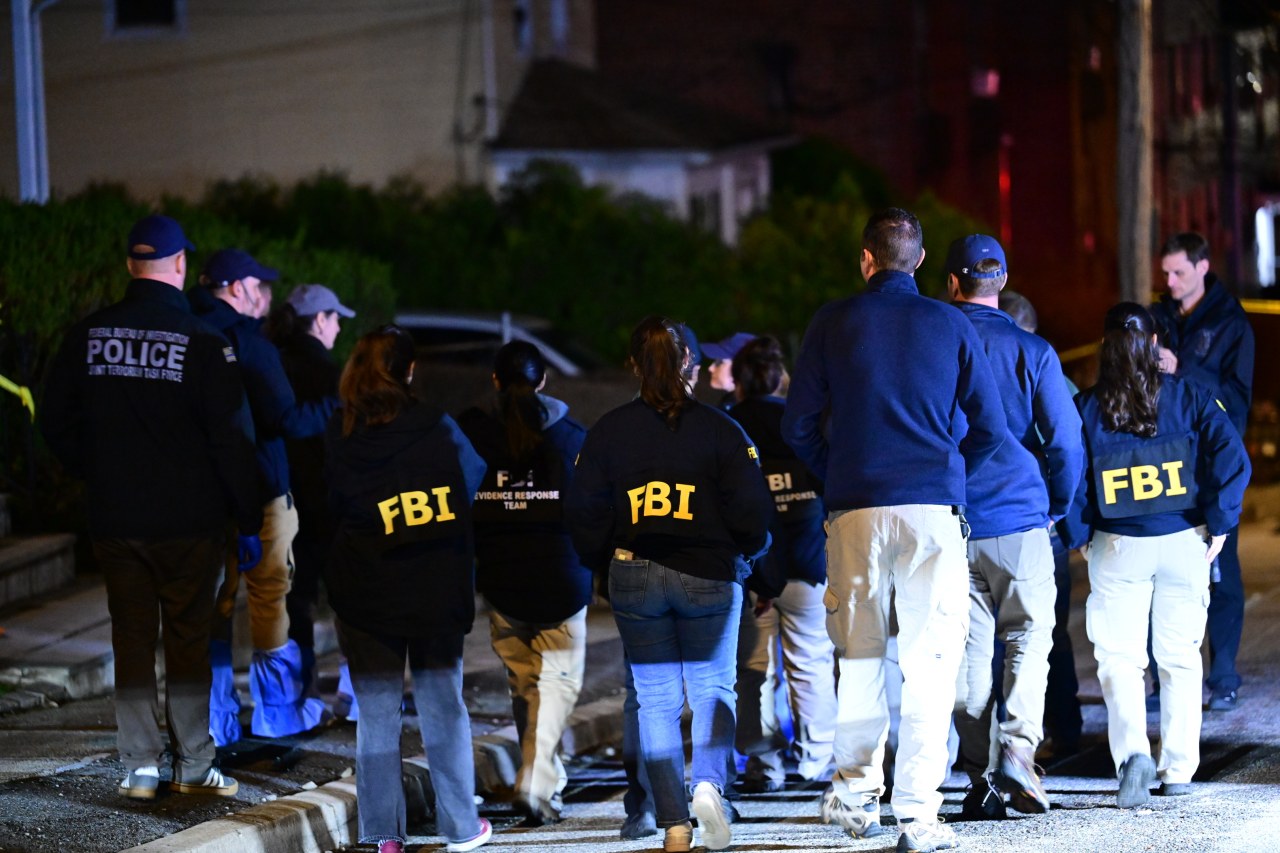
Speculation linking her disappearance and the losses of several scientists has for months churned through fringe online communities. Now, President Trump and the House Oversight Committee are paying attention. Earlier this week, the FBI said it was spearheading an effort to look for connections, working with the Department of Energy and the Department of Defense, as well as state and local officials.
“I hope it’s random,” Trump told a reporter last week. “But some of them were very important people and we’re going to look at it.”
The questions center on deaths or disappearances from 2022 through this February. They include an independent researcher, a long-retired Air Force general, and Casias, the administrative assistant. Some were connected to NASA’s Jet Propulsion Laboratory. Two had ties to Los Alamos National Laboratory, which has long featured in UFO conspiracy theories.
Fringe narratives percolate constantly. But few rise to national attention—or prompt federal inquiry.
“Your average conspiracy theory, someone comes up with it and it dies on the vine,” said Joseph Uscinski, a professor at the University of Miami who studies them. “What makes this unique is you have government agents, with guns, investigating this.”
The narrative evolved over months of internet speculation. Many of the deaths and disappearances were first covered individually, sometimes with a conspiratorial bent.
Right-wing media personality Tim Pool dedicated a 2025 podcast episode to the killing of MIT physicist Nuno Loureiro outside Boston, which Pool argued could have been motivated by Loureiro’s research into clean energy. Authorities said the shooter was Loureiro’s former classmate, who also allegedly opened fire in a Brown University classroom days earlier.
A few creators, including the popular conservative writer and influencer Jessica Reed Kraus, suggested a possible connection between Loureiro’s death and the February 2026 killing of Caltech astronomer Carl Grillmair. Kraus’s post went viral, quickly becoming one of her most shared, she says.
“When I put it on IG, it went crazy,” she said in an interview. “And it just kept going.”
Their messaging amplified speculation that was already swirling online about possible connections among prior deaths, including Loureiro’s and Novartis researcher Jason Thomas’s, both in December 2025.
The February disappearance of a 68-year-old retired Air Force general, William “Neil” McCasland, kicked the theorizing into high gear, particularly once a local FBI field office joined the search early last month.
“What is happening to our space scientists?!” one popular UFO account wrote on X, attaching a photo collage of Loureiro, Grillmair and McCasland.
In a Facebook post intended to dispel misinformation, McCasland’s wife said that, although her husband had access to highly classified information in the Air Force, he retired nearly 13 years ago. “It seems quite unlikely that he was taken to extract very dated secrets from him,” she wrote.
In March, a speculative post shared widely on UFO and conspiracy accounts linked up nine different names, including Loureiro, Grillmair, McCasland, Casias and missing aerospace engineer Monica Jacinto Reza.
By mid-March, the once-fringe theory had gone mainstream. It appeared on NewsNation and in the New York Post, then got picked up by Fox News and the Daily Mail.
“We don’t know if these cases are even connected, but this many top scientists getting killed or going missing in just under a year looks like a major red flag,” Fox News host Jesse Watters said in a segment. Watters also noted that McCasland’s disappearance came “right after Trump announced he was releasing the UFO files.”
Pool, the podcaster, chimed back in on a March episode of his podcast, wondering whether the scientists were involved in UFO research or “special weapons projects” for the U.S. government.
Deaths of prominent scientists have long generated chatter about secret plots. Some maintain the government may have stolen inventor Nikola Tesla’s research on a “death beam” after he died in 1943. The FBI released 250 pages of Tesla-related documents in 2016.
Unfounded theories have gotten more reach under Trump’s presidencies, including that the 2020 election was rigged. The release of legitimate investigative files on Jeffrey Epstein has also fed unfounded theories about baby farms, murder and cloning.
For families of the missing or deceased scientists, the dredging-up of these tragedies—some of them years-old—can be upsetting. Amy Eskridge, an independent researcher who died in 2022, co-founded the Institute for Exotic Science in Huntsville, Ala., which specialized in quantum computing and gravity modification. Her family said she suffered from chronic pain.
“People should realize that scientists die also and not make too much of this,” the family said in a statement, adding that she was “a beautiful and marvelously intelligent person.”
Online commentators have spread speculation that Eskridge had warned that if she died, no one should believe she had killed herself.
A family member said Eskridge died by suicide, and that the family has no doubt about her cause of death.
Michael David Hicks, a physicist with NASA’s Jet Propulsion Lab who specialized in comets and asteroids, died in 2023. His daughter told CNN that her father had been suffering from medical issues, and the recent conjecture has been unsettling.
“From what I know of my dad, there’s no train of logic to follow that would implicate him in this potential federal investigation,” she told CNN. “I don’t understand the connection between my dad’s death and the other missing scientists.”
Write to Roshan Fernandez at roshan.fernandez@wsj.com, Caitlin Ostroff at caitlin.ostroff@wsj.com and Jaclyn Jeffrey-Wilensky at jjw@wsj.com