
Key Takeaways
- Certain plants like basil, lavender, and marigolds naturally repel flies with their strong scents.
- These plants can be grown in gardens or containers to create a fly-free outdoor space.
- Flies avoid these plants due to their pungent odors, making them a natural pest deterrent.
There is nothing more aggravating than a fly buzzing around your head (well, other than a mosquito). How are you supposed to enjoy your iced tea in the garden when that pest is relentless? While I can't promise that every fly will move along, there are plants that flies avoid because of their pungent (at least to a fly) odors. Whether you plant them in the garden or in containers, I suggest surrounding your favorite outdoor sitting spot with these plants that keep flies away.
01 of 11
Basil
An annual herb, basil can keep flies and mosquitos away thanks to its strong aroma. It's also a pest deterrent to aphids, mites, and tomato hornworms in the garden. Consider planting several types like broad-leafed Italian basils or purple basils to Thai basils for both cooking and visual interest. If you plan to harvest for cooking, do a mid-summer planting to keep basil growing well into the fall.
- Botanical Name: Ocimum basilicum
- Sun Exposure: Full sun
- Soil Type: Moist and well-draining
- Soil pH: Neutral
02 of 11
Lavender
The fragrance of lavender may be calming to your senses but it is unpleasant to pests like flies, mosquitoes, fleas, and moths. Since many lavender varieties prefer cool summers that don't happen in the South, search for cultivars like ‘Dutch,’ ‘Provence,’ or ‘Grosso' that are more heat-tolerant. Moisture control is usually easier in container-grown lavender than in the garden.
- Botanical Name: Lavandula x intermedia
- Sun Exposure: Full sun
- Soil Type: Well-draining to dry
- Soil pH: Neutral
03 of 11
Marigolds
Marigolds are almost a standard in most Southern gardens. They thrive in full sun and heat and are somewhat drought-tolerant. Those bright, vibrant blooms in shades of yellow, orange, and red also repel flies and other insects thanks to their pungent odors. Beauty and pest repellency are perfect two-fer.
- Botanical Name: Tagetes spp.
- Sun Exposure: Full
- Soil Type: Well-drained
- Soil pH: 6.0-7.0
04 of 11
Catnip
Part of the mint family, catnip is perfectly safe for lulling cats into submission but contains a compound called nepetalactone that repels insects such as flies, mosquitoes, and deer ticks. It is an aggressive grower, so unless you have plenty of garden space, keep it in a container.
- Botanical Name: Nepeta cataria
- Sun Exposure: Full, partial
- Soil Type: Well-drained
- Soil pH: 6.0-7.8
05 of 11
Citronella Grass
Everyone has tried citronella candles and torches to ward off flies, so why not try planting some citronella grass? A tropical perennial from Asia and Pacific coastal areas, this tall grass emits that familiar citronella scent. Closely related to lemongrass, citronella grass should not be used for cooking. Unless you live in USDA Zones 10 and 11, plant it in a container in well-draining soil and place it in full sun. Move it to the greenhouse before frosty temperatures arrive.
- Botanical Name: Cymbopogon nardus
- Sun Exposure: Full
- Soil Type: Well-drained
- Soil pH: 6.5-7.0
06 of 11
Sage
Sage is a small, evergreen shrub that performs best in cooler growing zones without high humidity. Choose the cultivar ‘Berggarten’ for better results and mildew resistance in Zones 8 and above. You can harvest the oval, gray-green leaves for cooking (dry them for Thanksgiving dressing). Sage enjoys full sun and repels flies, ants, and mosquitoes.
- Botanical Name: Salvia officinalis
- Sun Exposure: Full sun
- Soil Type: Well-draining, moist to dry
- Soil pH: Neutral
07 of 11
Mint
If you look at pesticide-free insect repellents, many of them contain peppermint oil. So, why not plant some mint in the garden? As you probably know, mint spreads rapidly so use a container or keep it in check by thinning it regularly. It's easy to grow new plants from cuttings, division, or transplants. Harvest the leaves often for your iced tea and Julips to keep plants from becoming leggy and flowering.
- Botanical Name: Mentha
- Sun Exposure: Full sun to partial shade
- Soil Type: Moist, well-draining
- Soil pH: Neutral
08 of 11
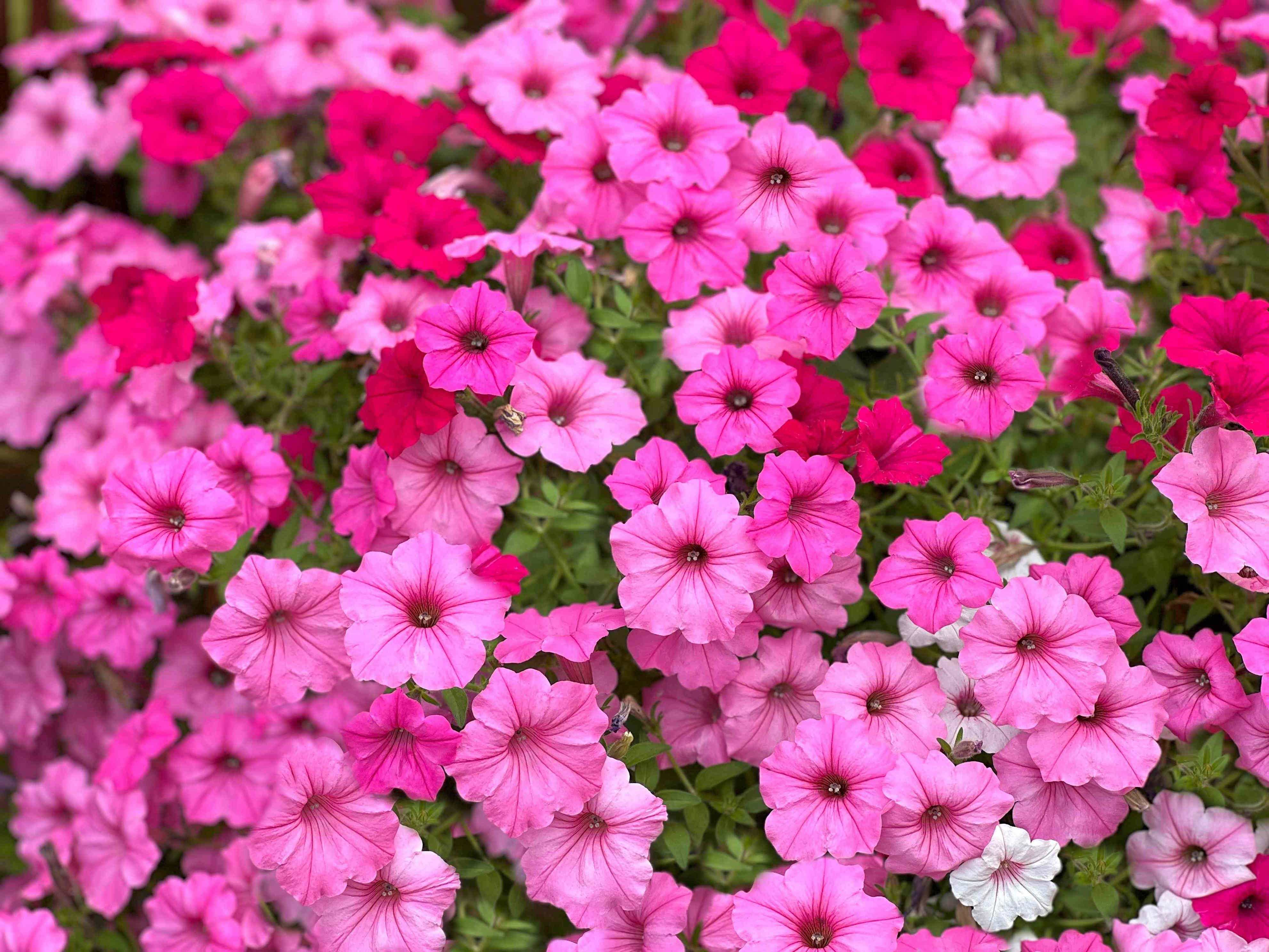
Petunias
These colorful annuals have an unusual scent that flies seem to hate. They are a perfect container plant, especially for hanging baskets since many varieties have a r trailing nature. It's important to know that it's only the scent of the blooms that keep flies away. So choose a variety like Cool Wave Petunias that bloom continuously without deadheading.
- Botanical Name: Petunia hybrids
- Sun Exposure: Full sun to part shade
- Soil Type: Medium, well-draining, average fertility
- Soil pH: Slightly acidic (6.0-7.0)
09 of 11
Rosemary
The fragrant, needle-like foliage of rosemary will repel flies but add a distinctive flavor to your recipes. Once the tiny, blue, lavender, or white flowers have faded, prune the plant severely to encourage dense foliage growth. While easy to propagate from a cutting, rosemary varies in hardiness. In colder growing zones, choose a hardy variety such as ‘Arp’ or ‘Hill Hardy’.
- Botanical Name: Salvia rosmarinus
- Sun Exposure: Full sun
- Soil Type: Moist, well-draining to dry
- Soil pH: Neutral to acidic
10 of 11
Scented Geraniums
Scented geraniums are quite effective in repelling flies and mosquitos. In addition to the beautiful colors, the blooms contain an essential oil compound, geraniol, which creates a pleasant fragrance for us, but not the pests. Fortunately, long-tongued pollinators like butterflies love the blooms. While often grown as an annual because they are not cold tolerant, you can overwinter geraniums in a greenhouse or protected shed or garage.
- Botanical Name: Pelargonium spp.
- Sun Exposure: Full
- Soil Type: Well-drained, moist
- Soil pH: 6.0-6.8
11 of 11
Bay Laurel
Bay laurels can be cultivated as a tree or small shrub. The volatile oils that give bay leaves their distinct odor and flavors repel flies, moths, cockroaches, and even mice. A Mediterranean perennial, container-grown plants should be brought indoors as temperatures dip below 50°F. A plant that grows fine in a partial shade outdoor location will want more sunlight in the winter—give it a sunny window or patio door. No winter protection is necessary for trees in warm-weather zones but winter is the best time for pruning to keep their growth in check and maintain their shape.
- Botanical Name: Laurel nobilis
- Sun Exposure: Full, partial
- Soil Type: Well-drained, moist, sandy, rocky
- Soil pH: 6.0-7.0
Read the original article on Southern Living