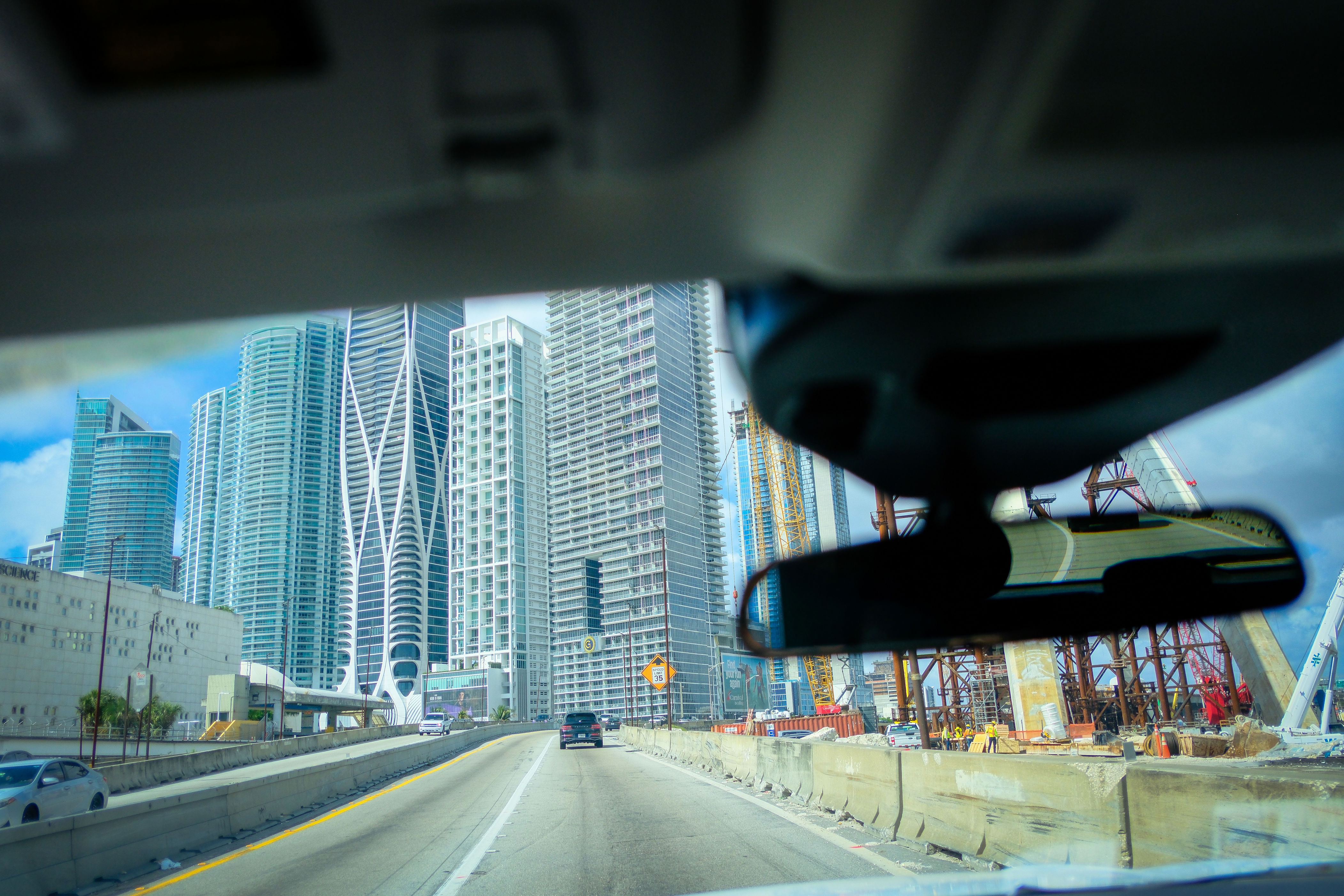
Disgruntled and discouraged residents are ditching Miami in droves after years of rising living, housing and insurance costs, while billionaires are flocking to it, with the city surpassing New York as the nation’s largest luxury inventory market, according to the latest data by Realtor.com.
A record 10,115 of residents left the so-called Magic City between 2024 and 2025, marking the third-largest population decline among all U.S. counties during that period.
The main culprit was likely the steady drop in international migration that the city has seen in response to the Trump administration’s immigration crackdown.
But the full picture is more complex, reflecting years of dramatic changes for the city—especially in housing costs. According to Apartments.com, the cost of living in Miami is now roughly 20 percent above the national average, with a single adult needing over $100,000 annually to live comfortably.
“Florida, like many areas in the country that saw home price growth during the pandemic, is being affected by still-elevated interest rates and stubbornly high home prices,” Juan Arias, National Director of U.S. Industrial Analytics at CoStar, told Newsweek.
“While real wages have continued to grow, they have not yet adjusted to the new local cost-of-living reality,” he added. “Therefore, South Florida specifically continues to see net in-migration of wealthier individuals and net outflows of younger, less well-off households, a trend that has been in place since well before the pandemic.”
Why Are Residents Leaving Miami?
Liliana O. and her partner left Miami last week. “Everything went up and we found ourselves working harder than ever without being able to enjoy the fruits of our labor,” she told Newsweek. After the pandemic, the city was just a place they no longer recognized.
“The loss of third spaces affected us heavily post-pandemic and our typical hangout spots have been vanishing over the last six years, so we stayed at home a lot more. Our expenses didn’t go down though,” she said.
“Everything has gone up. Gas, food, utilities, the internet, our rent after every lease renewal. I had cancer during this timeframe, and from one year to the other, I went from receiving amazing care to all my doctors leaving and paying three times what I used to for mediocre providers,” she said.
The final straw for her was the Trump administration’s immigration crackdown. “ICE happened, and adding fear to the day-to-day stress was too much,” she said.
She was not the only one for which the increased presence of federal immigration agents was a driving factor to leave the city.
“In my Miami circles, I’ve been seeing a pattern of Latinx folks leaving the city. Not just blue-collar workers, but also young professionals with degrees, either returning to their home countries after decades or relocating to other cities,” she said.
Where Are They Moving To?
Many of those leaving Miami are relocating to other, cheaper parts of Florida, Miami realtor Joe Biscaha told Newsweek. Others are going to cities such as Houston or Dallas in Texas, North Carolina, and other states “with lower costs and less congestion.”
Lorenzo M., a 41-year-old working in the hospitality sector, left Miami for the D.C. metro area in 2014, years before the pandemic’s inflation spike and the homebuying frenzy that sent housing prices through the roof.
Already then, “the rising cost of living, stagnant wages, the perpetual traffic, and minimal job opportunities” led Lorenzo to leave the city, he told Newsweek. “I make well over six figures now. I don’t think I would have had the same career trajectory in Miami,” he said.
“I go home about once a year now. My siblings have mostly relocated outside of Florida. I do enjoy visiting Miami when I get the chance,” Lorenzo said.
“I have plenty of friends in Miami and they tell me how expensive it’s gotten for them. I don’t think I would relocate back to Miami unless I was offered something I couldn’t pass up. I’m very happy where I am. I don’t have the same anxiety I had when I lived in Miami. The people are kinder up here,” he said.
Florida politics were also a reason why Lorenzo decided to leave Miami. “The rapid move of Miami-Dade to the right when [President Donald] Trump was elected was a smaller reason why I left, but still a deciding factor,” he said.
Is the Exodus Over—Or Has It Just Begun?
Many residents are growing fed up with the city—not only because of rising costs, but for its changing culture.
N.F., who has asked for their identity to remain anonymous, is still living in Miami but has “a strong urge” to leave, they told Newsweek.
“Aside from housing prices, and how unaffordable it is to live here unless you live in someone’s efficiency—even then, that’s expensive too—, there’s so so so much to complain about,” they said, providing a list of their grudges against the city.
“1. Hard to find parking, especially during events; 2. Rise in pay-for-parking areas. I used to not have to pay for parking for a majority of spots I frequent, but now pay-for-parking is rampant and/or everywhere; 3. Superficial people love it here; 4. Springbreakers; 5. Gentrified places don’t feel real and/or normal, and new standoffish businesses with crazy prices for mediocre food.”
But the city is also attracting new residents—especially the ultra-wealthy.
“Miami remains a major draw for high-net-worth individuals and international buyers, which keeps the luxury market strong,” Biscaha said. “In 2025 there were 361 transactions over $10 million, roughly one home sale of $10 million+ every single day. Those levels were unheard of pre-Covid,” he added.
“So you have this two-tier dynamic: the middle-market is softening, but the top-end is booming.”
According to Realtor.com’s latest luxury housing market report, Miami had the country’s largest luxury inventory market by the end of 2025, with 10,513 active million-dollar listings, surpassing New York’s 9,216.
“Florida’s tax environment is a meaningful draw for prospective luxury buyers, particularly at the highest income levels. The absence of a state income tax and no state estate or inheritance tax creates real wealth-preservation advantages, and while higher sales taxes and rising home insurance costs are genuine offsets, they become increasingly marginal as income and net worth climb,” Anthony Smith, an economist at Realtor.com, told Newsweek.
But Miami’s appeal has grown “well beyond its tax advantages,” he said. “In the years following the pandemic, a wave of hedge funds, private equity firms, and wealth management operations relocated to the area, particularly in West Palm Beach, creating a legitimate financial hub. That growing corporate presence has shortened the commute for executives who would otherwise be tethered to New York, and it has transformed the region from a leisure market into a year-round business destination,” Smith added.
While the rise in billionaires in the city might change the city, Biscaha believes that, in the long-term, Miami will keep evolving and could potentially continue accommodating middle- and lower-income residents.
“Miami is such a young city. The influx of billionaires is reshaping certain areas and driving development, but the city may also see more economic and social stratification,” he said.
Related Articles