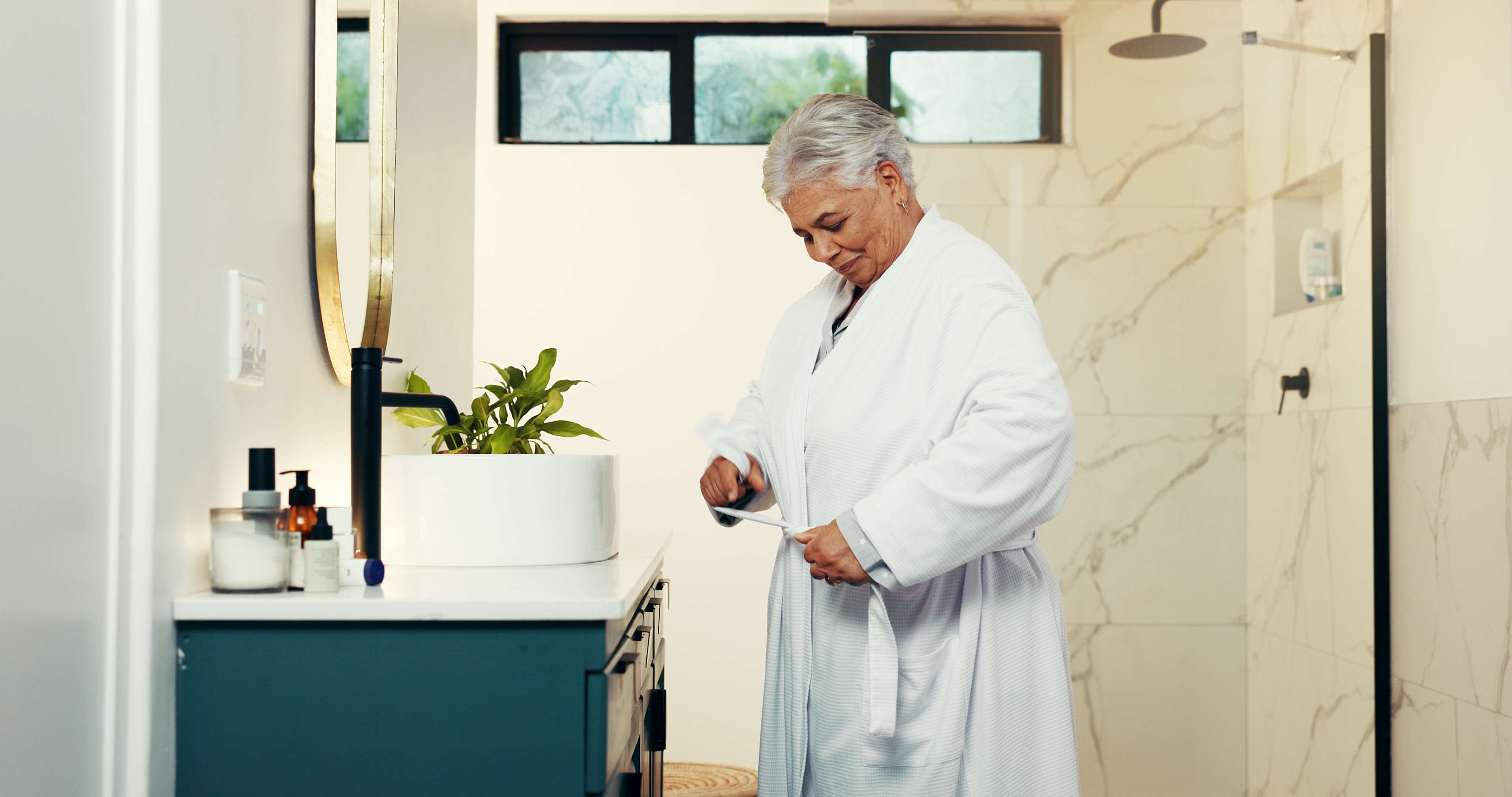
Daily showering has been treated as non‑negotiable. But according to doctors, that routine may quietly work against us as we age.
According to a national survey of more than 3,200 Americans conducted by Glass Doctor, a major North American franchise, the average American showers around six times per week and washes their hair four times per week. While that routine may work for younger adults, doctors say it’s often unnecessary—and potentially damaging—for older skin.
Newsweek spoke to Dr. Wesley Tensel, a general practitioner and preventative health specialist, who explained that aging causes the skin to undergo “significant structural and functional changes.”
“The production of natural oils declines, the skin barrier becomes thinner and more fragile, and water retention reduces,” Tensel said. “This means older skin is naturally drier and more vulnerable to irritation.”
As a result, frequent showering—particularly with hot water and foaming soaps—may strip away what little protection the skin has left.
“It can worsen dryness, itching, and even eczema,” said Tensel, the founder of Prestige Private Health in Manchester, England. “So the requirement doesn’t necessarily increase with age. In many cases, it should become gentler and more intentional.”
How Often Should Older Adults Shower?
There’s no universal rule, but Tensel says less is often more.
“For many healthy older adults, showering two to three times per week is entirely sufficient,” he said, provided daily hygiene is maintained for the face, hands, underarms, and groin.
People who are very active, live in hot climates, or have certain medical conditions may need more frequent washing. Conversely, those with eczema or very dry skin may benefit from fewer full showers.
“The key is tailoring the routine to the individual’s skin type, health conditions, mobility, and comfort,” Tensel said.
How Do Bathing and Showering Needs Change With Age?
As we age, both sweat and sebum (oil) production decline. That means older adults often don’t get “dirty” in the same way younger people do.
“Body odor is generally less pronounced unless there are medical issues, infections, or incontinence,” Tensel explained.
What does increase, however, is skin sensitivity.
“Mature skin is more prone to dryness, irritation, and small skin tears,” he said. “So washing routines need to prioritize skin barrier protection rather than simply cleanliness.”
In practical terms, Tensel recommends:
- Using lukewarm rather than hot water
- Keeping showers short
- Applying soap only to key areas such as underarms, groin, and feet
- Moisturizing immediately after washing, while the skin is still slightly damp
Can Over‑Washing Do More Harm Than Good in Later Life?
In short, the answer is yes. Over‑washing removes the skin’s natural lipid layer, which already declines with age. In older adults, this can lead to persistent dryness and itching, a higher risk of eczema, cracked skin that increases infection risk, and even skin tears in frail individuals.
When asked for one piece of advice about washing and aging, Tensel said: “Protect the barrier. Cleanliness should support skin health, not compromise it.”
Related Articles