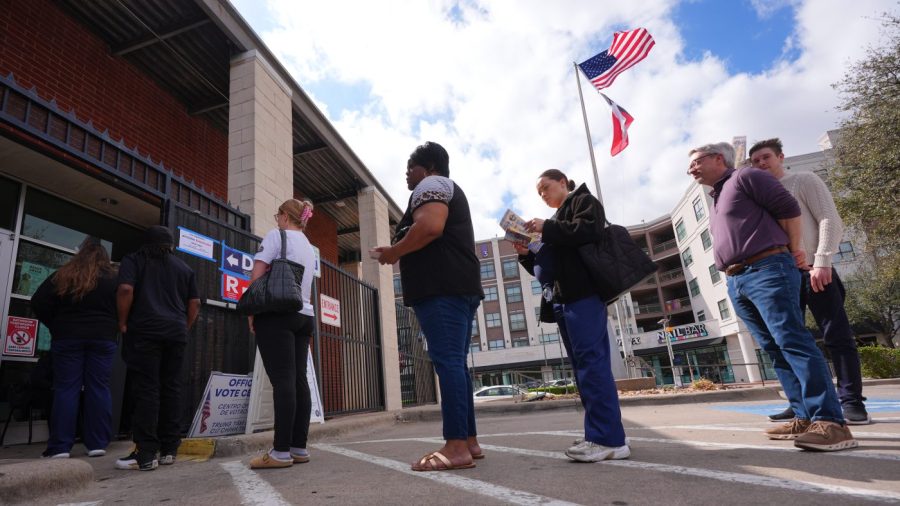
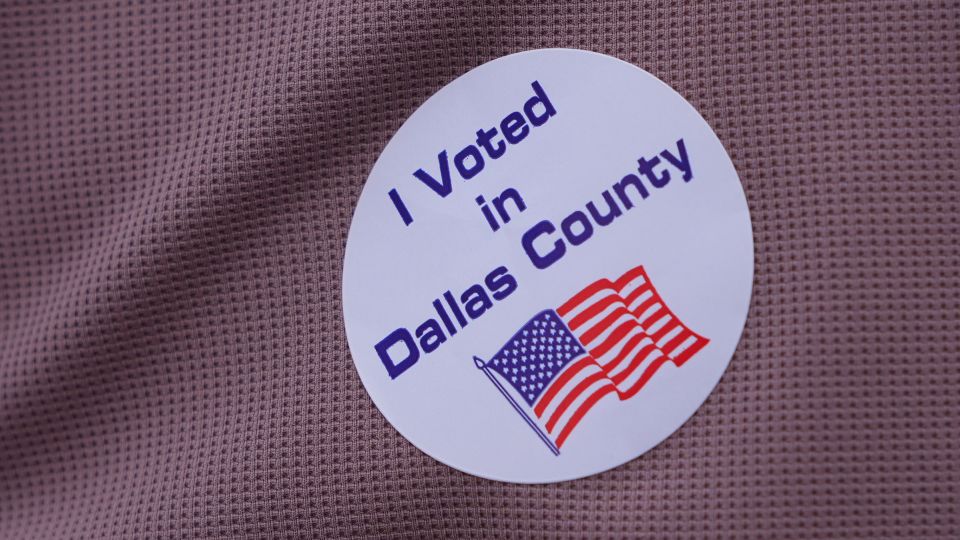
Changes to Election Day voting procedures in two Texas counties on Tuesday led to hundreds of voters being turned away from polling places, angry recriminations from candidates and an 11th hour scramble to delay poll closings.
In a rollercoaster day, Democratic voters in the Dallas area received two extra hours to cast their ballots after a judge intervened – only to have the state Supreme Court order the county to keep separate any votes cast during the extended voting period
But even before polls closed, Rep. Jasmine Crockett – locked in a competitive battle with state Rep. James Talarico for the Democratic Senate nomination – raised the possibility that the confusion at the polls could shape the primary’s outcome.
“Listen, this may be a very close election, and it may hinge on who was allowed to vote or who wasn’t allowed to vote in Dallas County,” she said. “Regardless as to whether or not it’s close or not, this is wrong if one person has the right to vote, and they weren’t allowed to cast their vote.”
On Tuesday, voters in Dallas and Williamson counties had to navigate new voting rules that required them to vote at assigned precincts, a sharp departure from previous elections. The change sparked confusion with hundreds of voters turned away from polling places and sent to the correct precincts, according to Kardal Coleman, the Dallas County Democratic Party chairman.
Coleman obtained a court order to keep nearly 280 Democratic precincts in the county until 10 p.m. ET.
The Texas Supreme Court late Tuesday stayed the earlier court order that had extended voting in Dallas County, ruling that any votes cast by people not in line at 8 p.m. ET should be separated. Nicholas Solorzano, a spokesman for the Dallas County Elections Department, said anyone who voted during the extended hours did so with provisional ballots, allowing officials to set those ballots aside if needed. It’s not immediately clear how many ballots were cast provisionally.
Late Tuesday night, Coleman said Democrats were weighing their legal options after the Supreme Court’s ruling. “We’re going to fight every step of the way,” he told CNN.
The all-Republican Texas Supreme Court is the court of last resort for civil matters in the state. Justices are elected.
Both Crockett and Talarico raised alarms about the impact on voters as word spread about the confusion over polling locations. Talarico, whose home base of Round Rock is in Williamson County, implored for the extension of voting hours “to ensure all Texans’ voices are heard in this critical election.”
Speaking to supporters at her watch party Tuesday night, Crockett said, “I can tell you now that people have been disenfranchised.”
GOP drove rule changes
Political parties, rather than local governments, administer primary elections in Texas. In the past, Democrats and Republicans have overseen them jointly.
The rules in effect Tuesday are part of local GOP leaders’ decision to hold a separate primary from Democrats this year in Dallas and Williamson counties, leading to precinct-based voting. In previous elections, individuals could cast ballots at any vote center, regardless of their address, under a countywide voting system.
In Dallas County, where some Republicans have expressed skepticism about the use of ballot-counting machines, local GOP officials also had initially planned to hand-count the primary ballots.
But Allen West, a former Florida congressman who now serves as chairman of the Dallas County GOP, abandoned the hand-counting effort, citing logistical and personnel challenges in counting tens of thousands of ballots.
But he has defended the separate, precinct-based system as an approach that allows the GOP to “maintain better control” over the election.
Republican Party officials in Dallas and Williamson counties did not respond to CNN’s inquiries about Tuesday’s voting.
This story has been updated with additional details.
CNN’s David Wright contributed to this report.
For more CNN news and newsletters create an account at CNN.com