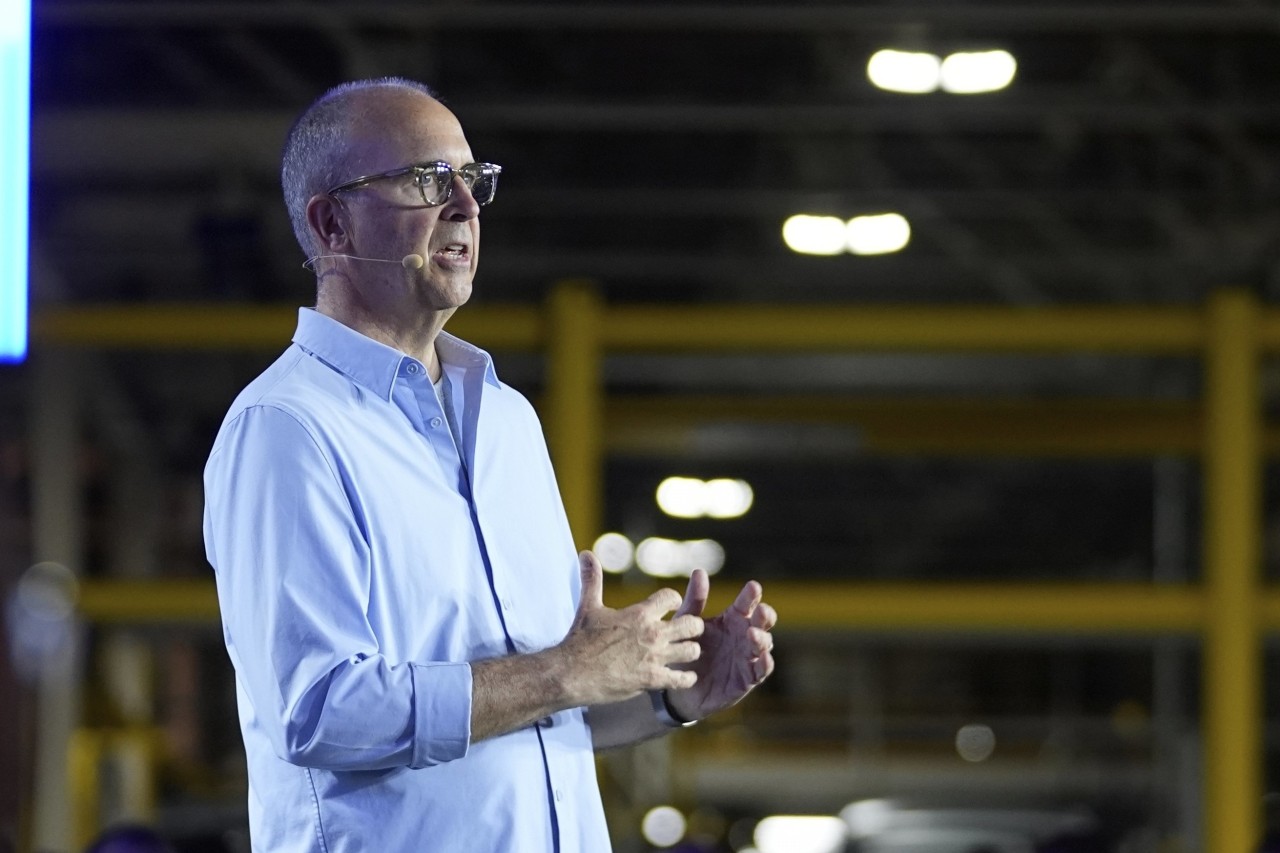
Doug Field, lured by Ford Motor from Apple five years ago to bring the 120-year-old automaker into the digital and electric age, is leaving the company amid a wider reorganization.
Field has been leading a secretive effort to develop a line of affordable, high-tech electric vehicles and is the latest high-profile Silicon Valley transplant to exit a Detroit automaker.
His exit comes as Ford races to get the first of those vehicles into production by next year.
Ford said Field opted to leave and will step down in the next month.
Field’s lieutenant and fellow Tesla alum, Alan Clarke, will continue to oversee a new EV platform developed by a so-called skunkworks team based in California. Ford has said the vehicles on that platform, starting with a $30,000 electric pickup set to launch next year, will compete with Chinese EVs that aren’t yet available in the U.S. but are gobbling up market share around the globe.
Ford said it would combine the unit that Field oversaw—electric vehicles, digital and design—with the company’s industrial operations. Operating chief Kumar Galhotra will oversee that new division.
“This transition point is an opportune time for me to pass the baton,” Field said in a call with reporters. “I came to Ford to partner with people that knew how to industrialize at a massive scale, and the product has reached a level of maturity.”
Ford Chief Executive Jim Farley said the changes would streamline Ford’s ability to develop and manufacture vehicles globally.
“This is the modern Ford,” Farley said. “This is the team that’s going to deliver this.”
Ford, like many rivals, has struggled to transform into an electrified, software-driven automaker to compete with the likes of Tesla and Chinese automakers.
Ford’s initial EV offerings have proved to be chronically unprofitable. The automaker recorded $19.5 billion in write-downs last year to pivot back to more profitable gas vehicles. The automaker also canceled several other next-generation products and plans in recent years, including an electric three-row SUV.
The company in 2022 shut down its Argo AI venture, abandoning full autonomous-driving aspirations in favor of adding more partially automated features to consumer vehicles.
Moreover, as Ford seeks to accelerate technologies seen as key to the auto industry’s future, including EVs, hybrids and software updates, it has struggled with quality issues and costly recalls. In 2025, Ford issued more U.S. recalls than any other automaker, affecting nearly 13 million vehicles.
Farley called Field “instrumental” in shaping Ford’s ability to be competitive in the future and said the automaker’s retooled organizational structure would help it cut costs and improve profit margins.
“This new structure positions us to move a lot faster, reduce complexity inside the company and deliver those great digital experiences and vehicles with greater quality and efficiency,” Farley said.
Field began his engineering career at Ford in 1987 before getting involved in some of the more modernistic iterations of personal transportation. He was an executive at Segway, which developed the self-balancing electric scooter, and was later recruited to Apple by Steve Jobs, where he oversaw the development of Macs before going to Tesla in 2013.
At Tesla, Field led the development of the Model 3, the company’s first smaller and more affordable vehicle and a landmark moment for mass-market EVs. The Model 3, and the related Model Y, kicked off a race in the auto industry to keep up with Tesla.
Field later returned to Apple and led its now-defunct car initiative before being recruited to Ford in 2021. There, he was tasked with revamping an old-school auto manufacturer that lived and died by gas truck sales into one with a cutting-edge approach to software, EVs and other nascent technologies.
“When I first came to Ford, I had a very specific goal in mind,” Field said. “If we can figure out how to take the blank-sheet startup mentality and capability to innovate and combine that with a brand with Ford’s history, and with the industrial might of a company like this, we would really be something to be reckoned with.”
In recent years, Detroit’s automakers have emphasized hiring Silicon Valley talent to help modernize their technology operations and attempt to keep up with China’s advanced car companies, but they have frequently struggled to keep those executives.
Last year, crosstown rival General Motors saw the departure of Google veteran Barak Turovsky after less than a year as its first chief AI officer, and also lost former Apple executives Baris Cetinok and Dave Richardson on its software leadership team.
Write to Sharon Terlep at sharon.terlep@wsj.com