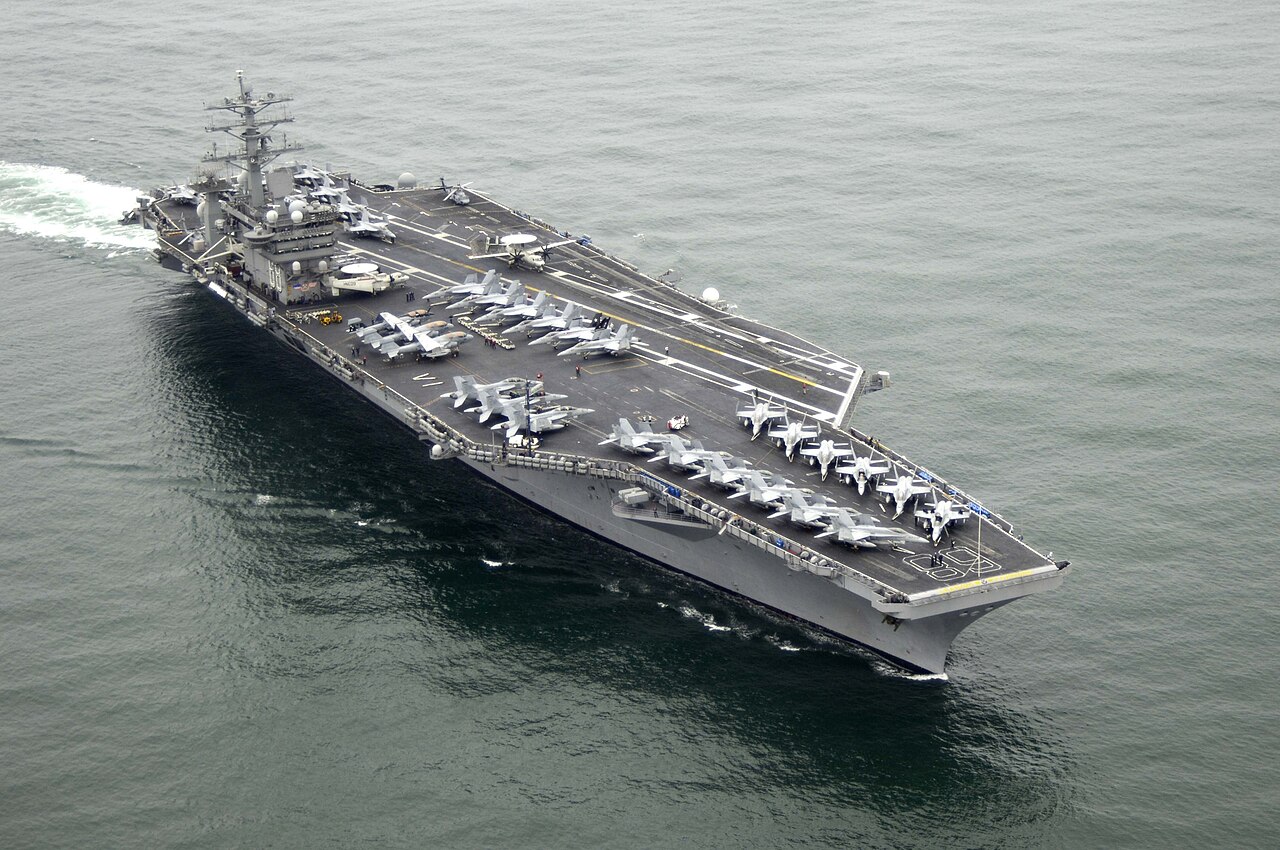
What will become of the most famous symbol of the fleet, when it is the simplest to attack? The imminent retirement of USS Nimitz can be said to have captured service life management. When it is put in comparison with how ocean surveillance and long-range strike changed the operating math of the carrier, it reads differently. Nimitz is still a floating airfield, yet where predictable concentration used to pay off, forces currently difficult to follow, difficult to classify, and difficult to hit with confidence are now in the ascendancy. In that regard, it is not the metal fatigue of the oldest supercarrier, but the concession of the fact that survivability has become the chief design consideration of sea-based airpower.
The main deal of the carrier, which was central to decades, was: steam ahead, create sorties and have mobility replace sanctuary. That model fitted into the times when generating a tracking of the maritime was sporadic, and the opponent could not last long in a clear targeting picture once the action started. The bargain has become slimmer today. Long-range precision strike, fused targeting, and persistent sensing elevate the problem to less of can a carrier launch aircraft and more “can the force keep the carrier uncertain, unlocated, and unattractive to shoot at long enough to create decisive effects?” The present solution offered by the Navy is in favor of networking, dispersion, and timing. A procedure of “dispersing the fleet whilst concentrating the effects” has been characterized by the Chief of Naval Operations as the fundamental reasoning, considering the geography and integration as a means to confuse an enemy destroy chain instead of merely outshooting it. The popularity of that carrier does not negate its strengths. It transforms as soon as these strengths become applicable.
Even a nuclear-powered carrier can deliver great sustained aviation capacity, and a modern air wing can fight with a surge capability of 125 strike sorties per day. It can also provide airpower with no negotiation regarding basing rights or overflight authorizations, which is a sensible benefit that is hard to substitute. Those very attributes, in turn, transform the carrier into the favourite target of the opponent: one platform whose degradation can have a propagation effect in the arenas of diplomacy, command-and-control, and combat credibility. “Mobility” in conflict areas becomes a battle of detection and deception, rather than an assurance that the ship can just move out of harm.
This is the reason why carrier relevance in the modern world is progressively being determined by the wider system encircling the deck. Modern thought is to consider the carrier as more than a strike generator: as command node, as an air-defense contributor and as an intelligence collector linked to other sensors and shooters. The adaptation presented in the discussions on peer-competition operations focus on integration with systems like space-based ISR and aircraft that enhance maritime surveillance and targeting. It is aimed at spreading the risk among various platforms and bearings and still retain the capacity of the carrier to confine the effects at the point of decision.
The second aspect of the carrier survivability issue is industrial and mechanical: being a supercarrier pilot does not mean merely surviving and winning a tactical battle but also a survivability marathon. A Government Accountability Office audit of shipbuilding sustainment risks reported how high-profile new construction can still bring to service life the design problems that seem to be irremovable, such as the Ford-class finds that create cyclical maintenance liabilities. One example that was mentioned was a clogging issue of the sewage system that occurred too often, and was unexpected, and had to be flushed every so often. It is not the matter of embarrassment but the matter of capacity. Time, shipyard throughput and skilled labor are constrained and hidden sustainment taxes constrain readiness as surely as threat rings do.
The retirement of Nimitz is also in a clash with the reality of force structure that counts each hull. A rolling “Nimitz Gap” is the danger of the delays in replacements to squeeze the world availability of the carriers when one carrier is normally in the midlife maintenance and others are taken through a period of lengthy maintenance. In reality, reducing the number of ready decks may cause the Navy to make more difficult tradeoffs regarding the maintenance of carrier presence and make it intermittent.
The retiring of USS Nimitz, therefore, acts as a forcing mechanism. It challenges the Navy to consider survivability as a systems issue fleet-wide – resilient networks, electronic warfare, deception, distributed logistics and training which regards integration as a core combat capability. The carrier is not carried away in that future; it is running in that future. The distinction is that seafarers aviation no longer has the privilege to presume that the ocean will safeguard a capital ship just because it is on the move.