
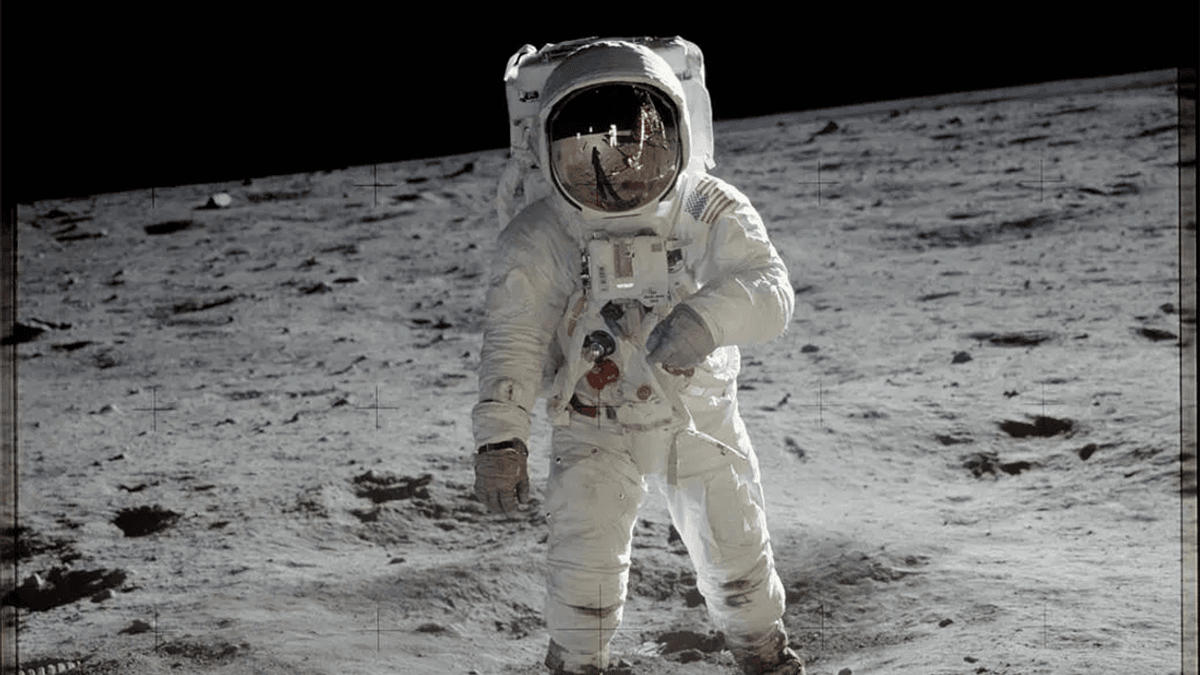
On July 20, 1969, Neil Armstrong stepped out of the Apollo 11 Lunar Module "Eagle" and became the first human to set foot on the surface of the Moon.
On the surface for 21 hours and 36 minutes, Armstrong conducted scientific activities, took photos of the lunar surface, and erected a flag, alongside fellow astronaut Buzz Aldrin. Astronauts' tasks are diverse, and the two also did a lot of mining, collecting 21.6 kilograms (47 pounds) of material from the lunar surface.
Weight was a huge consideration, and as a result, NASA planned to leave a number of items on the Moon (yes, including astronaut poop). Among these was a bag called a McDivitt Purse. The purse part of the name was coined by astronauts for how its style and shutting mechanism resemble a clutch purse.
The McDivitt part is because, on Apollo 9, Commander James McDivitt suggested that what you really need when working in microgravity environments is a small bag to temporarily store items when you don't have time to place them in their correct home. Sort of like the chair you leave clothes on in your bedroom, but in space.
So, as mentioned, this bag was meant to have been left up in space, but years after Armstrong's death in 2012, his wife Carol was looking through one of their closets when she found the bag, and recognized that it contained items clearly from a spacecraft. Carol had already discussed donating other artifacts of Armstrong's to the Smithsonian National Air and Space Museum, and so she got in touch with them to see if they were interested.
"Needless to say, for a curator of a collection of space artifacts, it is hard to imagine anything more exciting," curator Allan Needell said in a blog post.
Enlisting the help of other experts, a team at the museum set about determining if the bag had indeed been to space. They soon found out that it had, and it was initially scheduled by NASA to be left on the lunar surface. However, at some point during the mission, the organization changed its mind, as evidenced by the official NASA transcripts from the mission.
"You know, that – that one's just a bunch of trash that we want to take back – LM [lunar module] parts, odds and ends, and it won't stay closed by itself," Armstrong told Michael Collins, the astronaut who piloted the command module while Armstrong and Aldrin were on the Moon, adding, "we'll have to figure something out for it."
Inside the purse, later described as "10 pounds of LM miscellaneous equipment," were some real treats. Included was a tether, which had been designed to secure the astronauts if something went wrong and they had to return to the command module via a space walk.
It was never used for this purpose, but investigating further, the team determined that the tether was the same one that Armstrong instead used as a makeshift leg hammock. After a long EVA, the two astronauts were allowed a seven-hour rest period, but there was a problem with the available space. Armstrong, inside his unpressurized spacesuit, was too long to fit comfortably inside the cabin.
All in all, it was not a comfy sleep, with the glow of Earth and the noises in the cabin keeping them awake. But Armstrong solved the space issue by suspending his legs using the tether.
"I think it was my position (that) was bothered by the noise more than yours, because you were on the floor – right? – and I was on the engine cover with a loop that I'd rigged up of some kind to hold my legs, hanging from something up there," Armstrong later said in an interview.
"And my head was back to the rear of the cabin, and there was a glycol pump or a water pump or something very close to where my head was. But the temperature control was probably the most troublesome."
That's a pretty cool find, but it gets cooler. Inside the bag was the 16 millimeter Data Acquisition Camera, the camera that had been mounted to the lunar module, recording the undocking from the command module, and the first crewed landing on the Moon. As with the other items and the bag itself, the camera was simply to be left on the Moon out of weight concerns, though NASA changed its mind before the astronauts departed the surface.
As far as the team could tell, when these items were found in 2015, nobody really knew they still existed until Carol discovered them in the closet, nor had Neil mentioned them to anybody in the decades since he landed on the Moon. It's probable he simply forgot he had them, and when you're forgetting about tethers you used as a Moon hammock, that's indicative of a pretty cool life.